

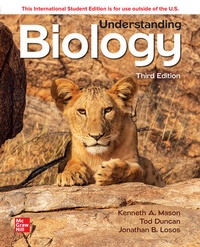
ISE Understanding Biology
3rd Edition
Published on 5. March 2020
Book
Paperback/Softback
1056 pages
978-1-260-57058-8 (ISBN)
Description
A concise and engaging biology text for biology majors, Understanding Biology partnered with Connect emphasizes fundamentals concepts to help students better understand biology and focus on developing scientific skills. This approach utilizes the Vision and Change guidelines of Core Concepts and Core Skills while helping students begin the process of becoming a scientist.
Condensed chapters are centered on a learning path that serves to connect concepts within a chapter. The learning path begins with learning outcomes, which help students understand the core skills and concepts they should develop. Inquiry and Analysis cases help students build scientific skills, while scaffold end of chapter assessment ensures they not only grasp core concepts, but can also critically analyze and apply what they've learned. "Connecting the Concepts," a synthesis feature that ends every part, helps students understand the connections between biological concepts, thus helping them "see" the big picture.
Condensed chapters are centered on a learning path that serves to connect concepts within a chapter. The learning path begins with learning outcomes, which help students understand the core skills and concepts they should develop. Inquiry and Analysis cases help students build scientific skills, while scaffold end of chapter assessment ensures they not only grasp core concepts, but can also critically analyze and apply what they've learned. "Connecting the Concepts," a synthesis feature that ends every part, helps students understand the connections between biological concepts, thus helping them "see" the big picture.
More details
Edition
3rd edition
Language
English
Place of publication
OH
United States
Target group
College/higher education
US School Grade: From College Freshman to College Graduate Student
Illustrations
1007 Illustrations
Dimensions
Height: 274 mm
Width: 229 mm
Thickness: 36 mm
Weight
1912 gr
ISBN-13
978-1-260-57058-8 (9781260570588)
Copyright in bibliographic data and cover images is held by Nielsen Book Services Limited or by the publishers or by their respective licensors: all rights reserved.
Schweitzer Classification
Persons
Kenneth A. Mason received his undergraduate degree in Molecular Biology from the University of Washington, worked at UC Berkeley, then pursued his PhD in Genetics at UC Davis. He has taught Gentics, Microbial Genetics, Microbiology, Advanced Molecular Genetics, Introductory Biology, and a Genetics Laboratory that he designed.
Tod Duncan is a Clinical Assistant Professor at the University of Colorado Denver. He currently teaches firstsemester general biology and coordinates first and second semester general biology laboratories. Previously,he taught general microbiology, virology, the biology of cancer, medical microbiology, and cell biology. Abachelor's degree in cell biology with an emphasis on plant molecular and cellular biology from the Universityof East Anglia in England led to doctoral studies in cell cycle control, and postdoctoral research on themolecular and biochemical mechanisms of DNA alkylation damage in vitro and in Drosophila melanogaster.Currently, he is interested in factors affecting retention and success of incoming first-year students in diversedemographics. He lives in Boulder, Colorado, with his two Great Danes, Eddie and Henry
Jonathan Losos is a Monique and Philip Lehner Professor for the Study of Latin America in the Department of Organismic and Evolutionary Biology and Curator of Herpetology at the Museum of Comparative Zoology at Harvard University. Losos's research has focused on studying patterns of adaptive ratiation and evolutionary diversification in lizards. The recipient of several awards including hte prestigious Theodosius Dobzhansky and David Starr Jordan Prizes for outstanding young evolutionary biologists, Losos has published more than 100 scientific articles.
Tod Duncan is a Clinical Assistant Professor at the University of Colorado Denver. He currently teaches firstsemester general biology and coordinates first and second semester general biology laboratories. Previously,he taught general microbiology, virology, the biology of cancer, medical microbiology, and cell biology. Abachelor's degree in cell biology with an emphasis on plant molecular and cellular biology from the Universityof East Anglia in England led to doctoral studies in cell cycle control, and postdoctoral research on themolecular and biochemical mechanisms of DNA alkylation damage in vitro and in Drosophila melanogaster.Currently, he is interested in factors affecting retention and success of incoming first-year students in diversedemographics. He lives in Boulder, Colorado, with his two Great Danes, Eddie and Henry
Jonathan Losos is a Monique and Philip Lehner Professor for the Study of Latin America in the Department of Organismic and Evolutionary Biology and Curator of Herpetology at the Museum of Comparative Zoology at Harvard University. Losos's research has focused on studying patterns of adaptive ratiation and evolutionary diversification in lizards. The recipient of several awards including hte prestigious Theodosius Dobzhansky and David Starr Jordan Prizes for outstanding young evolutionary biologists, Losos has published more than 100 scientific articles.
Content
Part I The Molecular Basis of Life
1--The Science of Biology
2--The Nature of Moleculars and the Properties of Water
3--The Chemical Building Blocks of Life
Part II The Biology of the Cell
4--Cell Structure
5--Membranes
6--Energy and Metabolism
7--How Cells Harvest Energy
8--Photosynthesis
9--Cell Communication
10--How Cells Divide
Part III Genetic and Molecular Biology
11--Sexual Reproduction and Meiosis
12--Patterns of Inheritance
13--The Chromosomal Basis of Inheritance
14--DNA: The Genetic Material
15--Genes and How They Work
16--Control of Gene Expression
17--Biotechnology
18--Genomics
Part IV Evolution
19--Genes Within Populations
20--The Evidence for Evolution
21--The Origin of Species
Part V The Diversity of Life
22--Systematics and Phylogeny
23--Prokaryotes and Viruses
24--Protists
25--Fungi
26--Plants
27--Animal Diversity
28--Vertebrates
Part VI Plant Form and Function
29--Plant Form
30--Flowering Plant Reproduction
31--The Living Plant
Part VII Animal Form and Function
32--The Animal Biology and How It Moves
33--The Nervous System
34--Fueling the Body's Metabolism
35--Maintaining Homeostasis
36--Reproduction and Development
Part VIII Ecology and Behavior
37--Behavioral Biology
38--Ecology of Individuals and Populations
39--Community Ecology and Ecosystem Dynamics
40--The Living World
1--The Science of Biology
2--The Nature of Moleculars and the Properties of Water
3--The Chemical Building Blocks of Life
Part II The Biology of the Cell
4--Cell Structure
5--Membranes
6--Energy and Metabolism
7--How Cells Harvest Energy
8--Photosynthesis
9--Cell Communication
10--How Cells Divide
Part III Genetic and Molecular Biology
11--Sexual Reproduction and Meiosis
12--Patterns of Inheritance
13--The Chromosomal Basis of Inheritance
14--DNA: The Genetic Material
15--Genes and How They Work
16--Control of Gene Expression
17--Biotechnology
18--Genomics
Part IV Evolution
19--Genes Within Populations
20--The Evidence for Evolution
21--The Origin of Species
Part V The Diversity of Life
22--Systematics and Phylogeny
23--Prokaryotes and Viruses
24--Protists
25--Fungi
26--Plants
27--Animal Diversity
28--Vertebrates
Part VI Plant Form and Function
29--Plant Form
30--Flowering Plant Reproduction
31--The Living Plant
Part VII Animal Form and Function
32--The Animal Biology and How It Moves
33--The Nervous System
34--Fueling the Body's Metabolism
35--Maintaining Homeostasis
36--Reproduction and Development
Part VIII Ecology and Behavior
37--Behavioral Biology
38--Ecology of Individuals and Populations
39--Community Ecology and Ecosystem Dynamics
40--The Living World