

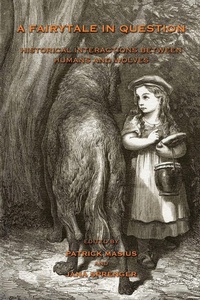
A Fairytale in Question
Historical Interactions Between Humans and Wolves
Published on 15. July 2016
Book
Paperback/Softback
320 pages
978-1-874267-92-8 (ISBN)
Description
A COLLECTION OF ESSAYS PLACING THE HUMAN-WOLF RELATIONSHIP IN HISTORICAL PERSPECTIVEInternational in range and chronological in organisation, this volume aims to grasp the maincurrents of thought about interactions with the wolf in modern history. It focuses on perceptions, interactions and dependencies, and includes cultural and social analyses as well as biological aspects. Wolves have been feared and admired, hunted and cared for. At the same historical moment, different cultural and social groups have upheld widely diverging ideas about the wolf. Fundamental dichotomies in modern history, between nature and culture, wilderness and civilisation and danger and security, have been portrayed in terms of wolf-human relationships. The wolf has been part of aesthetic, economic, political, psychological and cultural reasoning albeit it is nowadays mainly addressed as an object of wildlife management. There has been a major shift in perception from dangerous predator to endangered species, but the big bad fairytale wolf remains a cultural icon. This volume roots study of human-wolf relationships coherently within the disciplines of environmental and animal history for the first time.
More details
Language
English
Place of publication
Knapwell
United Kingdom
Target group
College/higher education
Illustrations
black and white illustrations; black and white illustrations
Dimensions
Height: 229 mm
Width: 152 mm
Thickness: 20 mm
Weight
534 gr
ISBN-13
978-1-874267-92-8 (9781874267928)
Copyright in bibliographic data and cover images is held by Nielsen Book Services Limited or by the publishers or by their respective licensors: all rights reserved.
Schweitzer Classification
Persons
Patrick Masius is a Post-doctoral researcher at Gottingen University, Germany. His research focuses on natural hazards and dangerous animals. In 2010, he received his Ph.D. at Gottingen University with a historical study on politics of natural disasters in the German Empire. Previously, he studied Geography and Social Anthropology at the Universities of Bayreuth and Sussex.Jana Sprenger Post-doctoral researcher at Gottingen University. She researches the persecution and extirpation of wolves in early modern and modern Germany. In 2011, she received her Ph.D. at Gottingen University with a study about the perception, damage and control of insect pests in forestry and agriculture in Prussian Brandenburg. Previously, she studied Biology, focusing on biodiversity, at Kassel University.
Content
Patrick Masius and Jana Sprenger.Introduction.1. Alexander Kling. Wartime, Wolftime. Material-Semiotic Knots in the Chronicles of the Thirty Years' War.2. Martin Rheinheimer. The Belief in Werewolves and the Extermination of Real Wolves in Schleswig-Holstein.3. Roger Bergstrom, Karin Dirke, and Kjell Danell. The Wolf War in Sweden during the 18th Century - Strategies, Measures and Leaders.4. Julien Alleau and John D.C. Linnell. The Story of a Man-eating Beast in Dauphine, France (1746-1756).5. Karin Dirke. Where is the Big Bad Wolf? Notes and Narratives on Wolves in Swedish Newspapers during the 18th and 19th Centuries.6. Patrick Masius and Jana Sprenger. Reconstructing the Extermination of Wolves in Germany. Case Studies from Brandenburg and Rhineland-Palatinat.7. Jose Maria Fernandez-Garcia. Historical Decline (and Persistence) of the Grey Wolf in Spain.8. Steven Rodriguez. British Programmes for the Extermination of the Indian Wolf, c. 1870-1915.9. Karen Jones. Writing the Wolf: Canine Tales and North American Environmental-Literary Tradition.10. Linda Kalof. The Shifting Iconography of Wolves over the Twentieth Century.11. Lydia A. Dixon. Alaska Wild? Wolves in America's Last Frontier.12. Robert W. Myslajek and Sabina Nowak. Not an Easy Road to Success: The History of Exploitation and Restoration of the Wolf Population in Poland after World War Two.13. Adam Perou Hermans. 'If You Wander in Winter, They Will Eat You': Local Knowledge, Wolves and Justice in Central Asia.14. Jessica Bell. Hierarchy, Intrusion and the Anthropomorphism of Nature: Hunter and Rancher Discourse on North American Wolves.