

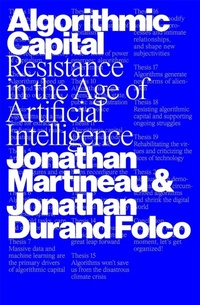
Algorithmic Capital
Resistance in the Age of Artificial Intelligence
Will be published approx. on 22. September 2026
Book
Paperback/Softback
496 pages
978-1-80429-900-5 (ISBN)
Description
This book provides a critical theory of the new stage of algorithmic capitalism, and maps out paths for critique and resistance. AI and algorithms are not just technologies, they are rooted in new capitalist forms and processes that transcend economics and technology. as a result, they profoundly reshape social reality, politics, culture and subjectivities.
Set out in 20 theses, that stretch from geopolitics, the mining of rare earths, labour, crypto, influencers, climate change, GenAI, social acceleration, Silicon Valley ideologies and predictive policing, this book situates contemporary social change in the context of the advent of algorithmic capital. Through this the authors show how the valorization of data and the development of AI are symptoms of deeper socio-economic and political mutations.
Algorithmic capital is, at once, a logic of accumulation, a form of social power, a mediation of social relations and a relation to nature, as well as a multidimensional reality that profoundly reshapes social life. In the face of this new stage of capitalism, the book explores paths towards organizing and resistance, tracing ways of fighting and exiting algorithmic capitalism towards a post-capitalist and just world.
Set out in 20 theses, that stretch from geopolitics, the mining of rare earths, labour, crypto, influencers, climate change, GenAI, social acceleration, Silicon Valley ideologies and predictive policing, this book situates contemporary social change in the context of the advent of algorithmic capital. Through this the authors show how the valorization of data and the development of AI are symptoms of deeper socio-economic and political mutations.
Algorithmic capital is, at once, a logic of accumulation, a form of social power, a mediation of social relations and a relation to nature, as well as a multidimensional reality that profoundly reshapes social life. In the face of this new stage of capitalism, the book explores paths towards organizing and resistance, tracing ways of fighting and exiting algorithmic capitalism towards a post-capitalist and just world.
Reviews / Votes
In 20 theses, this book develops a powerful, critical and multidimensional way of thinking about the algorithmic logic and artificial intelligence that are transforming our lives today. -- Aurelien Berthier * Agir par la Culture Magazine * A critical theory of the profound transformations that the digital economy is bringing to modern capitalism. An essential book. -- Fred Savard * Podcast * Jonathan Durand Folco and Jonathan Martineau offer us an intellectual and theoretical toolbox to help us better understand a whole series of phenomena that have swept through our societies over the last twenty years or so. -- Jean-Benoit Dumais * Endorsement * The book is on a grand scale in terms of both its theoretical ambition and the considerable amount of information it contains. -- Mircea Vultur * Relations Industrielles * A well-founded and researched argument -- Samuel Cossette * Labour/Le travail * Algorithmic Capital does a number of important things that, in combination, make it a wonderfully pedagogical text: it draws a distinction between an ethics of AI and a critical theory of AI; it conveys a practical urgency in its form, unfurling in theses instead of chapters; and it insists that the radicality of theory lies in identifying 'the real possibilities for emancipatory action and the good life' in the social world as we find it. Most importantly, perhaps, given their central thesis that 'a theory of algorithms needs a theory of capitalism,' Martineau and Durand Folco demonstrate that if our thought is going to keep up with developments in AI, it needs to slow down. -- Beverley Best, author of <i>The Automatic Fetish</i>More details
Edition
Paperback original
Language
English
Place of publication
London
United Kingdom
Dimensions
Height: 234 mm
Width: 153 mm
Weight
367 gr
ISBN-13
978-1-80429-900-5 (9781804299005)
Copyright in bibliographic data and cover images is held by Nielsen Book Services Limited or by the publishers or by their respective licensors: all rights reserved.
Schweitzer Classification
Persons
Jonathan Martineau is Associate Professor at the Liberal Arts College, Concordia University, Montreal, and Director of the Centre for Interdisciplinary Research on Time, Technology and Capitalism (CIRTTC - cirttc.org). He specializes in the history of ideas, political economy, critical theory and technology studies. He is the author of Time, Capitalism and Alienation and editor of Marxisme anglo-saxon. Figures contemporaines.
Jonathan Durand Folco is Associate Professor at the School for Social Innovation, St Paul University, Ottawa. He specializes in political philosophy, critical theory, democracy studies and social innovation. He is the author of Reinventer la democratie and A nous la ville! Traite de municipalisme.
Jonathan Durand Folco is Associate Professor at the School for Social Innovation, St Paul University, Ottawa. He specializes in political philosophy, critical theory, democracy studies and social innovation. He is the author of Reinventer la democratie and A nous la ville! Traite de municipalisme.
Content
Thesis 1
We Need a Critical Theory of Algorithms
Thesis 2
A Theory of Algorithms Needs a Theory of Capitalism
Thesis 3
Algorithms Accelerate Time and Keep us Glued to our Screens
Thesis 4
Algorithms are Machines for Extraction, Prediction and Manipulation
Thesis 5
AI Isn't Abolishing Work, But Reorganizing and Exploiting it
Thesis 6
Algorithmic Technologies Are Colonizing the Domestic Sphere, Housework, Care and Emotional Labor
Thesis 7
Big Data and Machine Learning are the Main drivers of Algorithmic Capital
Thesis 8
Neoliberalism Is Giving Way to a New Stage of Capitalism
Thesis 9
A New Form of Power Is Emerging: Algorithmic Governmentality
Thesis 10
The Algorithmic Logic Extends to the State, the Public Administration and the Police
Thesis 11
Algorithmic Capital Disrupts and Erodes Democratic Life
Thesis 12
Algorithmic Capital Is Helping to Reshape the International Order
Thesis 13
The Siliconization of the World Is Continuing Apace
Thesis 14
The Global Pandemic Brought a Great Leap Forward for Algorithmic Capitalism
Thesis 15
Algorithms Won't Save Us from Climate Crisis
Thesis 16
Algorithms Are Changing Socialization Processes and Intimate Relationships, And Shaping New Subjectivities
Thesis 17
Algorithms Are Generating New Forms of Alienation
Thesis 18
We Should Resist Algorithmic Capital - And Support the Struggles That Are Developing
Thesis 19
We Must Find the Virtues in Technologies and Criticize Their Vices
Thesis 20
We Need Technosober Democratic Planning - Reining in Algorithms and Tightening the Limits of the Digital World
Conclusion
Index
We Need a Critical Theory of Algorithms
Thesis 2
A Theory of Algorithms Needs a Theory of Capitalism
Thesis 3
Algorithms Accelerate Time and Keep us Glued to our Screens
Thesis 4
Algorithms are Machines for Extraction, Prediction and Manipulation
Thesis 5
AI Isn't Abolishing Work, But Reorganizing and Exploiting it
Thesis 6
Algorithmic Technologies Are Colonizing the Domestic Sphere, Housework, Care and Emotional Labor
Thesis 7
Big Data and Machine Learning are the Main drivers of Algorithmic Capital
Thesis 8
Neoliberalism Is Giving Way to a New Stage of Capitalism
Thesis 9
A New Form of Power Is Emerging: Algorithmic Governmentality
Thesis 10
The Algorithmic Logic Extends to the State, the Public Administration and the Police
Thesis 11
Algorithmic Capital Disrupts and Erodes Democratic Life
Thesis 12
Algorithmic Capital Is Helping to Reshape the International Order
Thesis 13
The Siliconization of the World Is Continuing Apace
Thesis 14
The Global Pandemic Brought a Great Leap Forward for Algorithmic Capitalism
Thesis 15
Algorithms Won't Save Us from Climate Crisis
Thesis 16
Algorithms Are Changing Socialization Processes and Intimate Relationships, And Shaping New Subjectivities
Thesis 17
Algorithms Are Generating New Forms of Alienation
Thesis 18
We Should Resist Algorithmic Capital - And Support the Struggles That Are Developing
Thesis 19
We Must Find the Virtues in Technologies and Criticize Their Vices
Thesis 20
We Need Technosober Democratic Planning - Reining in Algorithms and Tightening the Limits of the Digital World
Conclusion
Index