

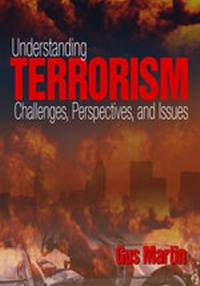
Understanding Terrorism
Challenges, Perspectives, and Issues
1st Edition
Published on 16. April 2003
Book
Paperback/Softback
512 pages
978-0-7619-2616-0 (ISBN)
Description
The study of terrorism requires a review of the events, ideas, motivations, and histories that result in terrorist acts, as well as an examination of the theories that help explain this volatile behavior.
Understanding Terrorism: Challenges, Perspectives, and Issues is a dynamic textbook for students who wish to explore the phenomenon of terrorism past and present. The text begins with a conceptual overview of terrorism, progresses to a focused discussion of the terrorists, investigates the nuances of the terrorist trade, and concludes with a final analysis of modern terrorism.
Understanding Terrorism is a primary source of information about terrorist typologies, the cause of terrorist violence, and responses to terrorism. The content emphasizes key perspectives and identifies critical issues, which also makes it an excellent resource for developing critical thinking on the subject. Accessibly written, each chapter has historical examples, case studies, discussion boxes, and Web exercises.
Features and Benefits:
Comprehensive yet Accessible. The text is written in an engaging style and includes appendixes that present focused information, including a chronology of historical events, a complete glossary, recommended Web sites and a list of relevant documentaries and dramatic films.
Compelling. Cases in Point provide a "reality check" for important theoretical concepts discussed in the chapter and Perspectives are boxed topics of special interest for students.
Stimulating. Discussion boxes present provocative information and pose challenging questions to promote critical thinking and further debate.
Interactive. Web exercises are included for students and instructors to explore and discuss information found on the Internet.
Understanding Terrorism: Challenges, Perspectives, and Issues is a dynamic textbook for students who wish to explore the phenomenon of terrorism past and present. The text begins with a conceptual overview of terrorism, progresses to a focused discussion of the terrorists, investigates the nuances of the terrorist trade, and concludes with a final analysis of modern terrorism.
Understanding Terrorism is a primary source of information about terrorist typologies, the cause of terrorist violence, and responses to terrorism. The content emphasizes key perspectives and identifies critical issues, which also makes it an excellent resource for developing critical thinking on the subject. Accessibly written, each chapter has historical examples, case studies, discussion boxes, and Web exercises.
Features and Benefits:
Comprehensive yet Accessible. The text is written in an engaging style and includes appendixes that present focused information, including a chronology of historical events, a complete glossary, recommended Web sites and a list of relevant documentaries and dramatic films.
Compelling. Cases in Point provide a "reality check" for important theoretical concepts discussed in the chapter and Perspectives are boxed topics of special interest for students.
Stimulating. Discussion boxes present provocative information and pose challenging questions to promote critical thinking and further debate.
Interactive. Web exercises are included for students and instructors to explore and discuss information found on the Internet.
Reviews / Votes
"I am very favorably impressed with this book. The author is well informed and an excellent writer. The recommended readings, Web sites, boxes, tables and the like provide very attractive features. There is an abundance of very good historical and current examples. I would adopt this book for my courses and look forward to its publication." -- Frank HaganMore details
Language
English
Place of publication
Thousand Oaks
United States
Target group
College/higher education
Dimensions
Height: 254 mm
Width: 178 mm
Weight
874 gr
ISBN-13
978-0-7619-2616-0 (9780761926160)
Copyright in bibliographic data and cover images is held by Nielsen Book Services Limited or by the publishers or by their respective licensors: all rights reserved.
Schweitzer Classification
Other editions
New editions
Book
04/2006
2nd Edition
SAGE Publications Inc
€57.13
Article exhausted; check for reprint
Person
Clarence Augustus "Gus" Martin is Professor Emeritus in the Department of Criminal Justice Administration at California State University, Dominguez Hills, where he teaches courses on criminal law, terrorism and extremism, and the criminal justice system. He served as the founding Chair of the department and as the founding Director of the School of Public Service and Justice. He also served as Associate Vice President for Human Resources Management, Acting Associate Dean of the College of Business Administration and Public Policy, Associate Vice President for Faculty Affairs, and Chair of the Department of Public Administration. He began his academic career as a member of the faculty of the Graduate School of Public and International Affairs, University of Pittsburgh, where he was an Administration of Justice professor. His current research and professional interests are terrorism and extremism, homeland security, and the administration of justice.
Dr. Martin is author of several books on the subjects of terrorism and homeland security, including Understanding Terrorism: Challenges, Perspectives, and Issues (SAGE Publications, 2025); Terrorism and WMDs: Awareness and Response, Third Edition (with John Pichtel, CRC Press, 2025); Understanding Homeland Security (SAGE Publications, 2024); The Handbook of Homeland Security (with Scott Romaniuk and Martin Scott Catino; Routledge, 2023); Essentials of Terrorism: Concepts and Controversies (SAGE Publications, 2022); Terrorism: An International Perspective (with Fynnwin Prager; SAGE Publications, 2019); The SAGE Encyclopedia of Terrorism, Second Edition (SAGE Publications, 2011); Terrorism and Homeland Security (SAGE, 2011); and The New Era of Terrorism: Selected Readings (SAGE Publications, 2004). He is also author of Juvenile Justice: Process and Systems (SAGE Publications, 2005).
Prior to joining academia, Dr. Martin served as Managing Attorney for the Fair Housing Partnership of Greater Pittsburgh, where he was also director of a program created under a federal consent decree to desegregate public and assisted housing. He was also Special Counsel to the Attorney General of the U.S. Virgin Islands on the island of St. Thomas. As Special Counsel, he occupied a personal and confidential position in the central office of the Department of Justice; sat as hearing officer for disciplinary hearings and departmental grievances; served as chair of the Drug Policy Committee; served as liaison to the intergovernmental Law Enforcement Coordinating Committee as well as to the Narcotics Strike Force; and provided daily legal and policy advice to the Attorney General. Prior to serving as Special Counsel, he was a "floor" Legislative Assistant to Congressman Charles B. Rangel of New York. As Legislative Assistant, he researched, evaluated and drafted legislation in areas of foreign policy, foreign aid, human rights, housing, education, social services, and poverty; he also drafted House floor statements, Congressional Record inserts, press releases, and news articles; and he composed speeches, briefing materials, and legislative correspondence.
Dr. Martin received his A.B. degree from Harvard College, J.D. from Duquesne University Thomas R. Kline School of Law, and Ph.D. from the Graduate School of Public and International Affairs at the University of Pittsburgh.
Dr. Martin is author of several books on the subjects of terrorism and homeland security, including Understanding Terrorism: Challenges, Perspectives, and Issues (SAGE Publications, 2025); Terrorism and WMDs: Awareness and Response, Third Edition (with John Pichtel, CRC Press, 2025); Understanding Homeland Security (SAGE Publications, 2024); The Handbook of Homeland Security (with Scott Romaniuk and Martin Scott Catino; Routledge, 2023); Essentials of Terrorism: Concepts and Controversies (SAGE Publications, 2022); Terrorism: An International Perspective (with Fynnwin Prager; SAGE Publications, 2019); The SAGE Encyclopedia of Terrorism, Second Edition (SAGE Publications, 2011); Terrorism and Homeland Security (SAGE, 2011); and The New Era of Terrorism: Selected Readings (SAGE Publications, 2004). He is also author of Juvenile Justice: Process and Systems (SAGE Publications, 2005).
Prior to joining academia, Dr. Martin served as Managing Attorney for the Fair Housing Partnership of Greater Pittsburgh, where he was also director of a program created under a federal consent decree to desegregate public and assisted housing. He was also Special Counsel to the Attorney General of the U.S. Virgin Islands on the island of St. Thomas. As Special Counsel, he occupied a personal and confidential position in the central office of the Department of Justice; sat as hearing officer for disciplinary hearings and departmental grievances; served as chair of the Drug Policy Committee; served as liaison to the intergovernmental Law Enforcement Coordinating Committee as well as to the Narcotics Strike Force; and provided daily legal and policy advice to the Attorney General. Prior to serving as Special Counsel, he was a "floor" Legislative Assistant to Congressman Charles B. Rangel of New York. As Legislative Assistant, he researched, evaluated and drafted legislation in areas of foreign policy, foreign aid, human rights, housing, education, social services, and poverty; he also drafted House floor statements, Congressional Record inserts, press releases, and news articles; and he composed speeches, briefing materials, and legislative correspondence.
Dr. Martin received his A.B. degree from Harvard College, J.D. from Duquesne University Thomas R. Kline School of Law, and Ph.D. from the Graduate School of Public and International Affairs at the University of Pittsburgh.
Content
Preface
Acknowledgments
PART I: TERRORISM - A CONCEPTUAL REVIEW
Chapter 1. An Introduction to Terrorism
Chapter Introduction
Historical Perspectives of Terrorism
Exploring Definitions, Sources, and Ideologies
The Morality of Terrorist Violence: Four Quotations
Terrorism and Criminal Skill: Three Cases
Terrorist Symbolism: Oklahoma City and September 11, 2001
Case in Point: The Assassins
Chapter Summary
Chapter 2. The Nature of the Beast - Defining Terrorism
Chapter Introduction
Reactionaries and Radicals: Revisiting the Classical Ideological Continuum
Understanding Extremism - The Foundation of Terrorism
Defining Terrorism
A Definitional Problem: Perspectives of Terrorism
The Political Violence Matrix
Case in Point: Are "Hate Crimes" Acts of Terrorism?
Chapter Summary
Chapter 3 Beginnings - The Causes of Terrorism
Chapter Introduction
Motives of Terrorists
Explanations of Terrorism
Case in Point: Profiles of Terrorists
Chapter Summary
PART II: THE TERRORIST
Chapter 4 Terror From Above - State Terrorism
Chapter Introduction
Monitoring State Terrorism
A State Terrorism Paradigm
State Terrorism as Foreign Policy
State Terrorism as Domestic Policy
Case in Point: Latin American State Terrorism as Domestic Policy and North African/Middle Eastern State Terrorism as Foreign Policy
Chapter Summary
Chapter 5. Terror from Below - Dissident Terrorism
Chapter Introduction
A Dissident Terrorism Paradigm
Operational Shifts - The New Morality and the Rise of Terrorist Cells
Anti-State Dissident Terrorism
Communal Terrorism
Case in Point: The Tupamaros
Chapter Summary
Chapter 6. Class Struggle and National Liberation - The Terrorist Left
Chapter Introduction
Left-Wing Ideology and Activism
Leftist Terrorism
The Future of the Violent Left
Case in Point: Supportive Environments on the Left - 1968 Paris
Chapter Summary
Chapter 7. Race and Order - The Terrorist Right
Chapter Introduction
Right-Wing Ideology and Activism
Common Themes on the Right
Rightist Terrorism
The Future of the Violent Right
Case in Point: Supportive Environments on the Right - Racist Skinheads
Chapter Summary
Chapter 8. For the Faith and Profit - Religious and Criminal Terrorism
Chapter Introduction
Religious Terrorism
Criminal Terrorism
Case in Point: The Beka'a Valley
Chapter Summary
Chapter 9. Terrorist Spillovers - International Terrorism
Chapter Introduction
Defining International Terrorism
Reasons for International Terrorism
International Terrorist Networks
Postscript: The "Stateless Revolutionaries"
Case in Point: Cooperation Between Terrorists: An Overview of the European Connection
Chapter Summary
PART III: THE TERRORIST TRADE
Chapter 10. Tools of the Trade - Tactics and Targets of Terrorists
Chapter Introduction
Terrorist Objectives
Terrorist Methods
Terrorist Targets
The Outcome - Is Terrorism Effective?
Case in Point: The Engineer
Chapter Summary
Chapter 11. The Role of the Media
Chapter Introduction
An Introduction to the Role of the Media
A New Battleground: The War for the Information High Ground
The Public's Right to Know: Regulating the Media
Case in Point: Media-Oriented Terror and Lebanon's Hezbollah
Chapter Summary
PART IV: FINAL ANALYSIS
Chapter 12. Terrorism in the United States
Chapter Introduction
Background to Political Violence on the Left and Right
Left-Wing Terrorism in the United States
Right-Wing Terrorism in the United States
The New Millennium and International Terrorism in the United States
Case in Point: Lynching - Vigilante Communal Terrorism in the United States
Chapter Summary
Chapter 13. Responding to Terror - The Options
Chapter Introduction
Counter-Terrorism and the Use of Force
Operations Other than War - Repressive Options
Operations Other than War - Conciliatory Options
Legalistic Responses
Case in Point: Hostage Rescues
Chapter Summary
Chapter 14. What Next? - The Future of Terrorism
Chapter Introduction
The Future of Terrorism
Controlling Terrorism
Prospects for Terrorism in the United States
Case in Point: The Technology of Surveillance
Chapter Summary
Maps
Glossary
Appendices
U.S. Department of State Terrorism Tables
Summary of Historical Examples
Recommended Internet Sites and Web Exercises
Documentaries and Dramatic Films
Subject/Name Index
Acknowledgments
PART I: TERRORISM - A CONCEPTUAL REVIEW
Chapter 1. An Introduction to Terrorism
Chapter Introduction
Historical Perspectives of Terrorism
Exploring Definitions, Sources, and Ideologies
The Morality of Terrorist Violence: Four Quotations
Terrorism and Criminal Skill: Three Cases
Terrorist Symbolism: Oklahoma City and September 11, 2001
Case in Point: The Assassins
Chapter Summary
Chapter 2. The Nature of the Beast - Defining Terrorism
Chapter Introduction
Reactionaries and Radicals: Revisiting the Classical Ideological Continuum
Understanding Extremism - The Foundation of Terrorism
Defining Terrorism
A Definitional Problem: Perspectives of Terrorism
The Political Violence Matrix
Case in Point: Are "Hate Crimes" Acts of Terrorism?
Chapter Summary
Chapter 3 Beginnings - The Causes of Terrorism
Chapter Introduction
Motives of Terrorists
Explanations of Terrorism
Case in Point: Profiles of Terrorists
Chapter Summary
PART II: THE TERRORIST
Chapter 4 Terror From Above - State Terrorism
Chapter Introduction
Monitoring State Terrorism
A State Terrorism Paradigm
State Terrorism as Foreign Policy
State Terrorism as Domestic Policy
Case in Point: Latin American State Terrorism as Domestic Policy and North African/Middle Eastern State Terrorism as Foreign Policy
Chapter Summary
Chapter 5. Terror from Below - Dissident Terrorism
Chapter Introduction
A Dissident Terrorism Paradigm
Operational Shifts - The New Morality and the Rise of Terrorist Cells
Anti-State Dissident Terrorism
Communal Terrorism
Case in Point: The Tupamaros
Chapter Summary
Chapter 6. Class Struggle and National Liberation - The Terrorist Left
Chapter Introduction
Left-Wing Ideology and Activism
Leftist Terrorism
The Future of the Violent Left
Case in Point: Supportive Environments on the Left - 1968 Paris
Chapter Summary
Chapter 7. Race and Order - The Terrorist Right
Chapter Introduction
Right-Wing Ideology and Activism
Common Themes on the Right
Rightist Terrorism
The Future of the Violent Right
Case in Point: Supportive Environments on the Right - Racist Skinheads
Chapter Summary
Chapter 8. For the Faith and Profit - Religious and Criminal Terrorism
Chapter Introduction
Religious Terrorism
Criminal Terrorism
Case in Point: The Beka'a Valley
Chapter Summary
Chapter 9. Terrorist Spillovers - International Terrorism
Chapter Introduction
Defining International Terrorism
Reasons for International Terrorism
International Terrorist Networks
Postscript: The "Stateless Revolutionaries"
Case in Point: Cooperation Between Terrorists: An Overview of the European Connection
Chapter Summary
PART III: THE TERRORIST TRADE
Chapter 10. Tools of the Trade - Tactics and Targets of Terrorists
Chapter Introduction
Terrorist Objectives
Terrorist Methods
Terrorist Targets
The Outcome - Is Terrorism Effective?
Case in Point: The Engineer
Chapter Summary
Chapter 11. The Role of the Media
Chapter Introduction
An Introduction to the Role of the Media
A New Battleground: The War for the Information High Ground
The Public's Right to Know: Regulating the Media
Case in Point: Media-Oriented Terror and Lebanon's Hezbollah
Chapter Summary
PART IV: FINAL ANALYSIS
Chapter 12. Terrorism in the United States
Chapter Introduction
Background to Political Violence on the Left and Right
Left-Wing Terrorism in the United States
Right-Wing Terrorism in the United States
The New Millennium and International Terrorism in the United States
Case in Point: Lynching - Vigilante Communal Terrorism in the United States
Chapter Summary
Chapter 13. Responding to Terror - The Options
Chapter Introduction
Counter-Terrorism and the Use of Force
Operations Other than War - Repressive Options
Operations Other than War - Conciliatory Options
Legalistic Responses
Case in Point: Hostage Rescues
Chapter Summary
Chapter 14. What Next? - The Future of Terrorism
Chapter Introduction
The Future of Terrorism
Controlling Terrorism
Prospects for Terrorism in the United States
Case in Point: The Technology of Surveillance
Chapter Summary
Maps
Glossary
Appendices
U.S. Department of State Terrorism Tables
Summary of Historical Examples
Recommended Internet Sites and Web Exercises
Documentaries and Dramatic Films
Subject/Name Index