

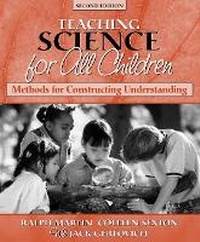
Science for All Children
Methods for Constructing Understanding
2nd Edition
Published on 4. April 2002
Book
Paperback/Softback
448 pages
978-0-205-33756-9 (ISBN)
Description
This truncated, paperback volume is composed of strategies and methods to provide students with an inquiry approach to promote the teaching of the concepts, skills, and attitudes of science in the classroom.
Science for All Children: Methods for Constructing Understanding is derived from the successful third edition of Teaching Science for All Children by the same author team. The authors have taken their popular 4E Learning Cycle (Exploration, Explanation, Expansion, and Evaluation) teaching method and applied it throughout this edition with concept story lines. Continuing to incorporate the National Science Education Standards, the authors provide ways for future teachers to foster an awareness among their students of the nature of science. This books allows them to implement skills in the classroom using science inquiry processes and develop in their students an understanding of the interactions among science, technology, and society.
Science for All Children: Methods for Constructing Understanding is derived from the successful third edition of Teaching Science for All Children by the same author team. The authors have taken their popular 4E Learning Cycle (Exploration, Explanation, Expansion, and Evaluation) teaching method and applied it throughout this edition with concept story lines. Continuing to incorporate the National Science Education Standards, the authors provide ways for future teachers to foster an awareness among their students of the nature of science. This books allows them to implement skills in the classroom using science inquiry processes and develop in their students an understanding of the interactions among science, technology, and society.
More details
Edition
2nd edition
Language
English
Place of publication
United States
Publishing group
Pearson Education (US)
Target group
Professional and scholarly
Dimensions
Height: 232 mm
Width: 190 mm
Thickness: 21 mm
Weight
735 gr
ISBN-13
978-0-205-33756-9 (9780205337569)
Copyright in bibliographic data and cover images is held by Nielsen Book Services Limited or by the publishers or by their respective licensors: all rights reserved.
Schweitzer Classification
Other editions
New editions
Ralph Martin | Colleen Sexton | Teresa Franklin
Teaching Science for All Children
Inquiry Methods for Constructing Understanding (with "Video Explorations" VideoWorkshop CD-ROM)
Book
10/2004
3rd Edition
Pearson
€90.73
Article exhausted; check for reprint
Previous edition

Ralph Martin | Colleen Sexton | Kay Wagner
Science for All Children
Methods for Constructing Understanding
Book
11/1997
Pearson
€48.46
Article exhausted; check for reprint
Content
All chapters open with "Introduction" and conclude with "Chapter Summary," "Discussion Questions and Projects," and "Build a Portfolio." I. THE EXPLORATION: METHODS AND BEST PRACTICES FOR EFFECTIVE SCIENCE TEACHING.
1. How Can We Help Learners to Inquire and Construct Scientific Meaning?
2. How Can You Use Demonstrations, Direct Instruction, and Textbooks Effectively?
II. THE EXPLANATION: MODERN SCIENCE TEACHING BENEFITS FROM INQUIRY-BASED, INTERACTIVE APPROACHES TO LEARNING.
3. What Is Science?
4. How Do Children Learn Science?
5. How Can You Teach Science for All Children?
6. What Goals Promote Scientific Literacy?
III. THE EXPANSION: CONTINUING OUR LEARNING, DEVELOPING SKILLS, AND USING THE TOOLS OF SCIENCE.
7. How Can You Plan Constructivist Science Lessons and Assess Student Performance?
8. How Can You Use Questions to Promote Science Inquiry?
9. How Can You Create a Safe and Efficient, Activity-Based Science Classroom?
10. Science Materials, Programs and Resources: What Are the Best Practices?
11. How Can You Use Educational Technology to Enrich Your Classroom?
1. How Can We Help Learners to Inquire and Construct Scientific Meaning?
2. How Can You Use Demonstrations, Direct Instruction, and Textbooks Effectively?
II. THE EXPLANATION: MODERN SCIENCE TEACHING BENEFITS FROM INQUIRY-BASED, INTERACTIVE APPROACHES TO LEARNING.
3. What Is Science?
4. How Do Children Learn Science?
5. How Can You Teach Science for All Children?
6. What Goals Promote Scientific Literacy?
III. THE EXPANSION: CONTINUING OUR LEARNING, DEVELOPING SKILLS, AND USING THE TOOLS OF SCIENCE.
7. How Can You Plan Constructivist Science Lessons and Assess Student Performance?
8. How Can You Use Questions to Promote Science Inquiry?
9. How Can You Create a Safe and Efficient, Activity-Based Science Classroom?
10. Science Materials, Programs and Resources: What Are the Best Practices?
11. How Can You Use Educational Technology to Enrich Your Classroom?