

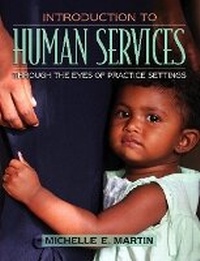
Introduction to Human Services
Published on 4. October 2006
Book
Paperback/Softback
432 pages
978-0-205-43961-4 (ISBN)
Description
This highly readable human services text offers a generalist view of the breadth and scope of human services.
This text uses various practice settings as a lens for examining the role and functions of the human service professional. Because the human services profession grew out of a concern about social problems that prevented people from getting their needs met, it is important to examine the generalist role of human service professionals. In addition, exploring the nature of working with individuals, families, or groups is more meaningful when explored within the context of a particular practice setting.
This text uses various practice settings as a lens for examining the role and functions of the human service professional. Because the human services profession grew out of a concern about social problems that prevented people from getting their needs met, it is important to examine the generalist role of human service professionals. In addition, exploring the nature of working with individuals, families, or groups is more meaningful when explored within the context of a particular practice setting.
More details
Language
English
Place of publication
United States
Publishing group
Pearson Education (US)
Target group
Professional and scholarly
Dimensions
Height: 232 mm
Width: 178 mm
Weight
612 gr
ISBN-13
978-0-205-43961-4 (9780205439614)
Copyright in bibliographic data and cover images is held by Nielsen Book Services Limited or by the publishers or by their respective licensors: all rights reserved.
Schweitzer Classification
Other editions
New editions
Book
07/2010
2nd Edition
Pearson
€104.17
Article exhausted; check for reprint
Content
I. HUMAN SERVICES AS A PROFESSION.
1. INTRODUCTION TO THE HUMAN SERVICES PROFESSION: PURPOSE, PREPARATION, PRACTICE AND THEORETICAL ORIENTATIONS.
The Many Types of Human Service Professionals.
Why is Human Services Needed?
Human Service Education and Licensure.
Duties and Functions of a Human Service Professional.
How Do Human Service Professionals Practice?
Theoretical Frameworks used in Human Services.
Bronfenbenner's Ecological Systems Theory.
PIE - Person in Environment.
Eco-systems Theory.
Understanding Human Services through a Look at Practice Settings.
2. HISTORY AND EVOLUTION OF THE HUMAN SERVICES PROFESSION.
The Feudal System of the Middle Ages.
Poor Laws of England.
The Elizabethan Poor Laws.
Charity Organization Societies.
Jane Addams and the Settlement House Movement.
Influences of African American Social Workers.
The New Deal and the Social Security Act of 1935.
II. CLINICAL ISSUES AND THE ROLE OF THE HUMAN SERVICE PROFESSIONAL.
3. SKILLS AND INTERVENTION STRATEGIES FOR GENERALIST PRACTICE.
Informed Consent and Confidentiality
The Limits of Confidentiality
Skills and Competencies
Sympathy and Empathy
Boundary Setting
The Hallmarks of Personal Growth
The Clinical Assessment
Patience
Active Listening Skills
Observation Skills
Family Genograms
Psychological Testing
Clinical Diagnoses
Criticisms of the DSM-IV-TR
Continuum of Mental Health
Case Management and Counseling
Basic Counseling Techniques for Generalist Practice
Task-Centered Casework
Perceptual Reframing, Emotional Regulation, Networking and Advocacy
4. CHILD AND FAMILY SERVICES
Overview and Purpose of Child and Family Services Agencies
The History of the Foster Care System in the United States
The U.S. Orphan Problem
The Orphan Asylum
The Seeds of Foster Care: The Orphan Trains
Overview of the Current U.S. Child Welfare System
Getting into the System
Child Abuse Investigations
Mandated Reporters
Sequence of Events in the Reporting and Investigation of Child Abuse
Types of Child Maltreatment
The Forensic Interview
To Intervene, or Not Intervene: Models for Decision Making
Working with Children in Placement
Permanency Plans
Working with Biological Families
Biological Parents and their Children: Maintaining the Connection
Working with Foster Children: Common Clinical Issues
Separation
Loss, Grief and Mourning
Identity Issues
Continuity of Family Ties
Crisis
Working with Foster Parents
Reunification
Family Preservation
Minority Populations and Multicultural Considerations
Placing Children of Color in Caucasian Homes
Native Americans and the U.S. Child Welfare System
Adoption Services
5. ADOLESCENT SERVICES
Adolescence: A New Stage of Development?
Developmental Perspectives
Common Clinical Issues and the Role of the Human Service Professional
Abstract Reasoning: A Dangerous Weapon in the Hands of an Adolescent
Adolescent Rebellion
Externalizing Behaviors
Internalizing Behaviors
Eating Disorders in the Adolescent Population
Schizophrenia in the Adolescent Population
Other Clinical Issues Affecting the Adolescent Population
Practice Settings Specific to Adolescent Treatment
Multicultural Considerations
6. AGING AND SERVICES FOR THE ELDERLY
The Aging of America: Changing Demographics
Old and Old-Old: A Developmental Perspective
Successful Aging
Current Issues Impacting the Elderly and the Role of the Human Service Professional
Ageism
Housing
Homelessness and the Elderly Population
Adjustment to Retirement
Grandparents Parenting
Depression
Dementia
Elder Abuse
Practice Settings Serving the Elderly
Special Populations
7. MENTAL HEALTH AND MENTAL ILLNESS
The History of Mental Illness: Perceptions and Treatment
The Deinstitutionalization of the Mentally Ill
Common Mental Illnesses and Clinical Issues
Serious Mental Disorders Diagnosed on Axis I
Psychotic Disorders
Affective Disorders
Serious Mental Disorders Diagnosed on Axis II
Mental Health Practice Settings and Counseling Interventions
Intervention Strategies
Common Practice Settings
Mental Illness and Special Populations
Mental Illness and the Homeless Population
Mental Illness and the Prison Population: The Criminalization of the Mentally Ill
Mental Health Courts
Multicultural Considerations
Current Legislation Affecting Access to Mental Health Services
Mental Health Parity Act of 1996
The President's New Freedom Commission on Mental Health
8. HOMELESSNESS
The Nature of Homelessness: How Many People are Homeless and Why
The Causes of Homelessness
History of Homelessness in the United States
The Contemporary Picture of Homelessness: The Rise of Single Parent Families
Homeless Shelter Living for Families with Children
Homeless Children: School Attendance and Academic Performance
Runaway Youth
Single Men, the Mentally Ill and Substance Abuse
The Elderly Homeless
Current Policies and Legislation
The Role of the Human Service Professional: Working with the Homeless Population: Common Clinical Issues
Common Practice Settings for Working with the Homeless Population
9. HEALTHCARE AND HOSPICE
Human Services in Hospitals
Crisis and Trauma Counseling
Working with Patients with HIV/AIDS
The Hospice Movement
The History of Hospice: The Neglect of the Dying
The Hospice Philosophy
The Hospice Team
The Role of the Hospice Human Services Worker
The Psychosocial Assessment
Intervention Strategies
Case Management and Counseling Services
Resisting the Reality of the Death
Planning for the Death
The Spiritual Component of Dying
Death and Dying: Effective Bereavement Counseling
The Journey Through Grief: A Task-Centered Approach
Multicultural Issues
Ethical Dilemmas in Hospice Care
10. SUBSTANCE ABUSE AND TREATMENT
History of the Practice Setting
History of Use and Early Treatment Efforts within the United States
The Prohibition Movement
The Rise of Modern Addiction Treatment in the United States
Demographics, Prevalence, and Usage Patterns
Defining Terms and Concepts
Theoretical Models of Use and Abuse
Types of Substances Abused
Abuse of Prescription Drugs
The Presence of Substance Abuse Across All Practice Settings
Acceptance of Problem
Hitting Bottom
Clinical Interventions
Motivational Interviewing
Cultural Sensitivity
Defining Treatment Goals
Abstinence
Harm Reduction
Mode of Service Delivery
Availability of Treatment
Public Programs
Private Programs
Continuum of Care
Treatment Modalities
The Role of the Human Services Professional
Stages of Recovery
Relapse Prevention
Common Treatment Settings
Detoxification Programs
In-Patient Treatment Programs
Partial Hospitalization Programs
Residential Treatment Programs
Out-Patient Treatment
Pharmacological Treatments
Self-Help
Family Involvement
11. HUMAN SERVICES IN THE SCHOOLS
School Social Work
The School Social Work Model
School Social Work Roles, Functions, and Core Competencies
School Counseling
Historical Roots of School Counseling
School Counselors: Professional Identity
The Urban Problem
Common Roles and Functions of School Counselors
School Psychologists
Common Clinical Issues and Effective Responses by Human Services Personnel
Depression and other Mental Health Concerns
Diversity and Race
Gay, Lesbian, and Transgendered Youth
The Terrorism Threat and U.S. During Wartime
Substance Abuse
Child Abuse and Neglect
Teenage Pregnancy
ADD and ADHD
12. FAITH-BASED AGENCIES
Faith-Based versus Secular Organizations
Faith-Based Community Initiatives Act
Methods of Practice in Faith-Based Agencies
The Benefits of Faith-Based Services
Religious Diversity in Faith-Based Organizations
Faith-Based Agencies: Services and Intervention Strategies
Jewish Human Services: Agencies and the Role of the Human Services Professional
United Jewish Communities: The Federations of North America
Association of Jewish Family Services and Children's Agencies
Christian Human Services: Agencies and the Role of the Human Services Professional
Rural Communities and the Black Church
Catholic Charities
Prison Fellowship Ministries
Teen Challenge
Islamic Human Services: Agencies and the Role of the Human Services Professional
Islamic Social Services Association
Inner-City Muslim Action Network
Muslim Family Services
13. VIOLENCE, VICTIM ADVOCACY AND CORRECTIONS
Domestic Violence
The Nature of Domestic Violence: The Cycle of Violence
Counseling Victims of Domestic Violence
Whose Fault is it Anyway? Attributing Causality of Abuse in the Relationship
Does She Stay or Does She Go?
Domestic Violence Practice Settings
The Prosecution of Domestic Violence
Batterers Programs
Sexual Assault
Why People Commit Rape
The Psychological Impact of Sexual Assault
Male-on-Male Sexual Assault
Common Practice Settings: Rape Crisis Centers
Victims of Violent Crime
The Victims' Bill of Rights
Victim-Witness Assistance
Surviving Victims of Homicide
Common Clinical Issues when Working with Victims of All Violent Crime
Perpetrators of Crime
Gang Activity
Risk-factors of Gang Involvement
Human Services Practice Settings Focusing on Gang Involvement
Human Services in Prison Settings
The War on Drugs
Clinical Issues in the Prison Population: The Role of the Human Services Professional
Mental Health Programs in Correctional Facilities
Prison and Pregnancy
STDs and AIDS
Barriers to Treatment
III. MACRO PRACTICE, ETHICS AND FUTURE CONSIDERATIONS
14. MACRO PRACTICE AND INTERNATIONAL SOCIAL JUSTICE
Why Macro Practice?
Vulnerable and Oppressed Populations
Mobilizing for Change: Shared Goals of Effective Macro Practice Techniques
Common Aspects of Macro Practice
Community Development
Community Organizing
Policy Practice
The Global Community: International Human Services
HIV/AIDS Pandemic
Crimes Against Women and Children
Female Genital Mutilation
Human Sex Trafficking
Street Children
Child Labor and Economic Injustice
Indigenous People
Torture and Abuse
Lesbian, Gay, Bisexual and Transgendered Rights
Macro Practice in Action
15. PROFESSIONAL ETHICS AND VALUES IN HUMAN SERVICES
Moral, But by Whose Standards?
Ethical Values vs. Emotional Desires: "I Know it was Wrong, But we were in Love!"
When Our Values Collide: "I Value Honesty, But What if Lives Are at Stake?"
The Development of Moral Reasoning
Developing a Professional Code of Ethics
Resolving Ethical Dilemmas
Cultural Influences on the Perception of Ethical Behavior
Ethical Standards in Human Services
Closing Thoughts on Professional Ethics
EPILOGUE: THE FUTURE OF HUMAN SERVICES
Avoiding Professional Burn-out
Human Services and Technology
Increased Need for Services
1. INTRODUCTION TO THE HUMAN SERVICES PROFESSION: PURPOSE, PREPARATION, PRACTICE AND THEORETICAL ORIENTATIONS.
The Many Types of Human Service Professionals.
Why is Human Services Needed?
Human Service Education and Licensure.
Duties and Functions of a Human Service Professional.
How Do Human Service Professionals Practice?
Theoretical Frameworks used in Human Services.
Bronfenbenner's Ecological Systems Theory.
PIE - Person in Environment.
Eco-systems Theory.
Understanding Human Services through a Look at Practice Settings.
2. HISTORY AND EVOLUTION OF THE HUMAN SERVICES PROFESSION.
The Feudal System of the Middle Ages.
Poor Laws of England.
The Elizabethan Poor Laws.
Charity Organization Societies.
Jane Addams and the Settlement House Movement.
Influences of African American Social Workers.
The New Deal and the Social Security Act of 1935.
II. CLINICAL ISSUES AND THE ROLE OF THE HUMAN SERVICE PROFESSIONAL.
3. SKILLS AND INTERVENTION STRATEGIES FOR GENERALIST PRACTICE.
Informed Consent and Confidentiality
The Limits of Confidentiality
Skills and Competencies
Sympathy and Empathy
Boundary Setting
The Hallmarks of Personal Growth
The Clinical Assessment
Patience
Active Listening Skills
Observation Skills
Family Genograms
Psychological Testing
Clinical Diagnoses
Criticisms of the DSM-IV-TR
Continuum of Mental Health
Case Management and Counseling
Basic Counseling Techniques for Generalist Practice
Task-Centered Casework
Perceptual Reframing, Emotional Regulation, Networking and Advocacy
4. CHILD AND FAMILY SERVICES
Overview and Purpose of Child and Family Services Agencies
The History of the Foster Care System in the United States
The U.S. Orphan Problem
The Orphan Asylum
The Seeds of Foster Care: The Orphan Trains
Overview of the Current U.S. Child Welfare System
Getting into the System
Child Abuse Investigations
Mandated Reporters
Sequence of Events in the Reporting and Investigation of Child Abuse
Types of Child Maltreatment
The Forensic Interview
To Intervene, or Not Intervene: Models for Decision Making
Working with Children in Placement
Permanency Plans
Working with Biological Families
Biological Parents and their Children: Maintaining the Connection
Working with Foster Children: Common Clinical Issues
Separation
Loss, Grief and Mourning
Identity Issues
Continuity of Family Ties
Crisis
Working with Foster Parents
Reunification
Family Preservation
Minority Populations and Multicultural Considerations
Placing Children of Color in Caucasian Homes
Native Americans and the U.S. Child Welfare System
Adoption Services
5. ADOLESCENT SERVICES
Adolescence: A New Stage of Development?
Developmental Perspectives
Common Clinical Issues and the Role of the Human Service Professional
Abstract Reasoning: A Dangerous Weapon in the Hands of an Adolescent
Adolescent Rebellion
Externalizing Behaviors
Internalizing Behaviors
Eating Disorders in the Adolescent Population
Schizophrenia in the Adolescent Population
Other Clinical Issues Affecting the Adolescent Population
Practice Settings Specific to Adolescent Treatment
Multicultural Considerations
6. AGING AND SERVICES FOR THE ELDERLY
The Aging of America: Changing Demographics
Old and Old-Old: A Developmental Perspective
Successful Aging
Current Issues Impacting the Elderly and the Role of the Human Service Professional
Ageism
Housing
Homelessness and the Elderly Population
Adjustment to Retirement
Grandparents Parenting
Depression
Dementia
Elder Abuse
Practice Settings Serving the Elderly
Special Populations
7. MENTAL HEALTH AND MENTAL ILLNESS
The History of Mental Illness: Perceptions and Treatment
The Deinstitutionalization of the Mentally Ill
Common Mental Illnesses and Clinical Issues
Serious Mental Disorders Diagnosed on Axis I
Psychotic Disorders
Affective Disorders
Serious Mental Disorders Diagnosed on Axis II
Mental Health Practice Settings and Counseling Interventions
Intervention Strategies
Common Practice Settings
Mental Illness and Special Populations
Mental Illness and the Homeless Population
Mental Illness and the Prison Population: The Criminalization of the Mentally Ill
Mental Health Courts
Multicultural Considerations
Current Legislation Affecting Access to Mental Health Services
Mental Health Parity Act of 1996
The President's New Freedom Commission on Mental Health
8. HOMELESSNESS
The Nature of Homelessness: How Many People are Homeless and Why
The Causes of Homelessness
History of Homelessness in the United States
The Contemporary Picture of Homelessness: The Rise of Single Parent Families
Homeless Shelter Living for Families with Children
Homeless Children: School Attendance and Academic Performance
Runaway Youth
Single Men, the Mentally Ill and Substance Abuse
The Elderly Homeless
Current Policies and Legislation
The Role of the Human Service Professional: Working with the Homeless Population: Common Clinical Issues
Common Practice Settings for Working with the Homeless Population
9. HEALTHCARE AND HOSPICE
Human Services in Hospitals
Crisis and Trauma Counseling
Working with Patients with HIV/AIDS
The Hospice Movement
The History of Hospice: The Neglect of the Dying
The Hospice Philosophy
The Hospice Team
The Role of the Hospice Human Services Worker
The Psychosocial Assessment
Intervention Strategies
Case Management and Counseling Services
Resisting the Reality of the Death
Planning for the Death
The Spiritual Component of Dying
Death and Dying: Effective Bereavement Counseling
The Journey Through Grief: A Task-Centered Approach
Multicultural Issues
Ethical Dilemmas in Hospice Care
10. SUBSTANCE ABUSE AND TREATMENT
History of the Practice Setting
History of Use and Early Treatment Efforts within the United States
The Prohibition Movement
The Rise of Modern Addiction Treatment in the United States
Demographics, Prevalence, and Usage Patterns
Defining Terms and Concepts
Theoretical Models of Use and Abuse
Types of Substances Abused
Abuse of Prescription Drugs
The Presence of Substance Abuse Across All Practice Settings
Acceptance of Problem
Hitting Bottom
Clinical Interventions
Motivational Interviewing
Cultural Sensitivity
Defining Treatment Goals
Abstinence
Harm Reduction
Mode of Service Delivery
Availability of Treatment
Public Programs
Private Programs
Continuum of Care
Treatment Modalities
The Role of the Human Services Professional
Stages of Recovery
Relapse Prevention
Common Treatment Settings
Detoxification Programs
In-Patient Treatment Programs
Partial Hospitalization Programs
Residential Treatment Programs
Out-Patient Treatment
Pharmacological Treatments
Self-Help
Family Involvement
11. HUMAN SERVICES IN THE SCHOOLS
School Social Work
The School Social Work Model
School Social Work Roles, Functions, and Core Competencies
School Counseling
Historical Roots of School Counseling
School Counselors: Professional Identity
The Urban Problem
Common Roles and Functions of School Counselors
School Psychologists
Common Clinical Issues and Effective Responses by Human Services Personnel
Depression and other Mental Health Concerns
Diversity and Race
Gay, Lesbian, and Transgendered Youth
The Terrorism Threat and U.S. During Wartime
Substance Abuse
Child Abuse and Neglect
Teenage Pregnancy
ADD and ADHD
12. FAITH-BASED AGENCIES
Faith-Based versus Secular Organizations
Faith-Based Community Initiatives Act
Methods of Practice in Faith-Based Agencies
The Benefits of Faith-Based Services
Religious Diversity in Faith-Based Organizations
Faith-Based Agencies: Services and Intervention Strategies
Jewish Human Services: Agencies and the Role of the Human Services Professional
United Jewish Communities: The Federations of North America
Association of Jewish Family Services and Children's Agencies
Christian Human Services: Agencies and the Role of the Human Services Professional
Rural Communities and the Black Church
Catholic Charities
Prison Fellowship Ministries
Teen Challenge
Islamic Human Services: Agencies and the Role of the Human Services Professional
Islamic Social Services Association
Inner-City Muslim Action Network
Muslim Family Services
13. VIOLENCE, VICTIM ADVOCACY AND CORRECTIONS
Domestic Violence
The Nature of Domestic Violence: The Cycle of Violence
Counseling Victims of Domestic Violence
Whose Fault is it Anyway? Attributing Causality of Abuse in the Relationship
Does She Stay or Does She Go?
Domestic Violence Practice Settings
The Prosecution of Domestic Violence
Batterers Programs
Sexual Assault
Why People Commit Rape
The Psychological Impact of Sexual Assault
Male-on-Male Sexual Assault
Common Practice Settings: Rape Crisis Centers
Victims of Violent Crime
The Victims' Bill of Rights
Victim-Witness Assistance
Surviving Victims of Homicide
Common Clinical Issues when Working with Victims of All Violent Crime
Perpetrators of Crime
Gang Activity
Risk-factors of Gang Involvement
Human Services Practice Settings Focusing on Gang Involvement
Human Services in Prison Settings
The War on Drugs
Clinical Issues in the Prison Population: The Role of the Human Services Professional
Mental Health Programs in Correctional Facilities
Prison and Pregnancy
STDs and AIDS
Barriers to Treatment
III. MACRO PRACTICE, ETHICS AND FUTURE CONSIDERATIONS
14. MACRO PRACTICE AND INTERNATIONAL SOCIAL JUSTICE
Why Macro Practice?
Vulnerable and Oppressed Populations
Mobilizing for Change: Shared Goals of Effective Macro Practice Techniques
Common Aspects of Macro Practice
Community Development
Community Organizing
Policy Practice
The Global Community: International Human Services
HIV/AIDS Pandemic
Crimes Against Women and Children
Female Genital Mutilation
Human Sex Trafficking
Street Children
Child Labor and Economic Injustice
Indigenous People
Torture and Abuse
Lesbian, Gay, Bisexual and Transgendered Rights
Macro Practice in Action
15. PROFESSIONAL ETHICS AND VALUES IN HUMAN SERVICES
Moral, But by Whose Standards?
Ethical Values vs. Emotional Desires: "I Know it was Wrong, But we were in Love!"
When Our Values Collide: "I Value Honesty, But What if Lives Are at Stake?"
The Development of Moral Reasoning
Developing a Professional Code of Ethics
Resolving Ethical Dilemmas
Cultural Influences on the Perception of Ethical Behavior
Ethical Standards in Human Services
Closing Thoughts on Professional Ethics
EPILOGUE: THE FUTURE OF HUMAN SERVICES
Avoiding Professional Burn-out
Human Services and Technology
Increased Need for Services