

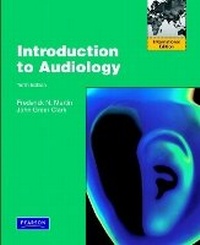
Introduction to Audiology (with CD-ROM)
International Edition
10th Edition
Published on 5. August 2009
Book
Mixed media product
528 pages
978-0-205-70813-0 (ISBN)
Description
The leading text for the introduction to hearing and hearing disorders course required of all Speech Language Pathology and Audiology majors.
Introduction to Audiology, Tenth Edition, provides in-depth coverage of the physics of sound, anatomy, and physiology of the auditory system; causes and treatment of hearing and balance disorders; and relevant diagnostic and therapeutic techniques. It emphasizes the proper evaluation of hearing disorders and the treatment avenues available for these disorders. The accompanying CD-ROM features a variety of video vignettes depicting clinical topics, a series of clinical case studies to examine students' abilities to synthesize diagnostic findings and develop cogent management recommendations, multiple format interactive exercises for students to evaluate their comprehension of information, printable clinical forms, and much more.
HIGHLIGHTS OF THE TENTH EDITION:
NEW "Evolving Case Studies" feature follows select disorders through diagnosis and recommended treatment paralleling students' mastery of key concepts. This new addition to the pedagogy will enhance students' understanding of comprehensive patient management from case history through discharge.
NEW updated discussions in the important areas of amplification and infant hearing.
NEW expansion and clarification of clinical masking procedures.
NEW discussion of recent developments in the management of auditory processing disorders.
NEW section on the role of the audiologist in vestibular management, as well as more on audiologic counseling.
Introduction to Audiology, Tenth Edition, provides in-depth coverage of the physics of sound, anatomy, and physiology of the auditory system; causes and treatment of hearing and balance disorders; and relevant diagnostic and therapeutic techniques. It emphasizes the proper evaluation of hearing disorders and the treatment avenues available for these disorders. The accompanying CD-ROM features a variety of video vignettes depicting clinical topics, a series of clinical case studies to examine students' abilities to synthesize diagnostic findings and develop cogent management recommendations, multiple format interactive exercises for students to evaluate their comprehension of information, printable clinical forms, and much more.
HIGHLIGHTS OF THE TENTH EDITION:
NEW "Evolving Case Studies" feature follows select disorders through diagnosis and recommended treatment paralleling students' mastery of key concepts. This new addition to the pedagogy will enhance students' understanding of comprehensive patient management from case history through discharge.
NEW updated discussions in the important areas of amplification and infant hearing.
NEW expansion and clarification of clinical masking procedures.
NEW discussion of recent developments in the management of auditory processing disorders.
NEW section on the role of the audiologist in vestibular management, as well as more on audiologic counseling.
Reviews / Votes
"This is an extraordinarily excellent text, well deserved to be the most widely used text in courses in diagnostic Audiology in the U.S."- Maurice H. Miller, New York University
"I see each piece of this text as quite necessary to achieving its goal of acquainting the reader with the profession and practice of audiology, from the introductory chapters, through the diagnostic procedures and anatomy and physiology, to the issues in audiologic management of patients."
- Scott K. Griffiths, Ph.D, University of Florida
"The text is user-friendly and well organized."
- Karen McNealy, Marshall University
More details
Edition
10th edition
Language
English
Place of publication
United States
Publishing group
Pearson Education (US)
Target group
College/higher education
Dimensions
Height: 198 mm
Width: 234 mm
Thickness: 26 mm
Weight
770 gr
ISBN-13
978-0-205-70813-0 (9780205708130)
Copyright in bibliographic data and cover images is held by Nielsen Book Services Limited or by the publishers or by their respective licensors: all rights reserved.
Schweitzer Classification
Other editions
New editions
Book
03/2011
11th Edition
Pearson
€125.02
Article exhausted; check for reprint
Content
Preface
How to Use This Book
How to Use the CD-ROM
About the Authors
Part ONE - Elements of Audiology
Chapter 1. The Profession of Audiology
Learning Objectives
The Evolution of Audiology
Licensing and Certification
Prevalence and Impact of Hearing Loss
A Blending of Art and Science
Audiology Specialties
Employment Settings
Professional Societies
Summary
Study Questions
References
Suggested Readings
Chapter 2. The Human Ear and Simple Tests of Hearing
Learning Objectives
Anatomy and Physiology of the Ear
Pathways of Sound
Types of Hearing Loss
Hearing Tests
Tuning Fork Tests
Summary
Evolving Case Studies
Study Questions
Suggested Readings
Chapter 3. Sound and Its Measurement
Learning Objectives
Sound
Waves
Vibrations
Frequency
Resonance
Sound Velocity
Wavelength
Phase
Complex Sounds
Intensity
The Decibel
Environmental Sounds
Psychoacoustics
Impedance
Sound Measurement
Summary
Study Questions
References
Suggested Readings
Part TWO - Hearing Assessment
Chapter 4. Pure-Tone Audiometry
Learning Objectives
The Pure-Tone Audiometer
Test Environment
The Patient's Role in Manual Pure-Tone Audiometry
The Clinician's Role in Manual Pure-Tone Audiometry
Air-Conduction Audiometry
Bone-Conduction Audiometry
Audiogram Interpretation
Masking
The Audiometric Weber Test
Automatic Audiometry
Computerized Audiometry
Evolving Case Studies
Summary
Study Questions
References
Suggested Readings
Chapter 5. Speech Audiometry
Learning Objectives
The Diagnostic Audiometer
Test Environment
The Patient's Role in Speech Audiometry
The Clinician's Role in Speech Audiometry
Speech-Threshold Testing
Masking for SRT
Bone-Conduction SRT
Most Comfortable Loudness Level
Uncomfortable Loudness Level
Range of Comfortable Loudness
Speech-Recognition Testing
Computerized Speech Audiometry
Summary
Evolving Case Studies
Study Questions
References
Suggested Readings
Chapter 6. Beyond Basic Audiometrics
Learning Objectives
Acoustic Immittance
Acoustic Reflexes
Otoacoustic Emissions (OAE)
Auditory Evoked Potentials
An Historical Note
Summary
Evolving Case Studies
Study Questions
References
Suggested Readings
Chapter 7. Hearing Tests for Children
Learning Objectives
Auditory Responses
Identifying Hearing Loss in Infants under 3 Months of Age
Objective Testing in Routine Pediatric Hearing Evaluation
Behavioral Testing of Children from Birth to Approximately 2 years of Age
Behavioral Testing of Children Approximately 2 to 5 Years of Age
Language Disorders
Auditory Processing Disorders
Psychological Disorders
Developmental Disabilities
Identifying Hearing Loss in the Schools
Nonorganic Hearing Loss in Children
Summary
Evolving Case Studies
Study Questions
References
Suggested Readings
Part THREE - Hearing Disorders
Chapter 8. The Outer Ear
Learning Objectives
Anatomy and Physiology of the Outer Ear
Development of the Outer Ear
Hearing Loss and the Outer Ear
Disorders of the Outer Ear and Their Treatments
Summary
Study Questions
References
Suggested Readings
Chapter 9. The Middle Ear
Learning Objectives
Anatomy and Physiology of the Middle Ear
Development of the Middle Ear
Hearing Loss and the Middle Ear
Disorders of the Middle Ear and Their Treatments
Other Causes of Middle Ear Hearing Loss
Summary
Evolving Case Studies
Study Questions
References
Suggested Readings
Chapter 10. The Inner Ear
Learning Objectives
Anatomy and Physiology of the Inner Ear
Development of the Inner Ear
Hearing Loss and Disorders of the Inner Ear
Causes of Inner-Ear Disorders
Summary
Evolving Case Studies
Study Questions
References
Suggested Readings
Chapter 11. The Auditory Nerve and Central Auditory Pathways
Learning Objectives
From Cochlea to Auditory Cortex and Back Again
Development of the Auditory Nerve and Central Auditory Nervous System
Summary of the Auditory Pathways
Hearing Loss and the Auditory Nerve and Central Auditory Pathways
Disorders of the Auditory Nerve
Disorders of the Cochlear Nuclei
Disorders of the Higher Auditory Pathways
Tests of the Higher Auditory Pathways
Tests for Auditory Processing Disorders
Summary
Study Questions
References
Suggested Readings
Chapter 12. Nonorganic Hearing Loss
Learning Objectives
Terminology
Patients with Nonorganic Hearing Loss
Indications of Nonorganic Hearing Loss
Performance on Routine Hearing Tests
Tests for Nonorganic Hearing Loss
Management of Patients with Nonorganic Hearing Loss
Summary
Evolving Case Studies
Study Questions
References
Suggested Readings
Part FOUR - Management of Hearing Loss
Chapter 13. Amplification/Sensory Systems
Learning Objectives
Hearing Aid Development
Hearing Aid Circuit Overview
Electroacoustic Characteristics of Hearing Aids
Binaural Amplification
Types of Hearing Aids
Selecting Hearing Aids for Adults
Selecting Hearing Aids for Children
Hearing Aid Acceptance and Orientation
Dispensing Hearing Aids
Hearing Assistance Technologies
Summary
Evolving Case Studies
Study Questions
References
Suggested Readings
Chapter 14. Audiologic Treatment
Learning Objectives
Patient Histories
Referral to Other Specialists
Audiologic Counseling
Management of Adult Hearing Impairment
Management of Childhood Hearing Impairment
The Deaf Community
Management of Auditory Processing Disorders
Management of Tinnitus
Hyperacusis
Vestibular Rehabilitation
Multicultural Considerations
Evidence-Based Practice
Outcome Measures
Summary
Evolving Case Studies
Study Questions
References
Suggested Readings
Glossary
Author Index
Subject Index
How to Use This Book
How to Use the CD-ROM
About the Authors
Part ONE - Elements of Audiology
Chapter 1. The Profession of Audiology
Learning Objectives
The Evolution of Audiology
Licensing and Certification
Prevalence and Impact of Hearing Loss
A Blending of Art and Science
Audiology Specialties
Employment Settings
Professional Societies
Summary
Study Questions
References
Suggested Readings
Chapter 2. The Human Ear and Simple Tests of Hearing
Learning Objectives
Anatomy and Physiology of the Ear
Pathways of Sound
Types of Hearing Loss
Hearing Tests
Tuning Fork Tests
Summary
Evolving Case Studies
Study Questions
Suggested Readings
Chapter 3. Sound and Its Measurement
Learning Objectives
Sound
Waves
Vibrations
Frequency
Resonance
Sound Velocity
Wavelength
Phase
Complex Sounds
Intensity
The Decibel
Environmental Sounds
Psychoacoustics
Impedance
Sound Measurement
Summary
Study Questions
References
Suggested Readings
Part TWO - Hearing Assessment
Chapter 4. Pure-Tone Audiometry
Learning Objectives
The Pure-Tone Audiometer
Test Environment
The Patient's Role in Manual Pure-Tone Audiometry
The Clinician's Role in Manual Pure-Tone Audiometry
Air-Conduction Audiometry
Bone-Conduction Audiometry
Audiogram Interpretation
Masking
The Audiometric Weber Test
Automatic Audiometry
Computerized Audiometry
Evolving Case Studies
Summary
Study Questions
References
Suggested Readings
Chapter 5. Speech Audiometry
Learning Objectives
The Diagnostic Audiometer
Test Environment
The Patient's Role in Speech Audiometry
The Clinician's Role in Speech Audiometry
Speech-Threshold Testing
Masking for SRT
Bone-Conduction SRT
Most Comfortable Loudness Level
Uncomfortable Loudness Level
Range of Comfortable Loudness
Speech-Recognition Testing
Computerized Speech Audiometry
Summary
Evolving Case Studies
Study Questions
References
Suggested Readings
Chapter 6. Beyond Basic Audiometrics
Learning Objectives
Acoustic Immittance
Acoustic Reflexes
Otoacoustic Emissions (OAE)
Auditory Evoked Potentials
An Historical Note
Summary
Evolving Case Studies
Study Questions
References
Suggested Readings
Chapter 7. Hearing Tests for Children
Learning Objectives
Auditory Responses
Identifying Hearing Loss in Infants under 3 Months of Age
Objective Testing in Routine Pediatric Hearing Evaluation
Behavioral Testing of Children from Birth to Approximately 2 years of Age
Behavioral Testing of Children Approximately 2 to 5 Years of Age
Language Disorders
Auditory Processing Disorders
Psychological Disorders
Developmental Disabilities
Identifying Hearing Loss in the Schools
Nonorganic Hearing Loss in Children
Summary
Evolving Case Studies
Study Questions
References
Suggested Readings
Part THREE - Hearing Disorders
Chapter 8. The Outer Ear
Learning Objectives
Anatomy and Physiology of the Outer Ear
Development of the Outer Ear
Hearing Loss and the Outer Ear
Disorders of the Outer Ear and Their Treatments
Summary
Study Questions
References
Suggested Readings
Chapter 9. The Middle Ear
Learning Objectives
Anatomy and Physiology of the Middle Ear
Development of the Middle Ear
Hearing Loss and the Middle Ear
Disorders of the Middle Ear and Their Treatments
Other Causes of Middle Ear Hearing Loss
Summary
Evolving Case Studies
Study Questions
References
Suggested Readings
Chapter 10. The Inner Ear
Learning Objectives
Anatomy and Physiology of the Inner Ear
Development of the Inner Ear
Hearing Loss and Disorders of the Inner Ear
Causes of Inner-Ear Disorders
Summary
Evolving Case Studies
Study Questions
References
Suggested Readings
Chapter 11. The Auditory Nerve and Central Auditory Pathways
Learning Objectives
From Cochlea to Auditory Cortex and Back Again
Development of the Auditory Nerve and Central Auditory Nervous System
Summary of the Auditory Pathways
Hearing Loss and the Auditory Nerve and Central Auditory Pathways
Disorders of the Auditory Nerve
Disorders of the Cochlear Nuclei
Disorders of the Higher Auditory Pathways
Tests of the Higher Auditory Pathways
Tests for Auditory Processing Disorders
Summary
Study Questions
References
Suggested Readings
Chapter 12. Nonorganic Hearing Loss
Learning Objectives
Terminology
Patients with Nonorganic Hearing Loss
Indications of Nonorganic Hearing Loss
Performance on Routine Hearing Tests
Tests for Nonorganic Hearing Loss
Management of Patients with Nonorganic Hearing Loss
Summary
Evolving Case Studies
Study Questions
References
Suggested Readings
Part FOUR - Management of Hearing Loss
Chapter 13. Amplification/Sensory Systems
Learning Objectives
Hearing Aid Development
Hearing Aid Circuit Overview
Electroacoustic Characteristics of Hearing Aids
Binaural Amplification
Types of Hearing Aids
Selecting Hearing Aids for Adults
Selecting Hearing Aids for Children
Hearing Aid Acceptance and Orientation
Dispensing Hearing Aids
Hearing Assistance Technologies
Summary
Evolving Case Studies
Study Questions
References
Suggested Readings
Chapter 14. Audiologic Treatment
Learning Objectives
Patient Histories
Referral to Other Specialists
Audiologic Counseling
Management of Adult Hearing Impairment
Management of Childhood Hearing Impairment
The Deaf Community
Management of Auditory Processing Disorders
Management of Tinnitus
Hyperacusis
Vestibular Rehabilitation
Multicultural Considerations
Evidence-Based Practice
Outcome Measures
Summary
Evolving Case Studies
Study Questions
References
Suggested Readings
Glossary
Author Index
Subject Index