

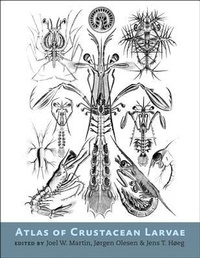
Atlas of Crustacean Larvae
Will be published approx. on 26. August 2014
Book
Hardback
384 pages
978-1-4214-1197-2 (ISBN)
Description
Crustaceans - familiar to the average person as shrimp, lobsters, crabs, krill, barnacles, and their many relatives-are easily one of the most important and diverse groups of marine life. Poorly understood, they are among the most numerous invertebrates on earth. Most crustaceans start life as eggs and move through a variety of morphological phases prior to maturity. In Atlas of Crustacean Larvae, more than 45 of the world's leading crustacean researchers explain and illustrate the beauty and complexity of the many larval life stages. Revealing shapes that are reminiscent of aliens from other worlds - often with bizarre modifications for a planktonic life or for parasitization, including (in some cases) bulging eyes, enormous spines, and aids for flotation and swimming - the abundant illustrations and photographs show the detail of each morphological stage and allow for quick comparisons. The diversity is immediately apparent in the illustrations: spikes that deter predators occur on some larvae, while others bear unique specializations not seen elsewhere, and still others appear as miniature versions of the adults.
Small differences in anatomy are shown to be suited to the behaviors and survival mechanisms of each species. Destined to become a key reference for specialists and students and a treasured book for anyone who wishes to understand "the invertebrate backbone of marine ecosystems," Atlas of Crustacean Larvae belongs on the shelf of every serious marine biologist.
Small differences in anatomy are shown to be suited to the behaviors and survival mechanisms of each species. Destined to become a key reference for specialists and students and a treasured book for anyone who wishes to understand "the invertebrate backbone of marine ecosystems," Atlas of Crustacean Larvae belongs on the shelf of every serious marine biologist.
Reviews / Votes
This welcome addition to the crustacean literature compiles, for the first time, descriptions and figures of larvae from all the different groups of crustaceans. Many are exquisite, never-before published scanning electron micrographs or light microscope photographs... One especially helpful feature is a table clarifying the many different (and often confusing) terms that have been used for the larvae of crabs and shrimps. This book is an essential reference, valuable for any natural history library. Choice The volume not only has the intended first-rate scientific rigor, but will also serve as a fetching and stimulating embellishment for the biologists' office desk or even home coffee table... This volume will be the definitive work on crustacean larvae for some time to come, and it will surely find its place in the libraries of academic institutions, museums, and many biologists. For the price, Atlas of Crustacean Larvae is truly a bargain. -- Raymond T. Bauer Quarterly Review of BiologyMore details
Language
English
Place of publication
Baltimore, MD
United States
Target group
Professional and scholarly
Product notice
sewn/stitched
Cloth over boards
Illustrations
134 farbige Bildtafeln
134 Plates, color
Dimensions
Height: 287 mm
Width: 222 mm
Thickness: 30 mm
Weight
1630 gr
ISBN-13
978-1-4214-1197-2 (9781421411972)
DOI
10.1353/book.31448
Copyright in bibliographic data and cover images is held by Nielsen Book Services Limited or by the publishers or by their respective licensors: all rights reserved.
Schweitzer Classification
Other editions
Additional editions
Joel W. Martin | Jorgen Olesen | Jens T. Hoeg
Atlas of Crustacean Larvae
E-Book
08/2014
Johns Hopkins University Press
€94.99
Available for download
Persons
Joel W. Martin is chief of the Division of Invertebrate Studies and curator of crustacea at the Natural History Museum of Los Angeles County. Jorgen Olesen is an associate professor and curator of crustacea at the Zoological Museum of the University of Copenhagen. Jens T. Hoeg is an associate professor of biology at the University of Copenhagen.
Content
Acknowledgments
1 Introduction
2 The Crustacean Nauplius
3 Fossil Larvae (Head Larvae, Nauplii, and Others) from the Cambrian in Orsten Preservation
4 Introduction to the Branchiopoda
5 Anostraca
6 Uniquely Preserved Fossil Larvae, Some with Branchiopod Affinities, from the Devonian: The Rhynie
and Windyfield Cherts
7 Notostraca
8 Laevicaudata
9 Spinicaudata
10 Cyclestherida
11 Cladocera: Anomopoda
12 Cladocera: Ctenopoda
13 Cladocera: Haplopoda
14 Cladocera: Onychopoda
15 Remipedia
16 Cephalocarida
17 Introduction to the Thecostraca
18 Facetotecta
19 Ascothoracida
20 Acrothoracica
21 Rhizocephala
22 Thoracica
23 Tantulocarida
24 Branchiura
25 Pentastomida
26 Mystacocarida
27 Copepoda
28 Introduction to the Ostracoda
29 Ostracoda: Podocopa
30 Ostracoda: Myodocopa
31 Introduction to the Malacostraca
32 Fossil Malacostracan Larvae
33 Leptostraca
34 Stomatopoda
35 Syncarida
36 Introduction to the Peracarida
37 Thermosbaenacea, Spelaeogriphacea, and "Mictacea"
38 Lophogastrida and Mysida
39 Amphipoda
40 Isopoda and Tanaidacea
41 Cumacea
42 Introduction to the Eucarida
43 Euphausiacea
44 Amphionidacea
45 Introduction to the Decapoda
46 Dendrobranchiata
47 Stenopodidea
48 Caridea
49 Astacidea
50 Gebiidea and Axiidea (= Thalassinidea)
51 Achelata
52 Polychelida
53 Anomura
54 Brachyura
55 Summary and Synopsis
Glossary
References
Index
1 Introduction
2 The Crustacean Nauplius
3 Fossil Larvae (Head Larvae, Nauplii, and Others) from the Cambrian in Orsten Preservation
4 Introduction to the Branchiopoda
5 Anostraca
6 Uniquely Preserved Fossil Larvae, Some with Branchiopod Affinities, from the Devonian: The Rhynie
and Windyfield Cherts
7 Notostraca
8 Laevicaudata
9 Spinicaudata
10 Cyclestherida
11 Cladocera: Anomopoda
12 Cladocera: Ctenopoda
13 Cladocera: Haplopoda
14 Cladocera: Onychopoda
15 Remipedia
16 Cephalocarida
17 Introduction to the Thecostraca
18 Facetotecta
19 Ascothoracida
20 Acrothoracica
21 Rhizocephala
22 Thoracica
23 Tantulocarida
24 Branchiura
25 Pentastomida
26 Mystacocarida
27 Copepoda
28 Introduction to the Ostracoda
29 Ostracoda: Podocopa
30 Ostracoda: Myodocopa
31 Introduction to the Malacostraca
32 Fossil Malacostracan Larvae
33 Leptostraca
34 Stomatopoda
35 Syncarida
36 Introduction to the Peracarida
37 Thermosbaenacea, Spelaeogriphacea, and "Mictacea"
38 Lophogastrida and Mysida
39 Amphipoda
40 Isopoda and Tanaidacea
41 Cumacea
42 Introduction to the Eucarida
43 Euphausiacea
44 Amphionidacea
45 Introduction to the Decapoda
46 Dendrobranchiata
47 Stenopodidea
48 Caridea
49 Astacidea
50 Gebiidea and Axiidea (= Thalassinidea)
51 Achelata
52 Polychelida
53 Anomura
54 Brachyura
55 Summary and Synopsis
Glossary
References
Index