

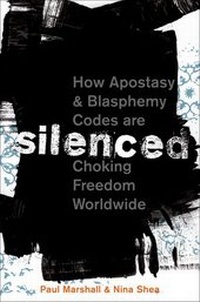
Silenced
How Apostasy and Blasphemy Codes are Choking Freedom Worldwide
Published on 17. November 2011
Book
Hardback
544 pages
978-0-19-981226-4 (ISBN)
Description
The fatwa against Salman Rushdie and the 2005 Danish cartoon fracas awakened many people to the potency of blasphemy accusations in the Muslim world. Accusations and charges such as "blasphemy," "apostasy," "insulting Islam," or "hurting Muslims' religious feelings" pose a far greater danger than censorship of irreverent caricatures of Mohammad: they are increasingly used as key tools by authoritarian governments and extremist forces in the Muslim world to acquire and consolidate power. These charges, which draw on disputed interpretations of Islamic law and carry a traditional punishment of death, have proved effective in crushing or intimidating not only converts and heterodox groups, but also political and religious reformers. In fact, one reason for the recent growth of more repressive forms of Islam is their use of accusations of blasphemy, apostasy, and related charges to intimidate and silence their religious opponents and make any criticism of their own actions and ideas religiously suspect. The effect of such laws thus goes far beyond what might narrowly be called religious matters.
This volume provides the first world survey of the range and effects of apostasy and blasphemy accusations in the contemporary Muslim world, in international organizations, and in the West. The authors argue that we need to understand the context, history, impact, and mechanics of the blasphemy phenomenon in modern Muslim societies and guidance on how to effectively respond. The book covers the persecution of Muslims who convert to another religion or decide that they have become agnostic or atheists, as well as 'heretics:' those who are accused of claiming a prophet after Mohammed, such as Baha'is and Ahmadis. It also documents the political effects in Muslim societies of blasphemy and apostasy laws, as well as non-governmental fatwas and vigilante violence. It describes the cases of hundreds of victims, including political dissidents, religious reformers, journalists, writers, artists, movie makers, and religious minorities throughout the Muslim world.
Finally, it addresses the legal evolution toward new blasphemy laws in the West; the increasing use of laws on "toleration" in the West, which may become surrogate blasphemy laws; increasing pressure by Muslim governments to make Western countries and international organizations enforce laws to restrict speech; and the increasing use of violence to stifle expression in the West even in the absence of law. Its foreword is by Indonesia's late President Abdurrahman Wahid.
This volume provides the first world survey of the range and effects of apostasy and blasphemy accusations in the contemporary Muslim world, in international organizations, and in the West. The authors argue that we need to understand the context, history, impact, and mechanics of the blasphemy phenomenon in modern Muslim societies and guidance on how to effectively respond. The book covers the persecution of Muslims who convert to another religion or decide that they have become agnostic or atheists, as well as 'heretics:' those who are accused of claiming a prophet after Mohammed, such as Baha'is and Ahmadis. It also documents the political effects in Muslim societies of blasphemy and apostasy laws, as well as non-governmental fatwas and vigilante violence. It describes the cases of hundreds of victims, including political dissidents, religious reformers, journalists, writers, artists, movie makers, and religious minorities throughout the Muslim world.
Finally, it addresses the legal evolution toward new blasphemy laws in the West; the increasing use of laws on "toleration" in the West, which may become surrogate blasphemy laws; increasing pressure by Muslim governments to make Western countries and international organizations enforce laws to restrict speech; and the increasing use of violence to stifle expression in the West even in the absence of law. Its foreword is by Indonesia's late President Abdurrahman Wahid.
Reviews / Votes
Silenced is an uncomfortable but essential contribution to a most important debate that many would prefer to sit out. Its sober, balanced, and detailed account of the threat from Islamic blasphemy laws - whether in Pakistan, at the U.N., or in Europe - lucidly demonstrates that we do so at our own peril. National ReviewMore details
Language
English
Place of publication
New York
United States
Target group
College/higher education
Dimensions
Height: 234 mm
Width: 163 mm
Thickness: 43 mm
Weight
802 gr
ISBN-13
978-0-19-981226-4 (9780199812264)
Copyright in bibliographic data and cover images is held by Nielsen Book Services Limited or by the publishers or by their respective licensors: all rights reserved.
Schweitzer Classification
Other editions
Additional editions
E-Book
10/2011
1st Edition
Oxford University Press, USA
€52.09
Available for download
E-Book
10/2011
1st Edition
Oxford University Press, USA
€56.79
Available for download
Book
10/2011
Oxford University Press Inc
€69.50
Shipment within 15-20 days
Persons
Paul Marshall is Senior Fellow at the Center for Religious Freedom, Hudson Institute.
Nina Shea is Director of the Center for Religious Freedom, Hudson Institute.
Nina Shea is Director of the Center for Religious Freedom, Hudson Institute.
Content
PART I; CHAPTER 1: INTRODUCTION; PART II: MUSLIM MAJORITY COUNTRIES; INTRODUCTION TO MUSLIM MAJORITY COUNTRIES; CHAPTER 2: SAUDI ARABIA; CHAPTER 3: IRAN; CHAPTER 4: EGYPT; CHAPTER 5: PAKISTAN; CHAPTER 6: AFGHANISTAN; CHAPTER 7: THE GREATER MIDDLE EAST; CHAPTER 8: AFRICA; CHAPTER 9: SOUTH AND SOUTH EAST ASIA; PART III: THE GLOBALIZATION OF BLASPHEMY; INTRODUCTION TO WESTERN COUNTRIES AND INTERNATIONAL BLASPHEMY; CHAPTER 10: ISLAM AND BLASPHEMY ON THE INTERNATIONAL STAGE 1989-2009; CHAPTER 11: LEGITIMIZING REPRESSION: BLASPHEMY RESTRICTIONS IN THE UNITED NATIONS; CHAPTER 12: RELIGIOUSLY INCORRECT: ISLAM, BLASPHEMY, AND HATE SPEECH IN WESTERN DOMESTIC LAW; CHAPTER 13: ENFORCEMENT BY VIOLENCE AND INTIMIDATION; PART IV: MUSLIM CRITICISM OF APOSTASY AND BLASPHEMY LAWS; INTRODUCTION TO MUSLIM VOICES; CHAPTER 14: RENEWING QUR'ANIC STUDIES IN THE CONTEMPORARY WORLD, BY NASR HAMID ABU-ZAYD; CHAPTER 15: RETHINKING CLASSICAL MUSLIM LAW OF APOSTASY AND THE DEATH PENALTY, BY ABDULLAH SAEED; PART V: CONCLUSIONS; CHAPTER 16