

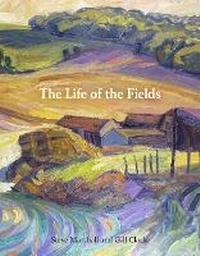
The Life of the Fields
Published on 1. September 2025
Book
Hardback
128 pages
978-1-915670-26-7 (ISBN)
Description
This lavishly illustrated book examines artists' portrayals of farming and farmed landscapes from 1900 to the present and is published to accompany an exhibition at St Barbe Museum and Art Gallery. Farming accounts for almost 70% of land use in England, so to portray the countryside was to portray agriculture landscapes that were bound up with notions of Englishness despite an increasingly urbanised population. Artists capturing contemporary life in the countryside during this period also chronicled massive change in farming techniques and the appearance of rural England.
The inter-war period was the heyday for artists' portrayals of farming. This coincided with a severe agricultural depression; decaying buildings and age-old farming methods made for picturesque subject matter that appealed to artists like Stanley Spencer, Laura Knight, Clare Leighton, Harry Epworth Allen and Eric Ravilious.
From the Second World War farmers were pressured to increase productivity by embracing mechanisation and industrial scale agriculture. Artists like Evelyn Dunbar, Edward Burra, Frank Newbould and Frances Hodgkins captured life on the land in wartime when farmers were celebrated for feeding the nation during a national emergency. When peace returned their reputation as custodians of the land was eroded as biodiversity was sacrificed to intensification. The early days of mechanisation being captured by C F Tunnicliffe, Claude Rogers and Norman Neasom.
Artists like Tunnicliffe, Thomas Hennell, James Bateman and Sheila Fell brought an intimate knowledge of farming to their work, while others like Stanley Anderson, Clare Leighton and George Clausen developed a fascination for the subject, capturing the details of farming practice and its place within the landscape, recording a disappearing way of life.
In the 21st century artists are finding renewed inspiration in rural landscapes, some acutely aware of intensive farming's impact on the nation's wildlife. The exhibition features recent work by Chris Drury, Julian Opie, Kurt Jackson, Carry Akroyd, David Tress, James Lynch, Kate Lynch and Nick Schlee.
The inter-war period was the heyday for artists' portrayals of farming. This coincided with a severe agricultural depression; decaying buildings and age-old farming methods made for picturesque subject matter that appealed to artists like Stanley Spencer, Laura Knight, Clare Leighton, Harry Epworth Allen and Eric Ravilious.
From the Second World War farmers were pressured to increase productivity by embracing mechanisation and industrial scale agriculture. Artists like Evelyn Dunbar, Edward Burra, Frank Newbould and Frances Hodgkins captured life on the land in wartime when farmers were celebrated for feeding the nation during a national emergency. When peace returned their reputation as custodians of the land was eroded as biodiversity was sacrificed to intensification. The early days of mechanisation being captured by C F Tunnicliffe, Claude Rogers and Norman Neasom.
Artists like Tunnicliffe, Thomas Hennell, James Bateman and Sheila Fell brought an intimate knowledge of farming to their work, while others like Stanley Anderson, Clare Leighton and George Clausen developed a fascination for the subject, capturing the details of farming practice and its place within the landscape, recording a disappearing way of life.
In the 21st century artists are finding renewed inspiration in rural landscapes, some acutely aware of intensive farming's impact on the nation's wildlife. The exhibition features recent work by Chris Drury, Julian Opie, Kurt Jackson, Carry Akroyd, David Tress, James Lynch, Kate Lynch and Nick Schlee.
More details
Language
English
Place of publication
Bristol
United Kingdom
Dimensions
Height: 270 mm
Width: 210 mm
ISBN-13
978-1-915670-26-7 (9781915670267)
Copyright in bibliographic data and cover images is held by Nielsen Book Services Limited or by the publishers or by their respective licensors: all rights reserved.
Schweitzer Classification
Persons
Steve Marshall is former Director of St Barbe Museum and Art Gallery. He curated 'The Artists Rifles' (2014) and 'Capture the Castle' (2016) for Southampton Art Gallery and 'Infinite Beauty'
(2022) for Hampshire Cultural Trust. With Gill Clarke he has coauthored Shorelines: Artists on the South Coast (2015), The Seasons: Art of the Unfolding Year (2020) and, with Robert Macfarlane, Unsettling Landscapes: The Art of the Eerie (2021). Gill Clarke is a writer and former academic. She has curated art exhibitions at St Barbe Museum and Art Gallery, Burgh House & Hampstead Museum and Pallant House Gallery. Her books include Evelyn Dunbar: War and Country; Shorelines: Artists on the South Coast; Randolph Schwabe: A Life in Art; Conflicting Views: Pacifist Artists; she contributed to Barnett Freedman: Designs for Modern Britain.
(2022) for Hampshire Cultural Trust. With Gill Clarke he has coauthored Shorelines: Artists on the South Coast (2015), The Seasons: Art of the Unfolding Year (2020) and, with Robert Macfarlane, Unsettling Landscapes: The Art of the Eerie (2021). Gill Clarke is a writer and former academic. She has curated art exhibitions at St Barbe Museum and Art Gallery, Burgh House & Hampstead Museum and Pallant House Gallery. Her books include Evelyn Dunbar: War and Country; Shorelines: Artists on the South Coast; Randolph Schwabe: A Life in Art; Conflicting Views: Pacifist Artists; she contributed to Barnett Freedman: Designs for Modern Britain.