

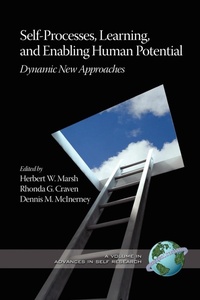
Self-Processes, Learning, and Enabling Human Potential
Dynamic New Approaches
Will be published approx. on 7. March 2008
Book
Paperback/Softback
452 pages
978-1-59311-903-4 (ISBN)
Description
This volume deals with a wealth of issues related to self, from the overarching theoretical perspective of Bandura and his careful and thorough analysis of the agentic self, highlighting the complexities of our multiple selves acting in an integrated, holistic, and dynamic fashion, to the engaging and novel treatment of self concept as a rope by John Hattie. From many of the chapters we see the utility value of the social cognitive theory and self-determination theory frameworks for interpreting self-processes and how these processes might drive engagement in learning. In particular we see how autonomy support, self-regulation, self-efficacy, and self-regulation are part and parcel of self-processes intimately involved as individuals work out their futures and possible selves. Entwined with these processes are the development of identity, resilience, and a sense of well-being. The BFLPE and bullying chapters provide two examples of self-processes in operation in the school context.
What can we take from this? Self-processes are complex, differentiated,and yet coordinated. By focusing on the agentic self we consider the whole person-picture as a rich, integrated, and dynamic tapestry and by focusing on differentiated self elements such as self-regulation, self-determination, self-concept, and self-efficacy, we are able to examine, in more detail, some of the individual threads of the tapestry and the roles they play in the integrated self. Overall, we learn that self-processes are dynamic and are fundamental to enabling human potential.
What can we take from this? Self-processes are complex, differentiated,and yet coordinated. By focusing on the agentic self we consider the whole person-picture as a rich, integrated, and dynamic tapestry and by focusing on differentiated self elements such as self-regulation, self-determination, self-concept, and self-efficacy, we are able to examine, in more detail, some of the individual threads of the tapestry and the roles they play in the integrated self. Overall, we learn that self-processes are dynamic and are fundamental to enabling human potential.
More details
Series
Language
English
Place of publication
Charlotte
United States
Publishing group
Emerald Publishing Inc
Target group
Professional and scholarly
Illustrations
Illustrations
Dimensions
Height: 234 mm
Width: 156 mm
Thickness: 24 mm
Weight
682 gr
ISBN-13
978-1-59311-903-4 (9781593119034)
Copyright in bibliographic data and cover images is held by Nielsen Book Services Limited or by the publishers or by their respective licensors: all rights reserved.
Schweitzer Classification
Other editions
Additional editions
Herbert Marsh | Rhonda G. Craven
Self-Processes, Learning and Enabling Human Potential
Dynamic New Approaches
E-Book
04/2008
1st Edition
Information Age Publishing
from
€62.33
Available for download
Content
About the Monograph Series.
Part I. Overview.
Chapter 1. Self-Processes, Learning, and Enabling Human Potential; Dennis M. McInerney, Herbert W. Marsh, and Rhonda Craven.
Part II. Dynamic Views of the Self.
Chapter 2. Toward an Agentic Theory of the Self; Albert Bandura.
Chapter 3. Processes of Integrating, Developing, and Processing Self Information; John Hattie.
Chapter 4. Self-Concept Is as Multidisciplinary as It Is Multidimensional: A Review of Theory, Measurement, and Practice in Self-Concept Research; Herb W. Marsh and Alison J. O'Mara.
Part III. Self-Determination, Self-Regulation and Self-Efficacy.
Chapter 5. Day-to-Day Variation in Competence Beliefs: How Autonomy Support Predicts Young Adolescents' Felt Competence; Yi-Miau Tsai, Mareike Kunter, Oliver Luedtke, and Ulrich Trautwein.
Chapter 6. Meet the Parents: Mothers' and Fathers' Contextual and Psychological Resources Associated to Adolescents' Perceptions of Parental Autonomy Support; Frederic Guay and Julien Chanal.
Chapter 7. In Search of Self-Regulated Learning: A Personal Quest; Barry J. Zimmerman.
Chapter 8. Evaluating Competence and Maintaining Self-Worth Between Early and Middle Childhood: Blissful Ignorance or the Construction of Knowledge and Strategies in Context? Ruth Butler.
Chapter 9. Teacher Self-Efficacy: Conceptual Analysis and Relations With Teacher Burnout and Perceived School Context; Einar M. Skaalvik and Sidsel Skaalvik.
Part IV. Identity Processes, Possible Selves, Well-Being, and the Resilient Self.
Chapter 10. Egosystem and Ecosystem Goals and Adjustment to College; Jennifer Crocker, Juliana G. Breines, Amy Canevello, Mary Y. Liu, and Yu Niiya.
Chapter 11. Possible Selves: Identity-Based Motivation and School Success; Daphna Oyserman.
Chapter 12. The Resilient Self: Lessons Educators Can Take Away From Risk and Resilience Research; Bridget V. Ammon and Martin L. Maehr.
Chapter 13. Self and Socialization: How Do Young People Navigate Through Adolescence? Jari-Erik Nurmi.
Part V. Applied Educational Research.
Chapter 14. Class-Average Achievement, Marks, and Academic Self-Concept in German Elementary Schools; Olaf Koeller, Horst Zeinz, and Ulrich Trautwein.
Chapter 15. East Meets West: An Examination of the Big-Fish-Little-Pond Effect in Western and Non-Western Countries; Marjorie Seaton, Rhonda G. Craven, and Herbert W. Marsh.
Chapter 16. The Beyond Bullying Secondary Program: An Innovative Program Empowering Teachers to Counteract Bullying in Schools; Roberto H. Parada, Rhonda G. Craven, and Herbert W. Marsh.
Contributors.
Part I. Overview.
Chapter 1. Self-Processes, Learning, and Enabling Human Potential; Dennis M. McInerney, Herbert W. Marsh, and Rhonda Craven.
Part II. Dynamic Views of the Self.
Chapter 2. Toward an Agentic Theory of the Self; Albert Bandura.
Chapter 3. Processes of Integrating, Developing, and Processing Self Information; John Hattie.
Chapter 4. Self-Concept Is as Multidisciplinary as It Is Multidimensional: A Review of Theory, Measurement, and Practice in Self-Concept Research; Herb W. Marsh and Alison J. O'Mara.
Part III. Self-Determination, Self-Regulation and Self-Efficacy.
Chapter 5. Day-to-Day Variation in Competence Beliefs: How Autonomy Support Predicts Young Adolescents' Felt Competence; Yi-Miau Tsai, Mareike Kunter, Oliver Luedtke, and Ulrich Trautwein.
Chapter 6. Meet the Parents: Mothers' and Fathers' Contextual and Psychological Resources Associated to Adolescents' Perceptions of Parental Autonomy Support; Frederic Guay and Julien Chanal.
Chapter 7. In Search of Self-Regulated Learning: A Personal Quest; Barry J. Zimmerman.
Chapter 8. Evaluating Competence and Maintaining Self-Worth Between Early and Middle Childhood: Blissful Ignorance or the Construction of Knowledge and Strategies in Context? Ruth Butler.
Chapter 9. Teacher Self-Efficacy: Conceptual Analysis and Relations With Teacher Burnout and Perceived School Context; Einar M. Skaalvik and Sidsel Skaalvik.
Part IV. Identity Processes, Possible Selves, Well-Being, and the Resilient Self.
Chapter 10. Egosystem and Ecosystem Goals and Adjustment to College; Jennifer Crocker, Juliana G. Breines, Amy Canevello, Mary Y. Liu, and Yu Niiya.
Chapter 11. Possible Selves: Identity-Based Motivation and School Success; Daphna Oyserman.
Chapter 12. The Resilient Self: Lessons Educators Can Take Away From Risk and Resilience Research; Bridget V. Ammon and Martin L. Maehr.
Chapter 13. Self and Socialization: How Do Young People Navigate Through Adolescence? Jari-Erik Nurmi.
Part V. Applied Educational Research.
Chapter 14. Class-Average Achievement, Marks, and Academic Self-Concept in German Elementary Schools; Olaf Koeller, Horst Zeinz, and Ulrich Trautwein.
Chapter 15. East Meets West: An Examination of the Big-Fish-Little-Pond Effect in Western and Non-Western Countries; Marjorie Seaton, Rhonda G. Craven, and Herbert W. Marsh.
Chapter 16. The Beyond Bullying Secondary Program: An Innovative Program Empowering Teachers to Counteract Bullying in Schools; Roberto H. Parada, Rhonda G. Craven, and Herbert W. Marsh.
Contributors.