

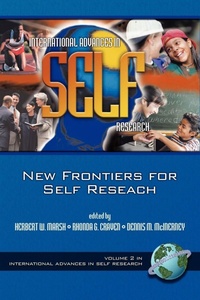
The New Frontiers for Self Research
Will be published approx. on 1. March 2005
Book
Paperback/Softback
424 pages
978-1-59311-155-7 (ISBN)
Description
Researchers with the Self-concept Enhancement and Learning Facilitation Research (SELF) Centre, U. of Western Sydney, introduce theoretical issues and research on the relationship of positive/self-handicapping self-concept to success/ failure in academic and other settings.
More details
Series
Language
English
Place of publication
Charlotte
United States
Publishing group
Emerald Publishing Inc
Target group
Professional and scholarly
Dimensions
Height: 234 mm
Width: 156 mm
Thickness: 23 mm
Weight
641 gr
ISBN-13
978-1-59311-155-7 (9781593111557)
Copyright in bibliographic data and cover images is held by Nielsen Book Services Limited or by the publishers or by their respective licensors: all rights reserved.
Schweitzer Classification
Content
Preface.
About the Monograph Series.
Part I. Overview.
Chapter 1. The New Frontier For Self Research; Herbert W. Marsh, Rhonda G. Craven, and Dennis M. McInerney.
Part II. Theoretical Issues.
Chapter 2. The Ontogeny of Ability Self Concepts and Subjective Task Values; Jacquelynne S. Eccles.
Chapter 3. On the Relationships Between Explicit and Implicit Global Self-Esteem and Personality; Jerry Suls and Zlatan Krizan.
Chapter 4. Self-Efficacy and Self-Concept Beliefs: Jointly Contributing to the Quality of Human Life; Frank Pajares and Dale H. Schunk.
Chapter 5. Do Self-Beliefs Matter? Evidence from a Meta-Analysis; Jeffrey C. Valentine and David L. DuBois.
Chapter 6. Self Theories in a Non-Western Milieu: Ten Years of Research in the Arab Culture; Maher M. Abu Hilal.
Chapter 7. What Comes First?: A Reciprocal Effects Model of the Mutually Reinforcing Effects of Academic Self-Concept and Achievement; Herbert W. Marsh and Rhonda G. Craven.
Part III. Measurement Issues.
Chapter 8. Experiences with and Reflections on the Self-Concept Construct Within an Historical Framework; William B. Michael and Joan J. Michael.
Chapter 9. Multiple Frames of Reference: The Relation Among Academic Self-Concept, Interest and Academic Choices; Olaf Koeller, Juergen Baumert and Ulrich Trautwein.
Chapter 10. Reconsidering the Measurement of Student Self-Concept: Use and Misuse; Alexander Seeshing Yeung.
Chapter 11. Self-Esteem Success/Pretensions: Assessing Pretensions/Importance in Self-Esteem; John Hattie and Richard Fletcher.
Part IV. Applied Studies: Focus on Schooling.
Chapter 12. Self-Concepts of Indigenous and Non-Indigenous Australian Students; Nola Purdie.
Chapter 13. Edifying Pathways to Walk the Dream: An Empirical Analysis of Indigenous Australian Students' Aspirations, Self-Concepts, and Realities; Rhonda G. Craven and Herbert W. Marsh.
Chapter 14. Achievement-Related Self-Perceptions and the Reading Recovery Programme: A Longitudinal Study; James W. Chapman and William E. Tunmer.
Chapter 15. Factorial Structure and Comparison Between Obese and Non-Obese Chinese Children's Physical Self-Concept; K. T. Hau, R. Y. T. Sung, C. W. Yu, and P. W. C. Lau.
Chapter 16. Fear of Failure in Students' Academic Lives: Exploring the Roles of Self-Handicapping and Defensive Pessimism; Andrew J. Martin.
About the Editors.
About the Contributors.
About the Monograph Series.
Part I. Overview.
Chapter 1. The New Frontier For Self Research; Herbert W. Marsh, Rhonda G. Craven, and Dennis M. McInerney.
Part II. Theoretical Issues.
Chapter 2. The Ontogeny of Ability Self Concepts and Subjective Task Values; Jacquelynne S. Eccles.
Chapter 3. On the Relationships Between Explicit and Implicit Global Self-Esteem and Personality; Jerry Suls and Zlatan Krizan.
Chapter 4. Self-Efficacy and Self-Concept Beliefs: Jointly Contributing to the Quality of Human Life; Frank Pajares and Dale H. Schunk.
Chapter 5. Do Self-Beliefs Matter? Evidence from a Meta-Analysis; Jeffrey C. Valentine and David L. DuBois.
Chapter 6. Self Theories in a Non-Western Milieu: Ten Years of Research in the Arab Culture; Maher M. Abu Hilal.
Chapter 7. What Comes First?: A Reciprocal Effects Model of the Mutually Reinforcing Effects of Academic Self-Concept and Achievement; Herbert W. Marsh and Rhonda G. Craven.
Part III. Measurement Issues.
Chapter 8. Experiences with and Reflections on the Self-Concept Construct Within an Historical Framework; William B. Michael and Joan J. Michael.
Chapter 9. Multiple Frames of Reference: The Relation Among Academic Self-Concept, Interest and Academic Choices; Olaf Koeller, Juergen Baumert and Ulrich Trautwein.
Chapter 10. Reconsidering the Measurement of Student Self-Concept: Use and Misuse; Alexander Seeshing Yeung.
Chapter 11. Self-Esteem Success/Pretensions: Assessing Pretensions/Importance in Self-Esteem; John Hattie and Richard Fletcher.
Part IV. Applied Studies: Focus on Schooling.
Chapter 12. Self-Concepts of Indigenous and Non-Indigenous Australian Students; Nola Purdie.
Chapter 13. Edifying Pathways to Walk the Dream: An Empirical Analysis of Indigenous Australian Students' Aspirations, Self-Concepts, and Realities; Rhonda G. Craven and Herbert W. Marsh.
Chapter 14. Achievement-Related Self-Perceptions and the Reading Recovery Programme: A Longitudinal Study; James W. Chapman and William E. Tunmer.
Chapter 15. Factorial Structure and Comparison Between Obese and Non-Obese Chinese Children's Physical Self-Concept; K. T. Hau, R. Y. T. Sung, C. W. Yu, and P. W. C. Lau.
Chapter 16. Fear of Failure in Students' Academic Lives: Exploring the Roles of Self-Handicapping and Defensive Pessimism; Andrew J. Martin.
About the Editors.
About the Contributors.