


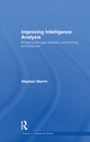
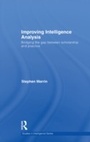
Improving Intelligence Analysis
Bridging the Gap between Scholarship and Practice
1st Edition
Published on 20. June 2011
Book
Hardback
192 pages
978-0-415-78068-1 (ISBN)
Description
This book on intelligence analysis written by intelligence expert Dr. Stephen Marrin argues that scholarship can play a valuable role in improving intelligence analysis.
Improving intelligence analysis requires bridging the gap between scholarship and practice. Compared to the more established academic disciplines of political science and international relations, intelligence studies scholarship is generally quite relevant to practice. Yet a substantial gap exists nonetheless. Even though there are many intelligence analysts, very few of them are aware of the various writings on intelligence analysis which could help them improve their own processes and products. If the gap between scholarship and practice were to be bridged, practitioners would be able to access and exploit the literature in order to acquire new ways to think about, frame, conceptualize, and improve the analytic process and the resulting product. This volume contributes to the broader discussion regarding mechanisms and methods for improving intelligence analysis processes and products. It synthesizes these articles into a coherent whole, linking them together through common themes, and emphasizes the broader vision of intelligence analysis in the introduction and conclusion chapters.
The book will be of great interest to students of intelligence studies, strategic studies, US national security, US foreign policy, security studies and political science in general,as well as professional intelligence analysts and managers.
Improving intelligence analysis requires bridging the gap between scholarship and practice. Compared to the more established academic disciplines of political science and international relations, intelligence studies scholarship is generally quite relevant to practice. Yet a substantial gap exists nonetheless. Even though there are many intelligence analysts, very few of them are aware of the various writings on intelligence analysis which could help them improve their own processes and products. If the gap between scholarship and practice were to be bridged, practitioners would be able to access and exploit the literature in order to acquire new ways to think about, frame, conceptualize, and improve the analytic process and the resulting product. This volume contributes to the broader discussion regarding mechanisms and methods for improving intelligence analysis processes and products. It synthesizes these articles into a coherent whole, linking them together through common themes, and emphasizes the broader vision of intelligence analysis in the introduction and conclusion chapters.
The book will be of great interest to students of intelligence studies, strategic studies, US national security, US foreign policy, security studies and political science in general,as well as professional intelligence analysts and managers.
More details
Series
Language
English
Place of publication
London
United Kingdom
Publishing group
Taylor & Francis Ltd
Target group
College/higher education
Product notice
Paper over boards
Dimensions
Height: 240 mm
Width: 161 mm
Thickness: 15 mm
Weight
461 gr
ISBN-13
978-0-415-78068-1 (9780415780681)
Copyright in bibliographic data and cover images is held by Nielsen Book Services Limited or by the publishers or by their respective licensors: all rights reserved.
Schweitzer Classification
Other editions
Additional editions

Book
12/2012
1st Edition
Routledge
€73.50
Shipment within 15-20 days
E-Book
08/2012
1st Edition
Routledge
€66.99
Available for download
E-Book
08/2012
1st Edition
Routledge
€67.49
Available for download
Person
Stephen Marrin is a Lecturer in the Centre for Intelligence and Security Studies at Brunel University in London. He has a PhD in Foreign Affairs from the University of Virginia and is a former Intelligence Analyst in the CIA.
Content
1. Bridging the Gap Between Scholarship and Practice 2. Describing Intelligence Analysis 3. Improving the Science of Intelligence Analysis 4. Improving the Art of Intelligence Analysis 5. Improving Intelligence Analysis with Analytic Teams 6. Improving Intelligence Analysis Through Training and Education 7. Using Analogies to Improve Intelligence Analysis 8. Improving Intelligence Analysis as a Profession 9. The Importance of Scholarship to Practice