

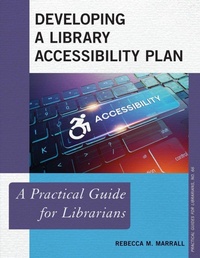
Developing a Library Accessibility Plan
A Practical Guide for Librarians
Published on 5. August 2020
Book
Paperback/Softback
160 pages
978-1-5381-3113-8 (ISBN)
Description
Developing a Library Accessibility Plan: A Practical Guide for Librarians provides library professionals with the knowledge, tools and templates, and practical examples necessary for developing a tailored and comprehensive accessibility plan for their institution.
Part One provides foundational knowledge about disability experiences in libraries, including an overview of existing legislation and a breakdown of the disability community in the United States. This part also names and defines the impact of different accessibility barriers within online, physical, and instructional settings for different populations.
Part Two outlines the initial stages of a developing a comprehensive plan for resolving accessibility issues. These chapters explore how to conduct an environmental scan of existing challenges, strategies for identifying potential partners in the resolution of these problems, and how to prioritize accessibility initiatives and projects.
Part Three provides several practical, real life examples of projects and initiatives drawn from the author's professional experiences. These case studies offer a summary of each accessibility project along the corresponding impact, finished by an analysis of "lessons learned" from the experience. A copy of all tools, templates, and other planning documents are available in the chapter itself.
The book will help readers understand how to inventory, prioritize, plan, implement, and assess a comprehensive improvement plan for electronic, physical, and instructional and/or programming-related accessibility issues within their library.
Part One provides foundational knowledge about disability experiences in libraries, including an overview of existing legislation and a breakdown of the disability community in the United States. This part also names and defines the impact of different accessibility barriers within online, physical, and instructional settings for different populations.
Part Two outlines the initial stages of a developing a comprehensive plan for resolving accessibility issues. These chapters explore how to conduct an environmental scan of existing challenges, strategies for identifying potential partners in the resolution of these problems, and how to prioritize accessibility initiatives and projects.
Part Three provides several practical, real life examples of projects and initiatives drawn from the author's professional experiences. These case studies offer a summary of each accessibility project along the corresponding impact, finished by an analysis of "lessons learned" from the experience. A copy of all tools, templates, and other planning documents are available in the chapter itself.
The book will help readers understand how to inventory, prioritize, plan, implement, and assess a comprehensive improvement plan for electronic, physical, and instructional and/or programming-related accessibility issues within their library.
Reviews / Votes
Highly recommend Developing a Library Accessibility Plan: A Practical Guide for Librarians for any library that is serious about creating spaces and services that are accessible for all people, especially those with disabilities. * Journal of the Medical Library Association * Librarians have a professional and legal obligation to ensure that library collections, buildings, programs, and services are accessible to patrons with disabilities. Many of these patrons require specific accommodations to use libraries effectively. The latest volume in the Practical Guides for Librarians series instructs librarians in planning, implementing, and assessing a customized accessibility plan. Marrall provides an overview of disability legislation and introduces readers to the major categories of disability and the adaptive techniques and technologies used to improve accessibility. Readers will learn how to assess barriers related to entrances, floor plans, electronic resources, programming, outreach, and more, as well as how to devise an accessibility plan to prioritize and then eradicate barriers. Marrall offers tools to track and evaluate results efficiently and explains how to gain the support of community and institutional partners and staff to remove barriers. The guide concludes with case studies describing how other libraries have approached accessibility issues. Libraries with limited staff and funds may have difficulty incorporating many of the suggestions without considerable assistance from community partners, but larger libraries will find a practical map for improving accessibility. * Library Journal * Marrall provides a comprehensive guide for understanding, improving, and advocating for greater accessibility in libraries, which can be a complex and overwhelming undertaking at times. The book offers an overview of the various aspects of accessibility in libraries, both electronic and physical, and presents readers with tips and strategies for implementing a library accessibility plan that centers people with disabilities in the process. -- Lauren Kehoe, Accessibility and Accommodations Librarian, NYU Libraries Libraries looking to develop accessibility plans will benefit from this guide, which contains foundational information about library accessibility and many practical resources, tips and tools to help advance and improve accessibility. Kudos to Rebecca Marrall for authoring a much-needed text on accessibility in the practical guides for librarians series. -- Heidi M. Schroeder, Accessibility Coordinator, Michigan State University Libraries This book is a helpful resource for those who know they have to improve their library's accessibility but aren't sure where to start. It takes users through the key concepts of library accessibility starting with the basics to ensure that a whole range of common questions are answered. -- Carli Spina, Head of Research & Instructional Services, Associate Professor, Gladys Marcus Library, Fashion Institute of Technology This book, a part of the Practical Guides for Librarians series provides definitions, plans for ways to resolve accessibility issues, and provides several examples of practical solutions. While the work could be read cover to cover, it is also useful to be used as a guide to specific challenges when circumstances require it.... This volume is helpful for a library that wants to begin to review their physical building and online presence for accessibility. The steps involved are well outlined and under-standable. Definitions, strategies, and additional resources are abundant in the book. The "how-to" chapters at the back are especially helpful after reviewing the initial sections which can make the job of meeting accessibility goals seem a little daunting. I think this is a very useful guide to help a library through the development of an accessibility plan. * Technical Services Quarterly *More details
Series
Language
English
Place of publication
United States
Publishing group
Bloomsbury Publishing Plc
Target group
Professional and scholarly
Illustrations
1 b/w photo; 47 tables; 8 textboxes
Dimensions
Height: 280 mm
Width: 216 mm
Thickness: 9 mm
Weight
421 gr
ISBN-13
978-1-5381-3113-8 (9781538131138)
Copyright in bibliographic data and cover images is held by Nielsen Book Services Limited or by the publishers or by their respective licensors: all rights reserved.
Schweitzer Classification
Other editions
Additional editions
E-Book
08/2020
1st Edition
Rowman & Littlefield Publishers
€65.99
Available for download
E-Book
08/2020
1st Edition
Bloomsbury eBooks US
€65.99
Available for download
Person
Rebecca M. Marrall is the director of technology and discovery services and an Associate Professor at Western Washington University Libraries. Her research interests are inclusive learning spaces; user experience in libraries; and accessibility practices in library spaces. She co-edited the open access text, The Research Process: Strategies for Undergraduate Students.
Content
Acknowledgements
Preface
Section One: Accessibility in Libraries
Chapter One: Disability Experiences in Libraries: Definitions, Demographics, Theory, and Legislation
Chapter Two: Electronic Accessibility
Chapter Three: Physical Accessibility
Chapter Four:Accessibility for Instruction, Programming, and Outreach
Section Two: Building an Accessibility Plan for Your Library
Chapter Five: Creating an Accessibility Plan
Chapter Six:Where to Start When Developing an Accessibility Plan
Chapter Seven: Building Consensus and Support within the Organization through Employee Professional Development
Chapter Eight: Crafting Community Partnerships for Enhanced Accessibility
Section Three: Case Studies in Accessibility Efforts
Chapter Nine: Deploying a Document Conversion Service for Patrons with Disabilities
Chapter Ten: Conducting an Electronic Accessibility Audit To Improve Library Web Presences
Chapter Eleven: Building Employee Knowledge through Voluntary Product Assessment Template Workshops
Chapter Twelve: Creating an Accessibility Response Plan for Employees
Chapter Thirteen: Raising Library Employee Awareness of Mental Health Issues
Chapter Fourteen: Service Animals in Libraries: Developing a Response Plan
Bibliography
Preface
Section One: Accessibility in Libraries
Chapter One: Disability Experiences in Libraries: Definitions, Demographics, Theory, and Legislation
Chapter Two: Electronic Accessibility
Chapter Three: Physical Accessibility
Chapter Four:Accessibility for Instruction, Programming, and Outreach
Section Two: Building an Accessibility Plan for Your Library
Chapter Five: Creating an Accessibility Plan
Chapter Six:Where to Start When Developing an Accessibility Plan
Chapter Seven: Building Consensus and Support within the Organization through Employee Professional Development
Chapter Eight: Crafting Community Partnerships for Enhanced Accessibility
Section Three: Case Studies in Accessibility Efforts
Chapter Nine: Deploying a Document Conversion Service for Patrons with Disabilities
Chapter Ten: Conducting an Electronic Accessibility Audit To Improve Library Web Presences
Chapter Eleven: Building Employee Knowledge through Voluntary Product Assessment Template Workshops
Chapter Twelve: Creating an Accessibility Response Plan for Employees
Chapter Thirteen: Raising Library Employee Awareness of Mental Health Issues
Chapter Fourteen: Service Animals in Libraries: Developing a Response Plan
Bibliography