

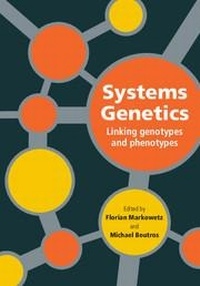
Systems Genetics
Linking Genotypes and Phenotypes
Published on 2. July 2015
Book
Hardback
268 pages
978-1-107-01384-1 (ISBN)
Description
Whereas genetic studies have traditionally focused on explaining heritance of single traits and their phenotypes, recent technological advances have made it possible to comprehensively dissect the genetic architecture of complex traits and quantify how genes interact to shape phenotypes. This exciting new area has been termed systems genetics and is born out of a synthesis of multiple fields, integrating a range of approaches and exploiting our increased ability to obtain quantitative and detailed measurements on a broad spectrum of phenotypes. Gathering the contributions of leading scientists, both computational and experimental, this book shows how experimental perturbations can help us to understand the link between genotype and phenotype. A snapshot of current research activity and state-of-the-art approaches to systems genetics are provided, including work from model organisms such as Saccharomyces cerevisiae and Drosophila melanogaster, as well as from human studies.
Reviews / Votes
'Since the completion of the Human Genome Project we hold the 'book of life' in our hands, but for the most part, we do not understand how to interpret it. We lack an understanding of the grammar that it is written in. With this book the authors put together an impressive collection of chapters that provide insights into our current efforts to understand how genetic information is integrated, coordinated and ultimately assembled into biological systems. If you are interested in how to decipher the grammar of life this is a must read!' Frank Buchholz, Technische Universitaet Dresden, GermanyMore details
Series
Language
English
Place of publication
Cambridge
United Kingdom
Target group
Professional and scholarly
Product notice
sewn/stitched
Cloth over boards
Illustrations
12 Tables, black and white; 16 Plates, black and white; 67 Halftones, unspecified; 67 Halftones, black and white; 18 Line drawings, black and white
Dimensions
Height: 254 mm
Width: 174 mm
Thickness: 20 mm
Weight
718 gr
ISBN-13
978-1-107-01384-1 (9781107013841)
Copyright in bibliographic data and cover images is held by Nielsen Book Services Limited or by the publishers or by their respective licensors: all rights reserved.
Schweitzer Classification
Other editions
Additional editions
Book
04/2020
Cambridge University Press
€49.50
Shipment within 15-20 days
E-Book
09/2015
Cambridge University Press
€88.99
Available for download
E-Book
07/2015
Cambridge University Press
€29.49
Available for download
Persons
Florian Markowetz is a Group Leader at Cancer Research UK's Cambridge Research Institute. His research is concerned with developing statistical and mathematical models of complex biological systems and analysing large-scale molecular data. His research interests range from the analysis of molecular clinical data to inference of cellular networks from high-throughput gene perturbation screens and integration of heterogeneous data sources using machines learning techniques and probabilistic graphic models. Michael Boutros is a group leader at the German Cancer Research Centre (DKFZ) in Heidelberg where he heads the Division of Signalling and Functional Genomics. He also holds a Professorship at the University of Heidelberg. His research focuses on the systematic dissection signalling pathways in Drosophila and mammalian cells, which are important during development and cancer. He attempts to define key components of signalling pathways, discovering interaction between pathways, and characterisation of signalling networks under normal and perturbed conditions.
Content
List of contributors; 1. An introduction to systems genetics Florian Markowetz and Michael Boutros; 2. Computational paradigms for analyzing genetic interaction networks Carles Pons, Michael Costanzo, Charles Boone and Chad L. Myers; 3. Mapping genetic interactions across many phenotypes in metazoan cells Christina Laufer, Maximilian Billmann and Michael Boutros; 4. Genetic interactions and network reliability Edgar Delgado-Eckert and Niko Beerenwinkel; 5. Synthetic lethality and chemoresistance in cancer Kimberly Maxfield and Angelique Whitehurst; 6. Joining the dots: network analysis of gene perturbation data Xin Wang, Ke Yuan and Florian Markowetz; 7. High content screening in infectious diseases: new drugs against bugs Andre P. Maeurer, Peter R. Braun, Kate Holden-Dye and Thomas F. Meyer; 8. Inferring genetic architecture from systems genetics studies Xiaoyun Sun, Stephanie Mohr, Arunachalam Vinayagam, Pengyu Hong and Norbert Perrimon; 9. Bayesian inference for model selection: an application to aberrant signalling pathways in chronic myeloid leukaemia Lisa E. M. Hopcroft, Ben Calderhead, Paolo Gallipoli, Tessa L. Holyoake and Mark A. Girolami; 10. Dynamic network models of protein complexes Yongjin Park and Joel S. Bader; 11. Phenotype state spaces and strategies for exploring them Andreas Hadjiprocopis and Rune Linding; 12. Automated behavioural fingerprinting of C. elegans mutants Andre E. X. Brown and William R. Schafer; Index.