

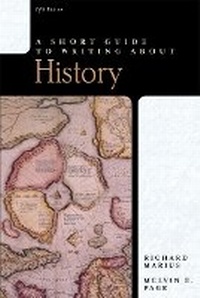
A Short Guide to Writing About History
5th Edition
Published on 5. August 2004
Book
Paperback/Softback
240 pages
978-0-321-22716-4 (ISBN)
Description
A "must have" for students taking any history course that requires writing, A Short Guide to Writing About History stresses thinking and writing like a historian. This engaging and practical little text helps the readers get beyond merely compiling dates and facts; it teaches them how to incorporate their own ideas into their papers and to tell a story about history that interests them and their peers. Covering both brief essays and the documented resource paper, this book explores the writing and researching processes, different modes of historical writing including argument and concludes with guidelines for improving style. The perfect short writing guide for any one who writes about history.
More details
Edition
5th edition
Language
English
Place of publication
United States
Publishing group
Pearson Education (US)
Target group
College/higher education
Dimensions
Height: 209 mm
Width: 141 mm
Thickness: 13 mm
Weight
270 gr
ISBN-13
978-0-321-22716-4 (9780321227164)
Copyright in bibliographic data and cover images is held by Nielsen Book Services Limited or by the publishers or by their respective licensors: all rights reserved.
Schweitzer Classification
Other editions
New editions
Richard A. Marius | Melvin E. Page
A Short Guide to Writing About History
Book
11/2006
6th Edition
Pearson
€28.51
Article exhausted; check for reprint
Previous edition

Richard A. Marius | Melvin E. Page
A Short Guide to Writing About History
Book
03/2002
4th Edition
Pearson
€16.11
Article exhausted; check for reprint
Content
"A Writer's Checklist" appears at end of each chapter.
1. Writing and History.
Stories about the Past Intended to be True.
Writing History as a Way of Thinking.
Basic Principles for History Essays.
2. Thinking About History.
Questioning Sources.
Making Inferences.
Evaluating Materials.
3. Modes of Historical Writing.
Description.
Narrative.
Exposition.
Argument.
4. Gathering Information.
Focusing on Your Topic.
Considering Potential Sources.
5. Taking Notes and Writing Drafts.
Recording Information and Ideas.
Organizing Your Essay.
Writing and Revising Drafts.
6. Writing in an Electronic Environment.
Questioning.
Research.
Evaluation.
Organization.
Revision.
7. Writing Conventions and Style.
Simple and Direct Writing.
Evidence and Quotations.
Word Forms and Punctuation.
8. Documenting Sources.
Basic Principles.
Electronic Sources.
Notes and Bibliographies.
Appendix A. Sample Student Research Paper.
Appendix B. Shorter Essays (and Examinations).
Appendix C. Book Reviews.
1. Writing and History.
Stories about the Past Intended to be True.
Writing History as a Way of Thinking.
Basic Principles for History Essays.
2. Thinking About History.
Questioning Sources.
Making Inferences.
Evaluating Materials.
3. Modes of Historical Writing.
Description.
Narrative.
Exposition.
Argument.
4. Gathering Information.
Focusing on Your Topic.
Considering Potential Sources.
5. Taking Notes and Writing Drafts.
Recording Information and Ideas.
Organizing Your Essay.
Writing and Revising Drafts.
6. Writing in an Electronic Environment.
Questioning.
Research.
Evaluation.
Organization.
Revision.
7. Writing Conventions and Style.
Simple and Direct Writing.
Evidence and Quotations.
Word Forms and Punctuation.
8. Documenting Sources.
Basic Principles.
Electronic Sources.
Notes and Bibliographies.
Appendix A. Sample Student Research Paper.
Appendix B. Shorter Essays (and Examinations).
Appendix C. Book Reviews.