

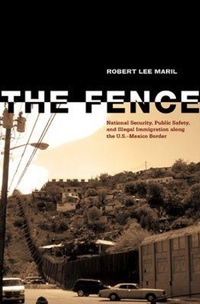
The Fence
National Security, Public Safety, and Illegal Immigration Along the U.S.-Mexico Border
Published on 30. October 2012
Book
Paperback/Softback
384 pages
978-0-89672-776-2 (ISBN)
Description
To the American public it's a 2,000-mile-long project to keep illegal immigrants, narcotics, and terrorists on the other side of the U.S.-Mexico border. In the deserts of Arizona, it's a "virtual fence" of high-tech electronic sensors, cameras, and radar. In some border stretches it's a huge concrete-and-steel wall; in others it's a series of solitary posts designed to stop drug runners; in still others it's rusted barbed-wire cattle fences. For two-thirds of the international boundary it's non-existent.
Just what is this entity known as "the fence"? And more important, is it working? Through first-person interviews with defence contractors, border residents, American military, Minutemen, county officials, Customs and Border Protection agents, environmental activists, and others whose voices have never been heard, Robert Lee Maril examines the project's human and financial costs. Along with Maril's site visits, his rigourous analysis of government documents from 1999 to the present uncovers fiscal mismanagement by Congress, wasteful defence contracts, and unkept political promises.
As drug violence mounts in border cities and increasing numbers of illegal migrants die from heat exhaustion in the Arizona desert, Maril argues how the fence may even be making an incendiary situation worse. Avoiding preconceived conclusions, he proposes new public policies that take into consideration human issues, political negotiation, and the need for compromise. Maril's lucid study shows the fence to be a symbol in concrete, steel, microchips, and fibre optics for the crucible of contemporary immigration policy, national security, and public safety. In corporate boardrooms, government offices, Border Patrol agents' pickup trucks, and the homes and workplaces of borderland residents, Maril exposes the motivations and costs submerged beneath media-driven immigration rhetoric.
Just what is this entity known as "the fence"? And more important, is it working? Through first-person interviews with defence contractors, border residents, American military, Minutemen, county officials, Customs and Border Protection agents, environmental activists, and others whose voices have never been heard, Robert Lee Maril examines the project's human and financial costs. Along with Maril's site visits, his rigourous analysis of government documents from 1999 to the present uncovers fiscal mismanagement by Congress, wasteful defence contracts, and unkept political promises.
As drug violence mounts in border cities and increasing numbers of illegal migrants die from heat exhaustion in the Arizona desert, Maril argues how the fence may even be making an incendiary situation worse. Avoiding preconceived conclusions, he proposes new public policies that take into consideration human issues, political negotiation, and the need for compromise. Maril's lucid study shows the fence to be a symbol in concrete, steel, microchips, and fibre optics for the crucible of contemporary immigration policy, national security, and public safety. In corporate boardrooms, government offices, Border Patrol agents' pickup trucks, and the homes and workplaces of borderland residents, Maril exposes the motivations and costs submerged beneath media-driven immigration rhetoric.
More details
Language
English
Place of publication
Texas
United States
Product notice
Paperback (trade)
Unsewn / adhesive bound
Illustrations
10 illustrations
Dimensions
Height: 233 mm
Width: 154 mm
Thickness: 30 mm
Weight
612 gr
ISBN-13
978-0-89672-776-2 (9780896727762)
Copyright in bibliographic data and cover images is held by Nielsen Book Services Limited or by the publishers or by their respective licensors: all rights reserved.
Schweitzer Classification
Person
Robert Lee Maril is professor of sociology and the founding director of the Centre for Diversity and Inequality Research at East Carolina University. The author of many books, including Patrolling Chaos: The U.S. Border Patrol in Deep South Texas (TTUP, 2006) and Waltzing with the Ghost of Tom Joad: Poverty, Myth, and Low-Wage Labor in Oklahoma, he has testified three times on his research before the U.S. Congress, and his work has been widely cited both in scholarly publications and the national media. A resident of the Texas borderlands for seventeen years, he now lives in Greenville, North Carolina.