

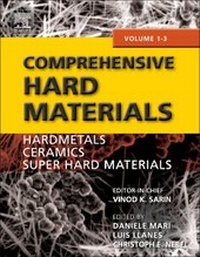
Comprehensive Hard Materials
Published on 4. February 2014
Book
1806 pages
978-0-08-096527-7 (ISBN)
Description
Comprehensive Hard Materials, Three Volume Set deals with the production, uses and properties of the carbides, nitrides and borides of these metals and those of titanium, as well as tools of ceramics, the superhard boron nitrides and diamond and related compounds. Articles include the technologies of powder production (including their precursor materials), milling, granulation, cold and hot compaction, sintering, hot isostatic pressing, hot-pressing, injection moulding, as well as on the coating technologies for refractory metals, hard metals and hard materials. The characterization, testing, quality assurance and applications are also covered. Comprehensive Hard Materials provides meaningful insights on materials at the leading edge of technology. It aids continued research and development of these materials and as such it is a critical information resource to academics and industry professionals facing the technological challenges of the future.
More details
Language
English
Place of publication
London
United Kingdom
Publishing group
Elsevier Health Sciences
Target group
Professional and scholarly
This work will appeal to every materials science department in every academic institution, government department and large corporation.
Dimensions
Height: 276 mm
Width: 216 mm
Weight
5520 gr
ISBN-13
978-0-08-096527-7 (9780080965277)
Copyright in bibliographic data and cover images is held by Nielsen Book Services Limited or by the publishers or by their respective licensors: all rights reserved.
Schweitzer Classification
Other editions
Additional editions
Daniele Mari | Luis Miguel | Christoph E. Nebel
Comprehensive Hard Materials
E-Book
05/2014
1st Edition
Elsevier
€1,172.00
Available for download
Persons
Christoph Nebel is at Fraunhofer Institute for Applied Solid State Physics, Freiburg, Germany
Content
Volume 1: Hardmetals
Section I: Introduction to Hardmetals
1.01. History of Hardmetals
1.02. Fundamentals and General Applications of Hardmetals
1.03. Microstructure and Morphology of Hardmetals
Section II: Classes of Materials
1.04. Cemented Tungsten Carbide Hardmetal-An Introduction
1.05. Cermets
Section III: Synthesis and Processing
1.06. Powder Synthesis
1.07. Powder Processing and Green Shaping
1.08. Consolidation Techniques
Section IV: Mechanical Properties
1.09. Hardness and Deformation of Hardmetals at Room Temperature
1.10. Fracture and Strength of Hardmetals at Room Temperature
1.11. Fatigue of Cemented Carbides
1.12. Wear of Hardmetals
1.13. Residual Stresses
1.14. Mechanical Behavior of Hardmetals at High Temperature
Section V: Applications
1.15. Cemented Carbides for Mining, Construction and Wear Parts
1.16. Coating Applications for Cutting Tools
1.17. Coatings by Thermal Spray
1.18. Coatings by Laser Cladding
1.19. Joining Cemented Carbides
Volume 2: Ceramics
Section I: Introduction
2.01. Fundamental Aspects of Hard Ceramics
2.02. Processing of Alumina and Corresponding Composites
Section II: Synthesis and Processing
2.03. Synthesis/Processing of Silicon Nitride Ceramics
2.04. Processing of Silicon Carbide-Based Ceramics
2.05. Spark Plasma Sintering of Nanoceramic Composites
2.06. Advanced Manufacturing of Hard Ceramics
2.07. Joining Methods for Hard Ceramics
Section III: Microstructure and Properties
2.08. Microstructural Characterization of Hard Ceramics
2.09. Mechanical Characterization of Ceramics: Designing with Brittle Materials
2.10. Toughness, Fatigue and Thermal Shock of Ceramics: Microstructural Effects
2.11. High-Temperature Mechanical Behavior of Hard Ceramics
2.12. Mechanical Behavior of SiC Fiber-Reinforced Ceramic Matrix Composites
2.13. Resistance to Contact Deformation and Damage of Hard Ceramics
2.14. Wear of Hard Ceramics
2.15. Corrosion of Ceramic Materials
Section IV: Coatings and Applications
2.16. PVD and CVD Hard Coatings
2.17. Thermal and Environmental Barrier Coatings for Si-Based Ceramics
2.18. Ceramic Cutting Tools
Volume 3: Super Hard Materials
Section I: Theory
3.01. The Physics of Strong Bonds
3.02. From Diamond to Superhard Borides and Oxides
3.03. High-Pressure Phase Diagrams of the Systems Containing Carbon and BN
3.04. Theory of Superhard Materials
3.05. Taming the Untamable-The Art and Science of Diamond Polishing
Section II: Materials: Growth, Properties and Applications: Carbon-Based DLC
3.06. Diamond-Like Carbon Films, Properties and Applications
Section III: Nanoe-and-Poly-Diamond
3.07. Production of Nanodiamond Particles
3.08. Nanopolycrystalline Diamond without Binder and its Application to Various High-Pressure Apparatus
Section IV: Single Crystalline Diamond
3.09. HPHT Synthesis of Large, High-Quality, Single Crystal Diamonds
3.10. Ultrafast Deposition of Diamond by Plasma-Enhanced CVD
3.11. Single Crystal Diamond Growth on Iridium
3.12. Conductivity and Impurity Doping on Single Crystal Diamond
3.13. Single-Ion Implantation in Diamond with a High Lateral Resolution: A Key Technology for the Fabrication of Quantum Devices
Section V: Selected Properties of Diamond and Applications
3.14. Surface Electronic Properties of Diamond
3.15. Polycrystalline CVD Diamond for Industrial Applications
3.16. Diamond Nanoparticles: Surface Modifications and Applications
3.17. Diamond for Particle and Photon Detection in Extreme Conditions
3.18. Single Color Centers in Diamond: Materials, Devices, and Applications
3.19. Electrochemical Application of Diamond Electrodes
Section VI: Other Carbon Phases
3.20. Superhard Materials Based on Fullerenes and Nanotubes
3.21. Nanostructured Superhard Carbon Phases Synthesized from Fullerites under Pressure
3.22. Graphene Properties and Application
Section VII: III-V Based and Novel Materials
3.23. Synthesis and Properties of Single Crystalline cBN and Its Sintered Body
3.24. Cubic Boron Nitride Films: Properties and Applications
3.25. High-Pressure Synthesis of Novel Superhard Phases
Section I: Introduction to Hardmetals
1.01. History of Hardmetals
1.02. Fundamentals and General Applications of Hardmetals
1.03. Microstructure and Morphology of Hardmetals
Section II: Classes of Materials
1.04. Cemented Tungsten Carbide Hardmetal-An Introduction
1.05. Cermets
Section III: Synthesis and Processing
1.06. Powder Synthesis
1.07. Powder Processing and Green Shaping
1.08. Consolidation Techniques
Section IV: Mechanical Properties
1.09. Hardness and Deformation of Hardmetals at Room Temperature
1.10. Fracture and Strength of Hardmetals at Room Temperature
1.11. Fatigue of Cemented Carbides
1.12. Wear of Hardmetals
1.13. Residual Stresses
1.14. Mechanical Behavior of Hardmetals at High Temperature
Section V: Applications
1.15. Cemented Carbides for Mining, Construction and Wear Parts
1.16. Coating Applications for Cutting Tools
1.17. Coatings by Thermal Spray
1.18. Coatings by Laser Cladding
1.19. Joining Cemented Carbides
Volume 2: Ceramics
Section I: Introduction
2.01. Fundamental Aspects of Hard Ceramics
2.02. Processing of Alumina and Corresponding Composites
Section II: Synthesis and Processing
2.03. Synthesis/Processing of Silicon Nitride Ceramics
2.04. Processing of Silicon Carbide-Based Ceramics
2.05. Spark Plasma Sintering of Nanoceramic Composites
2.06. Advanced Manufacturing of Hard Ceramics
2.07. Joining Methods for Hard Ceramics
Section III: Microstructure and Properties
2.08. Microstructural Characterization of Hard Ceramics
2.09. Mechanical Characterization of Ceramics: Designing with Brittle Materials
2.10. Toughness, Fatigue and Thermal Shock of Ceramics: Microstructural Effects
2.11. High-Temperature Mechanical Behavior of Hard Ceramics
2.12. Mechanical Behavior of SiC Fiber-Reinforced Ceramic Matrix Composites
2.13. Resistance to Contact Deformation and Damage of Hard Ceramics
2.14. Wear of Hard Ceramics
2.15. Corrosion of Ceramic Materials
Section IV: Coatings and Applications
2.16. PVD and CVD Hard Coatings
2.17. Thermal and Environmental Barrier Coatings for Si-Based Ceramics
2.18. Ceramic Cutting Tools
Volume 3: Super Hard Materials
Section I: Theory
3.01. The Physics of Strong Bonds
3.02. From Diamond to Superhard Borides and Oxides
3.03. High-Pressure Phase Diagrams of the Systems Containing Carbon and BN
3.04. Theory of Superhard Materials
3.05. Taming the Untamable-The Art and Science of Diamond Polishing
Section II: Materials: Growth, Properties and Applications: Carbon-Based DLC
3.06. Diamond-Like Carbon Films, Properties and Applications
Section III: Nanoe-and-Poly-Diamond
3.07. Production of Nanodiamond Particles
3.08. Nanopolycrystalline Diamond without Binder and its Application to Various High-Pressure Apparatus
Section IV: Single Crystalline Diamond
3.09. HPHT Synthesis of Large, High-Quality, Single Crystal Diamonds
3.10. Ultrafast Deposition of Diamond by Plasma-Enhanced CVD
3.11. Single Crystal Diamond Growth on Iridium
3.12. Conductivity and Impurity Doping on Single Crystal Diamond
3.13. Single-Ion Implantation in Diamond with a High Lateral Resolution: A Key Technology for the Fabrication of Quantum Devices
Section V: Selected Properties of Diamond and Applications
3.14. Surface Electronic Properties of Diamond
3.15. Polycrystalline CVD Diamond for Industrial Applications
3.16. Diamond Nanoparticles: Surface Modifications and Applications
3.17. Diamond for Particle and Photon Detection in Extreme Conditions
3.18. Single Color Centers in Diamond: Materials, Devices, and Applications
3.19. Electrochemical Application of Diamond Electrodes
Section VI: Other Carbon Phases
3.20. Superhard Materials Based on Fullerenes and Nanotubes
3.21. Nanostructured Superhard Carbon Phases Synthesized from Fullerites under Pressure
3.22. Graphene Properties and Application
Section VII: III-V Based and Novel Materials
3.23. Synthesis and Properties of Single Crystalline cBN and Its Sintered Body
3.24. Cubic Boron Nitride Films: Properties and Applications
3.25. High-Pressure Synthesis of Novel Superhard Phases