

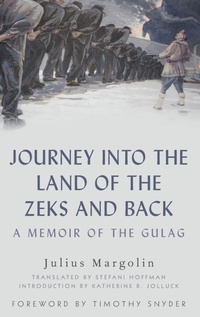
Journey into the Land of the Zeks and Back
A Memoir of the Gulag
Published on 10. December 2020
Book
Hardback
648 pages
978-0-19-750214-3 (ISBN)
Description
Under the Soviet regime, millions of zeks (prisoners) were incarcerated in the forced labor camps, the Gulag. There many died of starvation, disease, and exhaustion, and some were killed by criminals and camp guards. In 1939, as the Nazis and Soviets invaded Poland, many Polish citizens found themselves swept up by the Soviet occupation and sent into the Gulag. One such victim was Julius Margolin, a Pinsk-born Jewish philosopher and writer living in Palestine who was in Poland on family matters.
Margolin's Journey into the Land of the Zeks and Back offers a powerful, first-person account of one of the most shocking chapters of the violent twentieth century. Opening with the outbreak of World War II in Poland, Margolin relates its devastating impact on the Jews and his arrest and imprisonment in the Gulag system. During his incarceration from 1940 to 1945, he nearly died from starvation and overwork but was able to return to Western Europe and rejoin his family in Palestine. With a philosopher's astute analysis of man and society, as well as with humor, his memoir of flight, entrapment, and survival details the choices and dilemmas faced by an individual under extreme duress. Margolin's moving account illuminates universal issues of human rights under a totalitarian regime and ultimately the triumph of human dignity and decency.
This translation by Stefani Hoffman is the first English-language edition of this classic work, originally written in Russian in 1947 and published in an abridged French version in 1949. Circulated in a Russian samizdat version in the USSR, it exerted considerable influence on the formation of the genre of Gulag memoirs and was eagerly read by Soviet dissidents. Timothy Snyder's foreword and Katherine Jolluck's introduction contextualize the creation of this remarkable account of a Jewish world ravaged in the Stalinist empire--and the life of the man who was determined to reveal the horrors of the gulag camps and the plight of the zeks to the world.
Margolin's Journey into the Land of the Zeks and Back offers a powerful, first-person account of one of the most shocking chapters of the violent twentieth century. Opening with the outbreak of World War II in Poland, Margolin relates its devastating impact on the Jews and his arrest and imprisonment in the Gulag system. During his incarceration from 1940 to 1945, he nearly died from starvation and overwork but was able to return to Western Europe and rejoin his family in Palestine. With a philosopher's astute analysis of man and society, as well as with humor, his memoir of flight, entrapment, and survival details the choices and dilemmas faced by an individual under extreme duress. Margolin's moving account illuminates universal issues of human rights under a totalitarian regime and ultimately the triumph of human dignity and decency.
This translation by Stefani Hoffman is the first English-language edition of this classic work, originally written in Russian in 1947 and published in an abridged French version in 1949. Circulated in a Russian samizdat version in the USSR, it exerted considerable influence on the formation of the genre of Gulag memoirs and was eagerly read by Soviet dissidents. Timothy Snyder's foreword and Katherine Jolluck's introduction contextualize the creation of this remarkable account of a Jewish world ravaged in the Stalinist empire--and the life of the man who was determined to reveal the horrors of the gulag camps and the plight of the zeks to the world.
Reviews / Votes
Margolin's memoir presents a heart-wrenching account of hunger and cold, alongside numerous reflections on the Soviet camp system....What makes...[it] so compelling is its ground-breaking immediacy and urgency. This is direct report from Soviet camps, unencumbered by postwar interpretations and taboos....While it is too late to alter the fate of Margolin's fellow prisoners, this English edition of his memoir may play an important role in preserving the memory of millions of people of various nationalities and religions who perished in the Gulag. * Lidia Zessin-Jurek, East European Jewish Affairs * This is a superbly edited academic edition whose excellence is praised in the foreword by the celebrated historian Tim Snyder. Journey to the Land of the Zeks with all its horrifying details, philosophical insights, and superb literary style, will finally receive the honor and attention that it deserves. * Mikhal Dekel, Haaretz * But now we have the first English translation of the book, and in our current political climate it behooves people on both sides of the political aisle to read it. * Franklin Freeman, America Magazine, The Jesuit Review * An incisive, harrowing, and absorbing eyewitness account of the Gulag....Journey into the Land of the Zeks and Back acknowledges the scale of the catastrophe, but the volume focuses on its impact on humanity. * Harry C. Merritt, Arts Fuse * Beautifully written, incredibly detailed and moving - an important historical document. * Kirkus, Starred Review * More than just a Gulag memoir, this book includes an excellent and unusual portrait of Poland in 1939, encompassing an account of the occupation and Sovietization of its eastern territories after the Red Army's invasion in September. Margolin observes the impact of major political changes on different people and social classes; he has a strong sense of history, and his language has a literary flavor. This book is important for anyone interested in Soviet history, but also for anyone interested in a full account of the Jewish experience of the war. While the story of the Jews of Nazi-occupied Europe is well known, the fate of Jews in Soviet-occupied Europe is still obscure. This is a story that will seem fresh and unusual to many. * Anne Applebaum, author of Gulag: A History * "Julius (Yuli) Margolin - clairvoyant Jewish writer and passionate political polemicist - fought to open the eyes of the world to Stalin's crimes and, specifically, to the Soviet system of slave convict labor. The long-awaited English-language publication ofJourney into the Land of the Zeks and Backis a game changer in both Soviet studies and Jewish studies. * Maxim D. Shrayer, editor ofVoices of Jewish-Russian Literatureand author ofA Russian Immigrant * This is a powerful, fine-grained account of war, occupation and the Gulag from an extraordinarily gifted writer. Margolin vividly details the Eastern European world of Jews, Poles, Ukrainians, Belarussians and others living in fear under the German and Soviet occupation of their countries. His searing description of Gulag servitude is a ghastly refresher on mass dehumanization and how it robbed the prisoners of their identity, family, memories, health, and sanity. * Deborah Kaple, Princeton University * It's hard to believe that this publication marks the first appearance of this remarkable story in English. Back in 1949, this thoughtful, detailed compelling memoir was the first of what ended up being many diaries of reluctant travelers sent to this awful Kafkaesque world of the Soviet Gulag. The author thus became the first of many witnesses who exposed the natural consequences of the Marx-Lenin-Trotsky-Stalin ideology of imposing forced equality on the masses...this book can serve as a fresh and welcome reminder of a long-forgotten warning to beware the tyranny of even lovely-sounding ideas. * Natan Sharansky *More details
Language
English
Place of publication
New York
United States
Target group
Professional and scholarly
Illustrations
8 halftones
Dimensions
Height: 240 mm
Width: 161 mm
Thickness: 39 mm
Weight
1124 gr
ISBN-13
978-0-19-750214-3 (9780197502143)
Copyright in bibliographic data and cover images is held by Nielsen Book Services Limited or by the publishers or by their respective licensors: all rights reserved.
Schweitzer Classification
Other editions
Additional editions
E-Book
08/2020
1st Edition
OUP eBook
€20.49
Available for download
E-Book
08/2020
1st Edition
OUP eBook
€20.49
Available for download
Persons
Julius Margolin (1900-1971) was trapped in Poland by the successive Nazi and Soviet invasions in 1939 and was arrested by the Soviets in June 1940 for refusing to accept Soviet citizenship. From 1940 to 1945 he served time in the Soviet Gulag. Upon his return to the West, he wrote his memoirs, Journey to the Land of the Zek, and a description of his return via Europe, The Road to the West.
Stefani Hoffman is the former director of the Mayrock Center for Russian, Eurasian, and East European Research at The Hebrew University of Jerusalem. She has translated numerous works, including Fear No Evil by Natan Sharansky.
Timothy Snyder is Richard C. Levin Professor of History at Yale University. His award-winning works include The Reconstruction of Nations: Poland, Ukraine, Lithuania, Belarus, 1569-1999; Bloodlands: Europe Between Hitler and Stalin; and Black Earth: The Holocaust as History and Warning.
Katherine R. Jolluck is Senior Lecturer in History at Stanford
University. She is the author of Exile and Identity: Polish Women in the Soviet Union During World War II and the co-author of Gulag Voices: Oral Histories of Soviet Incarceration and Exile.
Stefani Hoffman is the former director of the Mayrock Center for Russian, Eurasian, and East European Research at The Hebrew University of Jerusalem. She has translated numerous works, including Fear No Evil by Natan Sharansky.
Timothy Snyder is Richard C. Levin Professor of History at Yale University. His award-winning works include The Reconstruction of Nations: Poland, Ukraine, Lithuania, Belarus, 1569-1999; Bloodlands: Europe Between Hitler and Stalin; and Black Earth: The Holocaust as History and Warning.
Katherine R. Jolluck is Senior Lecturer in History at Stanford
University. She is the author of Exile and Identity: Polish Women in the Soviet Union During World War II and the co-author of Gulag Voices: Oral Histories of Soviet Incarceration and Exile.
Author
Introduction
Senior Lecturer in HistorySenior Lecturer in History, Stanford University
Foreword
Richard C. Levin Professor of HistoryRichard C. Levin Professor of History, Yale University
Translation
Former director of the Mayrock Center for Russian, Eurasian, and East European ResearchFormer director of the Mayrock Center for Russian, Eurasian, and East European Research, The Hebrew University of Jerusalem
Content
Acknowledgements
Glossary
Foreword by Timothy Snyder
Introduction by Katherine R. Jolluck
Prologue
Chapter 1 September 1939
Chapter 2 Encircled
Chapter 3 The Story of a Disillusionment
Chapter 4 Pinsk Intermezzo
Chapter 5 Elijah the Prophet
Chapter 6 The Pinsk Prison
Chapter 7 The Wandering Coffin
Chapter 8 BBK [Baltic-White Sea Canal]
Chapter 9 "Square Forty-Eight"
Chapter 10 Rabguzhsila [Man/horsepower]
Chapter 11 Conversations
Chapter 12 Karelin's Brigade
Chapter 13 Dehumanization
Chapter 14 Wood Felling
Chapter 15 The Medical Sector
Chapter 16 My Enemy Labanov
Chapter 17 Gardenberg's Brigade
Chapter 18 Evening in the Barrack
Chapter 19 People at Square 48
Chapter 20 Spring 1941
Chapter 21 Etap
Chapter 22 Amnesty
Chapter 23 "You Must Work"
Chapter 24 Ivan Aleksandrovich Kuznetsov
Chapter 25 A Letter to Ehrenburg
Chapter 26 KVCh [Cultural-Educational Sector]
Chapter 27 Isaac the Fifth
Chapter 28 Camp Neurosis
Chapter 29 In the Bathhouse
Chapter 30 In the Office
Chapter 30a Three
Chapter 31 Maksik
Chapter 32 The Doctrine of Hate
Chapter 33 An Invalid's Lot
Chapter 34 The Brigade Leader of Chronic Invalids
Chapter 35 The Road to the North
Chapter 36 Kotlas
Chapter 37 Block Nine
Chapter 38 Block Five
Chapter 39 Release
Chapter 40 Conclusion
The Road to the West
Chapter 1 Slavgorod
Chapter 2 The Freedom Train
Chapter 3 Non Omnis Moriar
Chapter 4 The End of Maria
Chapter 5 September 1946
Chapter 6 Heliopolis
Glossary
Foreword by Timothy Snyder
Introduction by Katherine R. Jolluck
Prologue
Chapter 1 September 1939
Chapter 2 Encircled
Chapter 3 The Story of a Disillusionment
Chapter 4 Pinsk Intermezzo
Chapter 5 Elijah the Prophet
Chapter 6 The Pinsk Prison
Chapter 7 The Wandering Coffin
Chapter 8 BBK [Baltic-White Sea Canal]
Chapter 9 "Square Forty-Eight"
Chapter 10 Rabguzhsila [Man/horsepower]
Chapter 11 Conversations
Chapter 12 Karelin's Brigade
Chapter 13 Dehumanization
Chapter 14 Wood Felling
Chapter 15 The Medical Sector
Chapter 16 My Enemy Labanov
Chapter 17 Gardenberg's Brigade
Chapter 18 Evening in the Barrack
Chapter 19 People at Square 48
Chapter 20 Spring 1941
Chapter 21 Etap
Chapter 22 Amnesty
Chapter 23 "You Must Work"
Chapter 24 Ivan Aleksandrovich Kuznetsov
Chapter 25 A Letter to Ehrenburg
Chapter 26 KVCh [Cultural-Educational Sector]
Chapter 27 Isaac the Fifth
Chapter 28 Camp Neurosis
Chapter 29 In the Bathhouse
Chapter 30 In the Office
Chapter 30a Three
Chapter 31 Maksik
Chapter 32 The Doctrine of Hate
Chapter 33 An Invalid's Lot
Chapter 34 The Brigade Leader of Chronic Invalids
Chapter 35 The Road to the North
Chapter 36 Kotlas
Chapter 37 Block Nine
Chapter 38 Block Five
Chapter 39 Release
Chapter 40 Conclusion
The Road to the West
Chapter 1 Slavgorod
Chapter 2 The Freedom Train
Chapter 3 Non Omnis Moriar
Chapter 4 The End of Maria
Chapter 5 September 1946
Chapter 6 Heliopolis