

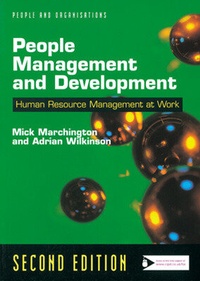
People Management and Development
2nd Edition
Published on 11. June 2003
Book
Paperback/Softback
604 pages
978-0-85292-926-1 (ISBN)
Description
Also available: Textbook and Revision Guide Pack ISBN 1843980819People Management and Development is the leading textbook for students taking the CIPD People Management and Development module. It is written by the chief moderator and the author of the new standards. It offers a comprehensive overview of People Management and Development in a clear and accessible style, while offering critical viewpoints to the subject area and challenging students to make their own assessments. It is designed to analyse the essential knowledge and understanding required of all personnel and development professionals. The book comprises a number of sections, commencing with an examination of the factors shaping HRM at work - including the legal and institutional forces as well as the changing nature of work and employment. A recurring theme throughout the book is the integration of HRM with business objectives and the degree to which it is able to add value. Later chapters in the book consider each of the main components of HRM at work, seeking to show how these interrelate with each other in a wide range of differing organisational contexts.
More details
Edition
2nd edition
Language
English
Place of publication
Wimbledon
United Kingdom
Target group
College/higher education
Illustrations
illustrations
Dimensions
Height: 246 mm
Width: 178 mm
Thickness: 36 mm
Weight
1110 gr
ISBN-13
978-0-85292-926-1 (9780852929261)
Copyright in bibliographic data and cover images is held by Nielsen Book Services Limited or by the publishers or by their respective licensors: all rights reserved.
Schweitzer Classification
Content
AcknowledgementsPart One: Introduction 1. Human resource management at work Part Two: Shaping the agenda for human resource management2. The changing nature of work and employment
3. The legal framework for human resource management
4. Institutional forces shaping human resource management at workPart Three: The Contribution of Specialist Human Resource Expertise5. Research and change management skills
6. The professional and ethical contribution of human resource managementPart Four: Integrating the Human Resource Contribution7. Best practice human resource management: improving organisational performance through the high commitment bundle
8. Exploring the links between business strategy and human resource management
9. Changing responsibilities for the management of human resourcesPart Five: Human Resource Management in Practice10. Cost effective human resource planning, recruitment and selection
11. Managing performance for added value
12. Maximising the skills and contributions of people
13. Managing the learning and development process
14. Structures and processes for effective employee relations
15. Using employee relations procedures to resolve differences and engender commitment
16. Motivating staff and rewarding contributions
17. Delivering equity and fairness in rewardsPart Six: Review and Conclusions18.Reviewing HRM at work - sample questions and guidelines for tackling examsReferences
3. The legal framework for human resource management
4. Institutional forces shaping human resource management at workPart Three: The Contribution of Specialist Human Resource Expertise5. Research and change management skills
6. The professional and ethical contribution of human resource managementPart Four: Integrating the Human Resource Contribution7. Best practice human resource management: improving organisational performance through the high commitment bundle
8. Exploring the links between business strategy and human resource management
9. Changing responsibilities for the management of human resourcesPart Five: Human Resource Management in Practice10. Cost effective human resource planning, recruitment and selection
11. Managing performance for added value
12. Maximising the skills and contributions of people
13. Managing the learning and development process
14. Structures and processes for effective employee relations
15. Using employee relations procedures to resolve differences and engender commitment
16. Motivating staff and rewarding contributions
17. Delivering equity and fairness in rewardsPart Six: Review and Conclusions18.Reviewing HRM at work - sample questions and guidelines for tackling examsReferences