

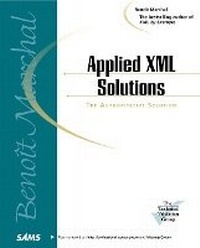
Applied XML Solutions
Published on 8. September 2000
Book
Mixed media product
360 pages
978-0-672-32054-5 (ISBN)
Description
Applied XML Solutions presents a series of projects rather than a tutorial format. The projects follow a natural progression from simple to complex. Within each chapter, helpful sidebars highlight XML fundamentals necessary to understand the project in progress. This will save readers' time having to look to another source if they forget a key detail. The last project incorporates techniques discussed throughout the book. The author will illustrate alternative solutions wherever appropriate. Applied XML Solutions shows professional developers how to apply XML to a variety of real-world applications, including: XML as a scripting substitute, using RSS to syndicate content to multiple & non-traditional browsers such as WAP-enabled handheld devices, using XSLT to facilitate communication between incompatible systems, separating web content from web code, importing data from various file formats.
More details
Language
English
Place of publication
Indianapolis
United States
Publishing group
Pearson Education (US)
Target group
College/higher education
Dimensions
Height: 230 mm
Width: 185 mm
Thickness: 20 mm
Weight
627 gr
ISBN-13
978-0-672-32054-5 (9780672320545)
Copyright in bibliographic data and cover images is held by Nielsen Book Services Limited or by the publishers or by their respective licensors: all rights reserved.
Schweitzer Classification
Other editions
Previous edition

Benoit Marchal
Applied XML Solutions
Book
08/2000
Que Corporation,U.S.
€60.14
Article exhausted; check different version
Person
Benoit Marchal runs the consulting company, Pineapplesoft, which specializes in Internet applications, particularly e-commerce, XML, and Java. He has worked with major players in Internet development such as Netscape and EarthWeb, and is a regular contributor to developer.com and other Internet publications. In 1997 he co-founded the XML/EDI Group, a think-tank which promotes the use of XML in e-commerce applications. Benoit frequently leads corporate training on XML and other Internet technologies. Benoit previously wrote XML by Example (ISBN: 0-7897-2242-9).
Content
Introduction.
Why a Solution Book? Who Should Read This Book. How to Read This Book. Conventions Used in This Book. Additional Resources.
1. Lightweight Data Storage.
Why Lightweight Data Storage? Meeting the Catalog Viewer. The XML Side. Designing with Patterns. Meeting the Builder Pattern. Meeting the Visitor Pattern. Building and Running the Project. Additional Resources.
2. Scripted Configuration Files.
Configuration Files. Meeting Survex. Building and Running the Project. Benefits. Additional Resources.
3. Electronic Forms.
The Event Form. Creating a Form with an Editor. Running the Project. Customizing the Behavior. Writing Macros. Advantages. Additional Resources.
4. Content Syndication.
Architecture. Publishing Formats. Styling on Demand. The Style Sheets. Building and Running the Project. Additional Resources.
5. Export to Any Format.
Meeting EDIFACT. EDI Meets XML. Breaking Down the Conversion. Building the Formatter. Writing the Style Sheet. Building and Running the Project. Additional Resources.
6. Import from Any Format.
Parsing EDIFACT. The EDIFACT Parser. The Conversion. Building and Running the Project. Additional Resources.
7. Write an e-Commerce Server.
XML Marketplaces. A Commercial Transaction. Architecture. The Post Manager. Sending the Invoice. Building and Running the Project. Additional Resources.
8. Organize Teamwork Between Developers and Designers.
Servlets and Teams. Using XSL in Servlets. Building XslServlet. Writing Pesticide Using XslServlet. Building and Running the Project. Playing with Style Sheets. Additional Resources.
9. Provide Up-to-the-Minute Information to Business Partners.
Architecture. The SOAP Protocol. A SOAP Library. The Stock Server. The Stock Client. Building and Running the Project. Additional Resources.
10. Where to Now.
XML As a File Format. Publishing Versus Data. Flexible, Generic Tools. e-Commerce.
Appendix A. XML Reference.
XML Elements. XML Document. Entities. Namespaces.
Appendix B. Parser Reference.
XMLReader. ContentHandler. DTDHandler. ErrorHandler. EntityResolver. InputSource. Attributes. Locator. Exceptions. XMLFilter. XMLReaderFactory. DefaultHandler.
Appendix C. XSLT Reference.
Style Sheet. Templates. Template Content. XPath. Combining Style Sheets. Parameters and Variables. Tests and Conditions. Functions. Copying. Extensions.
Index.
Why a Solution Book? Who Should Read This Book. How to Read This Book. Conventions Used in This Book. Additional Resources.
1. Lightweight Data Storage.
Why Lightweight Data Storage? Meeting the Catalog Viewer. The XML Side. Designing with Patterns. Meeting the Builder Pattern. Meeting the Visitor Pattern. Building and Running the Project. Additional Resources.
2. Scripted Configuration Files.
Configuration Files. Meeting Survex. Building and Running the Project. Benefits. Additional Resources.
3. Electronic Forms.
The Event Form. Creating a Form with an Editor. Running the Project. Customizing the Behavior. Writing Macros. Advantages. Additional Resources.
4. Content Syndication.
Architecture. Publishing Formats. Styling on Demand. The Style Sheets. Building and Running the Project. Additional Resources.
5. Export to Any Format.
Meeting EDIFACT. EDI Meets XML. Breaking Down the Conversion. Building the Formatter. Writing the Style Sheet. Building and Running the Project. Additional Resources.
6. Import from Any Format.
Parsing EDIFACT. The EDIFACT Parser. The Conversion. Building and Running the Project. Additional Resources.
7. Write an e-Commerce Server.
XML Marketplaces. A Commercial Transaction. Architecture. The Post Manager. Sending the Invoice. Building and Running the Project. Additional Resources.
8. Organize Teamwork Between Developers and Designers.
Servlets and Teams. Using XSL in Servlets. Building XslServlet. Writing Pesticide Using XslServlet. Building and Running the Project. Playing with Style Sheets. Additional Resources.
9. Provide Up-to-the-Minute Information to Business Partners.
Architecture. The SOAP Protocol. A SOAP Library. The Stock Server. The Stock Client. Building and Running the Project. Additional Resources.
10. Where to Now.
XML As a File Format. Publishing Versus Data. Flexible, Generic Tools. e-Commerce.
Appendix A. XML Reference.
XML Elements. XML Document. Entities. Namespaces.
Appendix B. Parser Reference.
XMLReader. ContentHandler. DTDHandler. ErrorHandler. EntityResolver. InputSource. Attributes. Locator. Exceptions. XMLFilter. XMLReaderFactory. DefaultHandler.
Appendix C. XSLT Reference.
Style Sheet. Templates. Template Content. XPath. Combining Style Sheets. Parameters and Variables. Tests and Conditions. Functions. Copying. Extensions.
Index.