

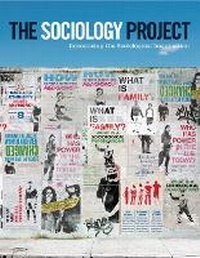
The Sociology Project
Introducing the Sociological Imagination
Published on 19. February 2013
Book
Paperback/Softback
656 pages
978-0-205-09382-3 (ISBN)
Description
Inspiring the Sociological Imagination
The Sociology Project conveys the power of the sociological imagination and engages us to interact with the questions, mysteries, and challenges of our world.
Seeking to spark students' sociological imaginations, The Sociology Project provides an interactive approach for discovery. The passion and insight of the sociological perspective are revealed through a collaborative authorship.
Teaching and Learning Experience
This program will provide a better teaching and learning experience - for you and your students. Here's how:
Personalize Learning - Featuring the most immersive media program available, MySocLab delivers dynamic, engaging experiences that personalize, stimulate, and measure learning for every student.
Improve Critical Thinking - The Big Questions pedagogical framework is designed to foster intellectual curiosity.
Engage Students - The text provides links to a wider world of content, including interactive maps, videos, and activities.
Explore Theory - Because each author is a specialist on the chapter's topic, students learn about the most current theory, research and debates in the field.
Support Instructors - In addition to a robust support program, instructors can join the conversation with the authors and fellow teachers in our Facebook Group.
Note: MySocLab does not come automatically packaged with this text. To purchase MySocLab, please visit www.mysoclab.com or you can purchase a ValuePack of the text + MySocLab: ValuePack ISBN-10: 0205949606 / ValuePack ISBN-13: 9780205949601.
The Sociology Project conveys the power of the sociological imagination and engages us to interact with the questions, mysteries, and challenges of our world.
Seeking to spark students' sociological imaginations, The Sociology Project provides an interactive approach for discovery. The passion and insight of the sociological perspective are revealed through a collaborative authorship.
Teaching and Learning Experience
This program will provide a better teaching and learning experience - for you and your students. Here's how:
Personalize Learning - Featuring the most immersive media program available, MySocLab delivers dynamic, engaging experiences that personalize, stimulate, and measure learning for every student.
Improve Critical Thinking - The Big Questions pedagogical framework is designed to foster intellectual curiosity.
Engage Students - The text provides links to a wider world of content, including interactive maps, videos, and activities.
Explore Theory - Because each author is a specialist on the chapter's topic, students learn about the most current theory, research and debates in the field.
Support Instructors - In addition to a robust support program, instructors can join the conversation with the authors and fellow teachers in our Facebook Group.
Note: MySocLab does not come automatically packaged with this text. To purchase MySocLab, please visit www.mysoclab.com or you can purchase a ValuePack of the text + MySocLab: ValuePack ISBN-10: 0205949606 / ValuePack ISBN-13: 9780205949601.
Reviews / Votes
Instructor Reviews"I think it is excellent! It is creative, innovative, collaborative, cutting-edge, interesting, forward-thinking and well-written. I also like the idea of a collaborative book drawing on experts in their fields."
-Bernadette Barton, Moorehead State University
"Fresh, insightful and engaging. By far the most interesting strategy that I have seen in a long time. It is so needed and timely."
-David Townsend, Ivy Tech Community College
"I think it is brilliant. Using experts in each area of Sociology to write the chapters is a wonderful idea."
- Jan Schall, Riverside Community College
"This book really is a collection of the best."
-Huiying Wei-Arthus, Weber State University
"I am very excited about the collaborative nature of authorship. I especially like the idea that the author of each chapter is one who teaches and researches in the subject of the chapter."
-Tiffany Parsons, University of West Georgia
Student Reviews
"I would say this is much better than the textbook I am currently using. Two main reasons why this book is better. The first is the organization of the book. I personally feel that this book flows better from subject to subject and using examples that relate to more of today's society. The second reason is the helpful tools the textbook provides. I like how the book highlights important ideas throughout the passage. In addition to the highlighted passages there were these big questions that helped direct what information you should be getting out of the reading.The most compelling feature was the big questions that are throughout the chapter. They make a real difference when trying to discern what to take away from the chapter."
-Jacob Diehl, Bowling Green State University
"When I first skimmed over the chapter I immediately found it more interesting than the current textbook. I liked the tone the author had throughout and the questions that were posed in the sections were thought provoking and questions that I've actually had myself."
-Symone Whitfield, East Carolina University
"I watched the 'Is Race Real?' video, and it really was informative. I like that the book has the interaction option built into the book. It gives the reader multiply ways of getting the information, and understanding it becomes easier. I also used the Infograph for the percentage of the population being white in Philadelphia and how it has changed over time. This tool really brings the information to life and helps the visual learners like myself better understand the topics in the book."
-Megan Spitler, Kennesaw State University
"I liked this chapter because it was not just a bunch of facts listed off. It made you think about how we ourselves think of race and ethnicity. I liked that it explained different examples without telling you what is right and wrong."
-Stephanie Spaniak, Northern Michigan University
"I absolutely loved the chapter, and enjoyed reading it. The chapter is much better then the chapter with my current text book. The information is very elaborate, and so much more interesting."
-Leah Wallace, Wor Wic Community College
More details
Language
English
Place of publication
United States
Publishing group
Pearson Education (US)
Target group
College/higher education
Dimensions
Height: 276 mm
Width: 216 mm
Weight
1207 gr
ISBN-13
978-0-205-09382-3 (9780205093823)
Copyright in bibliographic data and cover images is held by Nielsen Book Services Limited or by the publishers or by their respective licensors: all rights reserved.
Schweitzer Classification
Other editions
New editions
Jeff Manza | Richard Arum | Lynne Haney
The Sociology Project
Introducing the Sociological Imagination
Book
07/2015
2nd Edition
Pearson
€116.36
Article is exhausted; no reprint
Content
IN THIS SECTION:
1. Brief Table of Contents
2. Comprehensive Table of Contents
BRIEF TABLE OF CONTENTS:
Chapter 1: The Sociological Imagination (Jeff Manza, Lynne Haney, and Richard Arum)
Chapter 2: Studying the Social World (Lynne Haney)
Chapter 3: Social Interaction (Harvey Molotch)
Chapter 4: Social Structure (Jeff Manza and Harel Shapira)
Chapter 5: Culture, Media, and Communication (Eric Klinenberg and David Wachsmuth)
Chapter 6: Power and Politics (Steven Lukes and Jeff Manza)
Chapter 7: Markets, Organizations, and Work (Richard Arum and Jeff Manza, with Abby Larson, Michael Macarthy, and Elizabeth Baker-Smith)
Chapter 8: Cities and Communities (Patrick Sharkey with Max Besbris)
Chapter 9: Social Stratification, Inequality, and Poverty (Florencia Torche, Richard Arum, and Jeff Manza)
Chapter 10: Race and Ethnicity (Ann Morning, with Nandi E. Dill, Rachel Garver, and John Halushka)
Chapter 11: Gender and Sexuality (Paula England)
Chapter 12: Immigration (Guillermina Jasso, with Leslie-Ann Bolden, Carse Ramos, and Harel Shapira)
Chapter 13: Families and Family Life (Kathleen Gerson with Stacey Torres)
Chapter 14: Sociology of Religion (Gerald Marwell with Adam Murphee)
Chapter 15: Education (Caroline H. Persell)
Chapter 16: Crime, Deviance and Social Control (Troy Duster and Jeff Manza)
Chapter 17: Social Movements and Revolustions (Jeff Goodwin)
Chapter 18: Environment Sociology (Colin Jerolmack)
Chapter 19: Population, Aging, and Health (Lawrence L. Wu and Jennifer L. Jennings )
Chapter 20: Globalization (Vivek Chibber)
COMPREHENSIVE TABLE OF CONTENTS
Chapter 1: The Sociological Imagination
by Jeff Manza, Lynne Haney, and Richard Arum
The Big Questions
How Can a Sociological Imagination Help You Better Understand Your World?
Why Do Social Contexts Matter?
Where Did Sociology Come From, and How Is It Different from the Other Social Sciences?
How Can This Book Help You Develop a Sociological Imagination?
The Big Questions Revisited
Chapter 2: Studying the Social World
by Lynne Haney
The Big Questions
Where Do Sociological Questions Come From?
What Is the Best Method to Research a Sociological Question?
How Is Data Collected?
How Do Sociologists Make Sense of Their Findings?
The Big Questions Revisited
Chapter 3: Social Interaction
by Harvey Molotch
The Big Questions
How Do We Develop a Sense of Self?
How Do We Make Sense of Our Worlds?
Who Matters to Us?
What Challenges Do We Face as We Move from One Social Context to Another?
The Big Questions Revisited
Chapter 4: Social Structure
by Jeff Manza with Harel Shapira
The Big Questions
What Is Social Structure?
How Do Social Hierarchies Shape Our Life Choices and Relationships?
Why Do Institutions Influence Social Life?
How is Social Structure Linked to Social Interaction?
Why Are Social Structures Slow to Change?
The Big Questions Revisited
Chapter 5: Culture, Media, and Communication
by Eric Klinenberg with David Wachsmuth
The Big Questions
What Is Culture?
How Does Culture Shape Our Collective Identity?
How Do Our Cultural Practices Relate to Class and Status?
Who Produces Culture, and Why?
What Is the Relationship between Media and Democracy?
The Big Questions Revisited
Chapter 6: Power and Politics
by Steven Lukes and Jeff Manza
The Big Questions
What Are the Distinct Forms of Power?
How Does the State Distribute Power in a Society?
Who Has Power in the United States Today?
The Big Questions Revisited
Chapter 7: Markets, Organizations, and Work
by Richard Arum and Jeff Manza, with Abby Larson, Michael Macarthy, and Christine Baker-Smith
The Big Questions
How Do Social Factors Impact Markets?
Why Are Organizations Important for Social and Economic Life?
What Is the Relationship between Organizations and Their Environment?
How Are Jobs Structured?
What Makes a Good Job?
The Big Questions Revisited
Chapter 8: Cities and Communities
by Patrick Sharkey with Max Besbris
The Big Questions
What Draws People to Cities?
How Do Neighborhoods Form and Change?
Does Living in Cities Influence Who We Are, Who Our Friends
Are, and How We Live?
Why Are So Many Social Problems Found in Cities?
How Will Cities Change in an Increasingly Connected World?
The Big Questions Revisited
Chapter 9: Social Stratification, Inequality, and Poverty
by Florencia Torche, Richard Arum, and Jeff Manza
The Big Questions
What Is Inequality?
Why Is America So Unequal?
Do We All Have an Equal Opportunity to Succeed in Life?
How Much Poverty Exists in the United States and Around the World?
The Big Questions Revisited
Chapter 10: Race and Ethnicity
by Ann Morning, with Nandi E. Dill, Rachel Garver, and John Halushka
The Big Questions
What Is the Difference between Race and Ethnicity?
Is Race Real?
What Is Racist and What Isn't?
Do Race and Ethnicity Matter Anymore?
How Are Race and Ethnicity Changing in the Twenty-First Century?
The Big Questions Revisited
Chapter 11: Gender and Sexuality
by Paula England
The Big Questions
Where Do the Differences between Men and Women Come From?
How Have the Lives of Women and Men Changed in the Last 50 Years?
How Are Our Sex Lives Shaped by Biology and Society?
How Has Sexual Behavior Changed in the Last 50 Years?
The Big Questions Revisited
Chapter 12: Immigration
by Guillermina Jasso, with Leslie-Ann Bolden, Carse Ramos, and Harel Shapira
The Big Questions
What Is Immigration, and How Has It Changed Over Time?
Why Do People Move?
How Do Immigrants Fare in Their New Environments?
What Are the Consequences of Immigration?
The Big Questions Revisited
Chapter 13: Families and Family Life
by Kathleen Gerson with Stacy Torres
The Big Questions
What Is a Family?
Why Has Family Life Become the Topic of Such
Heated Debate?
What Challenges Do We Face as We Develop Relationships and Balance Family and Work?
What Is It Like to Grow Up in a Twenty-First-Century Family?
What Causes Inequality among Families?
What Social Policies around the World Best Support Changing Families?
The Big Questions Revisited
Chapter 14: Sociology of Religion
by Gerald Marwell with Adam Murphree
The Big Questions 381
What Is Religion, and How Is It Organized?
How Do People Choose Their Religions?
Why Are Women and Older People More Religious than Men and the Young?
Why Do People Kill Each Other in the Name of Religion?
What Is the Future of Religion?
The Big Questions Revisited
Chapter 15: Education
by Caroline H.Persell
The Big Questions
What are the Major Functions of Schooling?
How Is Education Related to Important Life Outcomes?
Is Education Equally Available to All?
How Do Educational Systems Differ?
How Do Digital Technologies Affect Education?
The Big Questions Revisited
Chapter 16: Crime, Deviance, and Social Control
by Troy Duster and Jeff Manza
The Big Questions
What Is Deviance?
How Is Morality Defined and Regulated?
Who Defines Deviance?
How Is Social Control Maintained?
The Big Questions Revisited
Chapter 17: Social Movements and Revolutions
by Jeff Goodwin
The Big Questions
What Are Social Movements?
Why Do Movements Emerge, and Who Joins Them?
What Do Movements Accomplish?
What Are Revolutions, and Why Do They Occur?
The Big Questions Revisited
Chapter 18: Environmental Sociology
by Colin Jerolmack
The Big Questions
How Does Social Life Relate to the Natural Environment?
How Has Human Activity Harmed the Environment?
How Do Environmental Factors Impact Inequality?
How Can We Create More Sustainable Societies?
The Big Questions Revisited
Chapter 19: Population, Aging, and Health
by Lawrence L. Wu and Jennifer L. Jennings
The Big Questions
How Do Populations Change over Time?
What Happens In Aging Societies?
How Do Social Contexts Affect Health?
Who Gets Sick and Why?
The Big Questions Revisited
Chapter 20: Globalization
by Vivek Chibber
The Big Questions
What Are the Origins of Globalization?
How Far-Reaching Is Globalization?
What Drives Globalization?
What Are the Benefits and Drawbacks of Globalization?
The Big Questions Revisited
1. Brief Table of Contents
2. Comprehensive Table of Contents
BRIEF TABLE OF CONTENTS:
Chapter 1: The Sociological Imagination (Jeff Manza, Lynne Haney, and Richard Arum)
Chapter 2: Studying the Social World (Lynne Haney)
Chapter 3: Social Interaction (Harvey Molotch)
Chapter 4: Social Structure (Jeff Manza and Harel Shapira)
Chapter 5: Culture, Media, and Communication (Eric Klinenberg and David Wachsmuth)
Chapter 6: Power and Politics (Steven Lukes and Jeff Manza)
Chapter 7: Markets, Organizations, and Work (Richard Arum and Jeff Manza, with Abby Larson, Michael Macarthy, and Elizabeth Baker-Smith)
Chapter 8: Cities and Communities (Patrick Sharkey with Max Besbris)
Chapter 9: Social Stratification, Inequality, and Poverty (Florencia Torche, Richard Arum, and Jeff Manza)
Chapter 10: Race and Ethnicity (Ann Morning, with Nandi E. Dill, Rachel Garver, and John Halushka)
Chapter 11: Gender and Sexuality (Paula England)
Chapter 12: Immigration (Guillermina Jasso, with Leslie-Ann Bolden, Carse Ramos, and Harel Shapira)
Chapter 13: Families and Family Life (Kathleen Gerson with Stacey Torres)
Chapter 14: Sociology of Religion (Gerald Marwell with Adam Murphee)
Chapter 15: Education (Caroline H. Persell)
Chapter 16: Crime, Deviance and Social Control (Troy Duster and Jeff Manza)
Chapter 17: Social Movements and Revolustions (Jeff Goodwin)
Chapter 18: Environment Sociology (Colin Jerolmack)
Chapter 19: Population, Aging, and Health (Lawrence L. Wu and Jennifer L. Jennings )
Chapter 20: Globalization (Vivek Chibber)
COMPREHENSIVE TABLE OF CONTENTS
Chapter 1: The Sociological Imagination
by Jeff Manza, Lynne Haney, and Richard Arum
The Big Questions
How Can a Sociological Imagination Help You Better Understand Your World?
Why Do Social Contexts Matter?
Where Did Sociology Come From, and How Is It Different from the Other Social Sciences?
How Can This Book Help You Develop a Sociological Imagination?
The Big Questions Revisited
Chapter 2: Studying the Social World
by Lynne Haney
The Big Questions
Where Do Sociological Questions Come From?
What Is the Best Method to Research a Sociological Question?
How Is Data Collected?
How Do Sociologists Make Sense of Their Findings?
The Big Questions Revisited
Chapter 3: Social Interaction
by Harvey Molotch
The Big Questions
How Do We Develop a Sense of Self?
How Do We Make Sense of Our Worlds?
Who Matters to Us?
What Challenges Do We Face as We Move from One Social Context to Another?
The Big Questions Revisited
Chapter 4: Social Structure
by Jeff Manza with Harel Shapira
The Big Questions
What Is Social Structure?
How Do Social Hierarchies Shape Our Life Choices and Relationships?
Why Do Institutions Influence Social Life?
How is Social Structure Linked to Social Interaction?
Why Are Social Structures Slow to Change?
The Big Questions Revisited
Chapter 5: Culture, Media, and Communication
by Eric Klinenberg with David Wachsmuth
The Big Questions
What Is Culture?
How Does Culture Shape Our Collective Identity?
How Do Our Cultural Practices Relate to Class and Status?
Who Produces Culture, and Why?
What Is the Relationship between Media and Democracy?
The Big Questions Revisited
Chapter 6: Power and Politics
by Steven Lukes and Jeff Manza
The Big Questions
What Are the Distinct Forms of Power?
How Does the State Distribute Power in a Society?
Who Has Power in the United States Today?
The Big Questions Revisited
Chapter 7: Markets, Organizations, and Work
by Richard Arum and Jeff Manza, with Abby Larson, Michael Macarthy, and Christine Baker-Smith
The Big Questions
How Do Social Factors Impact Markets?
Why Are Organizations Important for Social and Economic Life?
What Is the Relationship between Organizations and Their Environment?
How Are Jobs Structured?
What Makes a Good Job?
The Big Questions Revisited
Chapter 8: Cities and Communities
by Patrick Sharkey with Max Besbris
The Big Questions
What Draws People to Cities?
How Do Neighborhoods Form and Change?
Does Living in Cities Influence Who We Are, Who Our Friends
Are, and How We Live?
Why Are So Many Social Problems Found in Cities?
How Will Cities Change in an Increasingly Connected World?
The Big Questions Revisited
Chapter 9: Social Stratification, Inequality, and Poverty
by Florencia Torche, Richard Arum, and Jeff Manza
The Big Questions
What Is Inequality?
Why Is America So Unequal?
Do We All Have an Equal Opportunity to Succeed in Life?
How Much Poverty Exists in the United States and Around the World?
The Big Questions Revisited
Chapter 10: Race and Ethnicity
by Ann Morning, with Nandi E. Dill, Rachel Garver, and John Halushka
The Big Questions
What Is the Difference between Race and Ethnicity?
Is Race Real?
What Is Racist and What Isn't?
Do Race and Ethnicity Matter Anymore?
How Are Race and Ethnicity Changing in the Twenty-First Century?
The Big Questions Revisited
Chapter 11: Gender and Sexuality
by Paula England
The Big Questions
Where Do the Differences between Men and Women Come From?
How Have the Lives of Women and Men Changed in the Last 50 Years?
How Are Our Sex Lives Shaped by Biology and Society?
How Has Sexual Behavior Changed in the Last 50 Years?
The Big Questions Revisited
Chapter 12: Immigration
by Guillermina Jasso, with Leslie-Ann Bolden, Carse Ramos, and Harel Shapira
The Big Questions
What Is Immigration, and How Has It Changed Over Time?
Why Do People Move?
How Do Immigrants Fare in Their New Environments?
What Are the Consequences of Immigration?
The Big Questions Revisited
Chapter 13: Families and Family Life
by Kathleen Gerson with Stacy Torres
The Big Questions
What Is a Family?
Why Has Family Life Become the Topic of Such
Heated Debate?
What Challenges Do We Face as We Develop Relationships and Balance Family and Work?
What Is It Like to Grow Up in a Twenty-First-Century Family?
What Causes Inequality among Families?
What Social Policies around the World Best Support Changing Families?
The Big Questions Revisited
Chapter 14: Sociology of Religion
by Gerald Marwell with Adam Murphree
The Big Questions 381
What Is Religion, and How Is It Organized?
How Do People Choose Their Religions?
Why Are Women and Older People More Religious than Men and the Young?
Why Do People Kill Each Other in the Name of Religion?
What Is the Future of Religion?
The Big Questions Revisited
Chapter 15: Education
by Caroline H.Persell
The Big Questions
What are the Major Functions of Schooling?
How Is Education Related to Important Life Outcomes?
Is Education Equally Available to All?
How Do Educational Systems Differ?
How Do Digital Technologies Affect Education?
The Big Questions Revisited
Chapter 16: Crime, Deviance, and Social Control
by Troy Duster and Jeff Manza
The Big Questions
What Is Deviance?
How Is Morality Defined and Regulated?
Who Defines Deviance?
How Is Social Control Maintained?
The Big Questions Revisited
Chapter 17: Social Movements and Revolutions
by Jeff Goodwin
The Big Questions
What Are Social Movements?
Why Do Movements Emerge, and Who Joins Them?
What Do Movements Accomplish?
What Are Revolutions, and Why Do They Occur?
The Big Questions Revisited
Chapter 18: Environmental Sociology
by Colin Jerolmack
The Big Questions
How Does Social Life Relate to the Natural Environment?
How Has Human Activity Harmed the Environment?
How Do Environmental Factors Impact Inequality?
How Can We Create More Sustainable Societies?
The Big Questions Revisited
Chapter 19: Population, Aging, and Health
by Lawrence L. Wu and Jennifer L. Jennings
The Big Questions
How Do Populations Change over Time?
What Happens In Aging Societies?
How Do Social Contexts Affect Health?
Who Gets Sick and Why?
The Big Questions Revisited
Chapter 20: Globalization
by Vivek Chibber
The Big Questions
What Are the Origins of Globalization?
How Far-Reaching Is Globalization?
What Drives Globalization?
What Are the Benefits and Drawbacks of Globalization?
The Big Questions Revisited