

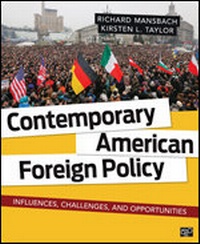
Contemporary American Foreign Policy
Influences, Challenges, and Opportunities
1st Edition
Published on 29. February 2016
Book
Paperback/Softback
568 pages
978-1-4522-8723-2 (ISBN)
Description
Contemporary American Foreign Policy: Influences, Challenges, and Opportunities looks at today's most pressing foreign-policy challenges from a U.S. perspective, as well as from the vantage point of other states and peoples. It explores global issues such as human rights, climate change, poverty, nuclear arms proliferation, and economic collapse from multiple angles, not just through a so-called national interest lens. Authors Richard Mansbach and Kirsten L. Taylor shed new light on the competing forces that influence foreign-policy decision making, outline the various policy options available to decision makers, and explore the potential consequences of those policies, all to fully grasp and work to meet contemporary foreign-policy challenges.
Reviews / Votes
"Mansbach and Taylor's practical, solution-oriented approach is novel and valuable. Its use of levels of analysis for causal factors and the way that it conscientiously includes important components of the global environment often neglected in other texts are just some of the factors that set it apart." -- Alynna Lyon "Manbach and Taylor enliven the subject matter and make it relevant to current situations. Each chapter provides an effective overview of the historical context and contemporary importance of a significant foreign policy issue, providing needed perspective that combines strong scholarship and engaging writing." -- James Seroka "Mansbach and Taylor provide a thoroughly up-to-date, useful pedagogical tool for studying and learning about U.S. foreign policy. Contemporary American Foreign Policy is particularly strong in its assessments of the opportunities and constraints relative to various foreign policy options presented to the American Foreign Policy Establishment. Its strongest assets lie in its incorporation of an issue areas-approach to foreign affairs and in its various case studies." -- Matt Caverly "Mansbach and Taylor present a timely, comprehensive, and engaging text, involving readers in the evaluation of each policy by showing positive and negative outcomes, as well as policy alternatives and approaches for analysis. Contemporary American Foreign Policy will be attractive to both upper division and lower division undergraduates alike." -- Martha CottamMore details
Language
English
Place of publication
Washington
United States
Publishing group
SAGE Publications Inc
Target group
College/higher education
Dimensions
Height: 232 mm
Width: 191 mm
Weight
852 gr
ISBN-13
978-1-4522-8723-2 (9781452287232)
Copyright in bibliographic data and cover images is held by Nielsen Book Services Limited or by the publishers or by their respective licensors: all rights reserved.
Schweitzer Classification
Persons
Richard W. Mansbach (BA Swarthmore College, DPhil Oxford University) is a former Marshall Scholar and three-time Fulbright Scholar. He has authored, co-authored, or edited seventeen books and numerous articles and book chapters largely concerning theory in global politics and foreign policy. His scholarship has extended our understanding of global politics beyond the traditional notion of territorial states interacting in an anarchic system to encompass a wide variety of actors complexly related across a variety of issues. Increasingly, his work has moved from the dominant role of "states" in international relations theory to encompass a changing cast of actors in a globalizing world and toward the concept of "identity" and the role of psychological, as opposed to geographic, distance in determining loyalties and behavior. His scholarship focuses on the critical role of history and norms in understanding change and continuity in global politics and in the movement from pre-international to international and, ultimately, post-international politics in a globalizing world. Among his books several are routinely used in major graduate programs, notably, The Web of World Politics, In Search of Theory: Toward a New Paradigm for Global Politics, The Elusive Quest: Theory and International Politics, Polities: Authority, Identities, and Change, The Elusive Quest Continues: Theory and Global Politics, Remapping Global Politics, Globalization: The return of borders to a borderless world?. In addition, Professor Mansbach was the co-editor of the field's flagship journal International Studies. He has also served as department chair at Rutgers University (New Brunswick) and at Iowa State University. Kirsten Taylor (BA University of Pittsburgh, PhD McGill University) is Associate Professor and Department Chair of Government and International Studies at Berry College, a private liberal arts college in Northwest Georgia. Her scholarship focuses on the development and transformation of international institutions and norms, with particular emphases on security and environmental institutions, teaching with simulations. Her articles have appeared in International Studies Perspectives, Canadian Journal of Political Science and Comparative Strategy. Dr. Taylor also is co-author of a textbook, Introduction to Global Politics, with Richard Mansbach.
Content
Introduction
Competing Models of U.S. Foreign Policy
Organization of the Book
Pedagogical Tools
Part I. Policy Orientations
Chapter 1: Sources of American Foreign Policy
The Linkage of Domestic and Foreign Policies
Sources of Foreign-Policy Influence
Conclusion
Chapter 2: Competing Currents in U.S. Foreign Policy
Competing Currents
Past: Competing Currents in Historical Perspective
Present: The Impact of 9/11
Conclusion: Engagement or Disengagement?
Part II. Challenges in Key Issue Areas
Chapter 3: American Military Strategy in an Era of Power Diffusion
Sources of U.S. Military Strategy
Past: Managing Superpower Rivalry
Present: Grand Strategy in a Changing World
Future: Adapting to a Changing Environment
Conclusion: A Changing Strategic Environment
Chapter 4: America and the Proliferation of Weapons of Mass Destruction
Past: Proliferation in the First Nuclear Age
Present: Proliferation in the Second Nuclear Age
Nonproliferation and the Future
Conclusion: A Dangerous World
Chapter 5: An American Economic Conundrum: Neoliberalism or Neo-Mercantilism?
Sources of U.S. Foreign Economic Policy
Past: The Evolution of U.S. Foreign Economic Policy
Present: Contemporary Economic Challenges
Future: Foreign Economic Policy
Conclusion: America and the Globalized Economy
Chapter 6: Democracy and Human Rights: Legitimate Objectives of American Policy?
Sources of U.S. Human-Rights Policies
Past: Discerning Trends in U.S. Human Rights Policy
Present: Recent Challenges to Democracy Promotion and Human Rights
Future: Promoting Democracy and Human Rights
Human Rights and National Security
Conclusion: An Inconsistent Human Rights Record
Chapter 7: The U.S. and the Global South: Practicing Intervention, Aid, and Neglect
Sources of U.S. Aid and Intervention
Past: U.S. Aid and Intervention
Present: Challenges in the Global South
Future: Balancing Aid, Intervention, and Neglect
Conclusion
Chapter 8: Energy and the Environment: The Limits of U.S. Leadership
Sources of U.S. Environmental and Energy Policies
Past: Changing Trends in U.S. Environmental Leadership
Future: Environmental and Energy Alternatives
Conclusion: Environment and Energy Issues
Part III: Challenges in Key Regions and Countries
Chapter 9: America and the Palestinian-Israeli Imbroglio
Sources of U.S. Policy toward Israel
Past: From Israel's Birth to the Six-Day War, 1948-1967
Present, 1967-2015
Future: Disputed Issues
Conclusion: Is Peace Possible?
Chapter 10: Arab Spring or Arab Winter?
Sources of U.S. Policy toward the Arab World
Past: Before the Arab Spring
Present: Stirrings of Spring
Future: An Arab Winter?
Conclusion: Arab Spring or Arab Winter?
Chapter 11: America and Radical Islam
Sources of U.S. Policy toward Terrorism
The Islamic Past
Present: The War on Terror
Future: Is the War on Terror Over?
Conclusion: Have We Won?
Chapter 12: The United States and China: Engagement or Containment?
Sources of American Policy toward China
Past: From Hostility to Engagement
Present: Partners or Adversaries?
Future: Balancing Cooperation and Conflict
Conclusion: Containment or Engagement?
Chapter 13: America, Europe, and NATO: A Changing Partnership
Sources of U.S. Policy toward Europe
Past: The New World and the Old
Present: NATO's Changing Mission
Future: NATO Reinvented
Conclusion: NATO Redux
Chapter 14: America and Russia: Values versus Power
Past: A Bipolar World
Present: From Cooperation to Conflict
Future: Churchill's "Riddle Wrapped in a Mystery inside an Enigma"
Conclusion: Did the "Reset" Succeed?
Part IV: Conclusion
Chapter 15: Conclusion: America, a Wary Hegemon
The Evolution of American Foreign Policy before the Cold War
After the Cold War
Contemporary Foreign-Policy Challenges
What Next?
Competing Models of U.S. Foreign Policy
Organization of the Book
Pedagogical Tools
Part I. Policy Orientations
Chapter 1: Sources of American Foreign Policy
The Linkage of Domestic and Foreign Policies
Sources of Foreign-Policy Influence
Conclusion
Chapter 2: Competing Currents in U.S. Foreign Policy
Competing Currents
Past: Competing Currents in Historical Perspective
Present: The Impact of 9/11
Conclusion: Engagement or Disengagement?
Part II. Challenges in Key Issue Areas
Chapter 3: American Military Strategy in an Era of Power Diffusion
Sources of U.S. Military Strategy
Past: Managing Superpower Rivalry
Present: Grand Strategy in a Changing World
Future: Adapting to a Changing Environment
Conclusion: A Changing Strategic Environment
Chapter 4: America and the Proliferation of Weapons of Mass Destruction
Past: Proliferation in the First Nuclear Age
Present: Proliferation in the Second Nuclear Age
Nonproliferation and the Future
Conclusion: A Dangerous World
Chapter 5: An American Economic Conundrum: Neoliberalism or Neo-Mercantilism?
Sources of U.S. Foreign Economic Policy
Past: The Evolution of U.S. Foreign Economic Policy
Present: Contemporary Economic Challenges
Future: Foreign Economic Policy
Conclusion: America and the Globalized Economy
Chapter 6: Democracy and Human Rights: Legitimate Objectives of American Policy?
Sources of U.S. Human-Rights Policies
Past: Discerning Trends in U.S. Human Rights Policy
Present: Recent Challenges to Democracy Promotion and Human Rights
Future: Promoting Democracy and Human Rights
Human Rights and National Security
Conclusion: An Inconsistent Human Rights Record
Chapter 7: The U.S. and the Global South: Practicing Intervention, Aid, and Neglect
Sources of U.S. Aid and Intervention
Past: U.S. Aid and Intervention
Present: Challenges in the Global South
Future: Balancing Aid, Intervention, and Neglect
Conclusion
Chapter 8: Energy and the Environment: The Limits of U.S. Leadership
Sources of U.S. Environmental and Energy Policies
Past: Changing Trends in U.S. Environmental Leadership
Future: Environmental and Energy Alternatives
Conclusion: Environment and Energy Issues
Part III: Challenges in Key Regions and Countries
Chapter 9: America and the Palestinian-Israeli Imbroglio
Sources of U.S. Policy toward Israel
Past: From Israel's Birth to the Six-Day War, 1948-1967
Present, 1967-2015
Future: Disputed Issues
Conclusion: Is Peace Possible?
Chapter 10: Arab Spring or Arab Winter?
Sources of U.S. Policy toward the Arab World
Past: Before the Arab Spring
Present: Stirrings of Spring
Future: An Arab Winter?
Conclusion: Arab Spring or Arab Winter?
Chapter 11: America and Radical Islam
Sources of U.S. Policy toward Terrorism
The Islamic Past
Present: The War on Terror
Future: Is the War on Terror Over?
Conclusion: Have We Won?
Chapter 12: The United States and China: Engagement or Containment?
Sources of American Policy toward China
Past: From Hostility to Engagement
Present: Partners or Adversaries?
Future: Balancing Cooperation and Conflict
Conclusion: Containment or Engagement?
Chapter 13: America, Europe, and NATO: A Changing Partnership
Sources of U.S. Policy toward Europe
Past: The New World and the Old
Present: NATO's Changing Mission
Future: NATO Reinvented
Conclusion: NATO Redux
Chapter 14: America and Russia: Values versus Power
Past: A Bipolar World
Present: From Cooperation to Conflict
Future: Churchill's "Riddle Wrapped in a Mystery inside an Enigma"
Conclusion: Did the "Reset" Succeed?
Part IV: Conclusion
Chapter 15: Conclusion: America, a Wary Hegemon
The Evolution of American Foreign Policy before the Cold War
After the Cold War
Contemporary Foreign-Policy Challenges
What Next?