

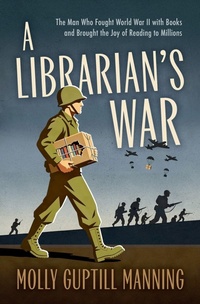
A Librarian's War
The Man Who Fought World War II with Books and Brought the Joy of Reading to Millions
Will be published approx. on 5. January 2027
Book
Hardback
264 pages
978-0-19-786124-0 (ISBN)
Description
The untold story of Ray Trautman, the Greatest Generation's librarian, who made reading central to the Allied fight in World War II and transformed the role of books in American life.
Though unknown to most readers, no one made a greater contribution to reading habits in America than Ray Trautman. Growing up in the rural Midwest, Trautman looked to reading as a way of exploring the world--as both escape and enlightenment--and yet, as with many Americans, discovered that with no community library and limited funds finding books was a challenge. This sparked in him a lifelong passion to build libraries and ensure free access to books for all. After working his way through college, Trautman became an independent bookseller, and then joined the Civilian Conservation Corps during the Depression, building libraries and teaching people how to read. In late 1940, after earning a degree in library studies from Columbia, he landed the job of a lifetime: Chief Librarian of the Army. Many military leaders believed books were an unnecessary distraction for troops, but Trautman relentlessly championed books, believing, like others, that they were key to the fight against totalitarianism and ultimately built the largest and most far-reaching library system in the world. He devised the "Armed Services Editions," wallet-sized paperbacks and printed miniature magazines for soldiers. He also created the most popular comic book in the Army, Overseas Comics. Along the way, Trautman fought book bans and book-resistant generals (including Douglas MacArthur), was nearly killed in the Battle of the Bulge while on a special assignment for Dwight Eisenhower and joined forces with librarians and publishers to spread access to reading. Trautman was credited with distributing nearly a half billion books, magazines, and comic books to troops.
When the war ended in 1945, Trautman brought the fight for books home: advocating for rural libraries, building libraries in prisons, campaigning for more books for the visually impaired, and working to develop materials for adults with low reading proficiency so they could improve their literacy skills.
A Librarian's War introduces readers to a man who dedicated his life to instilling a passion for reading and unhindered access to books. Molly Guptill Manning's book puts Trautman where he deserves to be: at the center of the story.
Though unknown to most readers, no one made a greater contribution to reading habits in America than Ray Trautman. Growing up in the rural Midwest, Trautman looked to reading as a way of exploring the world--as both escape and enlightenment--and yet, as with many Americans, discovered that with no community library and limited funds finding books was a challenge. This sparked in him a lifelong passion to build libraries and ensure free access to books for all. After working his way through college, Trautman became an independent bookseller, and then joined the Civilian Conservation Corps during the Depression, building libraries and teaching people how to read. In late 1940, after earning a degree in library studies from Columbia, he landed the job of a lifetime: Chief Librarian of the Army. Many military leaders believed books were an unnecessary distraction for troops, but Trautman relentlessly championed books, believing, like others, that they were key to the fight against totalitarianism and ultimately built the largest and most far-reaching library system in the world. He devised the "Armed Services Editions," wallet-sized paperbacks and printed miniature magazines for soldiers. He also created the most popular comic book in the Army, Overseas Comics. Along the way, Trautman fought book bans and book-resistant generals (including Douglas MacArthur), was nearly killed in the Battle of the Bulge while on a special assignment for Dwight Eisenhower and joined forces with librarians and publishers to spread access to reading. Trautman was credited with distributing nearly a half billion books, magazines, and comic books to troops.
When the war ended in 1945, Trautman brought the fight for books home: advocating for rural libraries, building libraries in prisons, campaigning for more books for the visually impaired, and working to develop materials for adults with low reading proficiency so they could improve their literacy skills.
A Librarian's War introduces readers to a man who dedicated his life to instilling a passion for reading and unhindered access to books. Molly Guptill Manning's book puts Trautman where he deserves to be: at the center of the story.
More details
Person
Molly Guptill Manning is a historian, curator, and professor of law at New York Law School. She is the author of the New York Times-bestseller, When Books Went to War, as well as The Myth of Ephraim Tut, and The War of Words. She frequently gives talks about the centrality of books in democracy, and curates museum exhibits that showcase the essential role that books, magazines, and newspapers played in World War II.
Content
- Introduction
- Chapter 1: Children of the Night
- Chapter 2: By the Grace of God and Certain Good Friends
- Chapter 3: Literary Equipment
- Chapter 4: A Friend to Hemingway; An Enemy to MacArthur
- Chapter 5: The Slicks
- Chapter 6: Go Small or Stay Home
- Chapter 7: Roads Paved in Books
- Chapter 8: Banned
- Chapter 9: Temporary Widow
- Chapter 10: Fighting Your War
- Chapter 11: Birds on His Shoulder
- Chapter 12: Civilian, Sort Of
- Chapter 13: Back into the Fold
- Chapter 14: Fatigues and New Frontiers
- Chapter 15: Forgotten People
- Epilogue