

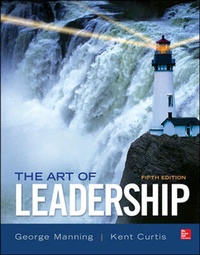
The Art of Leadership (Int'l Ed)
5th Edition
Published on 16. May 2014
Book
Paperback/Softback
544 pages
978-1-259-25440-6 (ISBN)
Description
The Art of Leadership, 5th edition is based on two ideas.
Leadership will take place to the extent the leader cares about the work to be done. Equally important, the leader must care about people. Neither of these qualities is sufficient without the other, and neither can be false. People know when the leader cares. When the leader is committed to the task and is concerned about people, these qualities serve as magnets and motivators to followers, and their potential for achievement becomes enormous. Leadership is an art that can be developed through mastery of nine key areas of success. The successful leader must possess knowledge and skills in the following areas: understanding leadership variables, the power of vision, the importance of ethics, the empowerment of people, leadership principles, understanding people, multiplying effectiveness, developing others, and performance management.
The difference between most other leadership texts and The Art of Leadership, 5th edition can be compared to the difference between a lecture and a seminar. Although both are good educational vehicles, the lecture is better for conveying large amounts of information, while the seminar is better for developing skills and attitudes. A good lecture is interesting and builds knowledge, while a good seminar is stimulating and builds competency. Without sacrificing either theoretical foundation or important content, the fifth edition of The Art of Leadership emphasizes the interactive, seminar approach to learning.
Leadership will take place to the extent the leader cares about the work to be done. Equally important, the leader must care about people. Neither of these qualities is sufficient without the other, and neither can be false. People know when the leader cares. When the leader is committed to the task and is concerned about people, these qualities serve as magnets and motivators to followers, and their potential for achievement becomes enormous. Leadership is an art that can be developed through mastery of nine key areas of success. The successful leader must possess knowledge and skills in the following areas: understanding leadership variables, the power of vision, the importance of ethics, the empowerment of people, leadership principles, understanding people, multiplying effectiveness, developing others, and performance management.
The difference between most other leadership texts and The Art of Leadership, 5th edition can be compared to the difference between a lecture and a seminar. Although both are good educational vehicles, the lecture is better for conveying large amounts of information, while the seminar is better for developing skills and attitudes. A good lecture is interesting and builds knowledge, while a good seminar is stimulating and builds competency. Without sacrificing either theoretical foundation or important content, the fifth edition of The Art of Leadership emphasizes the interactive, seminar approach to learning.
More details
Persons
George Manning is professor emeritus of psychology at Northern Kentucky University. He is a consultant to business, industry, and government, serving such clients as the AMA, AT&T, General Electric, IBM, Duke Energy, the United Auto Workers, Young Presidents' Organization, the U.S. Navy, and the National Institutes of Health. He lectures on economic and social issues, including quality of work life, workforce values, and business ethics. He maintains an active program of research and writing in organizational psychology. His current studies and interests include the changing meaning of work, leadership ethics, and coping skills for personal and social change.
Tom Head is an associate of the Bears and is recognized in his own right as an expert on several forms of non-traditional education.
Tom Head is an associate of the Bears and is recognized in his own right as an expert on several forms of non-traditional education.
Content
Chapter 1: The Importance of Leadership: Setting the Stage Part One - Leadership VariablesChapter 2: The Leadership Equation Chapter 3: Leadership Qualities, Characteristics of Followers, and Situational Factors Part Two - The Power of VisionChapter 4: The Importance of Vision and the Motive to Lead Chapter 5: Organizational Climate Part Three - The Importance of EthicsChapter 6: Leadership Ethics Chapter 7: The Role of Values and Ethics at Work Part Four - The Empowerment of PeopleChapter 8: Leadership Authority Chapter 9: Empowerment in the Workplace and the Quality Imperative Part Five - Leadership PrinciplesChapter 10: Effective Leadership and Human Relations Chapter 11: The Team Concept Part Six - Understanding PeopleChapter 12: Human Behavior and the Art of Persuasion Chapter 13: The Diversity Challenge Part Seven - Multiplying EffectivenessChapter 14: Effective Behavior and How to Assign Work Chapter 15: The Role of Personality Part Eight - Developing OthersChapter 16: The Leader as a Coach Chapter 17: Helping People through Change and Burnout Prevention Part Nine - Performance ManagementChapter 18: Managing Performance Chapter 19: Professional Performance and Sustaining Discipline Chapter 20: The Road Ahead: Challenge and Charge