

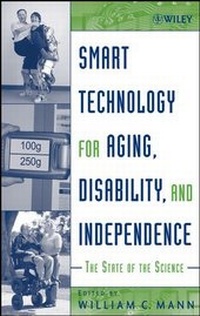
Smart Technology for Aging, Disability and Independence
The State of the Science
1st Edition
Published on 29. July 2005
Book
Hardback
380 pages
978-0-471-69694-0 (ISBN)
Description
Independent living with smart technologies
Smart Technology for Aging, Disability, and Independence: The State of the Science brings together current research and technological developments from engineering, computer science, and the rehabilitation sciences, detailing how its applications can promote continuing independence for older persons and those with disabilities.
Leading experts from multiple disciplines worldwide have contributed to this volume, making it the definitive resource. The text begins with a thorough introduction that presents important concepts, defines key terms, and identifies demographic trends at work. Using detailed product descriptions, photographs and illustrations, and case studies, subsequent chapters discuss cutting-edge technologies, including:
* Wearable systems
* Human-computer interactions
* Assisted vision and hearing
* Smart wheelchairs
* Handheld devices and smart phones
* Visual sensors
* Home automation
* Assistive robotics
* In-room monitoring systems
* Telehealth
After considering specific high-technology solutions, the text examines recent trends in other critical areas, such as basic assistive technologies, driving, transportation and community mobility, home modifications and design, and changing standards of elder care.
Students and professionals in the rehabilitation sciences, health care providers, researchers in computer science and engineering, and non-expert readers will all appreciate this text's thorough coverage and clear presentation of the state of the science.
Reviews / Votes
"...an in-depth overview of the current development and future trends on assistive technologies." (E-STREAMS, January 2007) "The well-organized book, which is part of two-volume series, would be a helpful resource for rehabilitation professionals, health care providers and technology researchers." (Quest, May-June 2006)"...a wealth of information...delivered in a clear and understandable format...a valuable contribution to the field of assistive technology." (IEEE Engineering in Medicine and Biology Magazine, March/April 2006)
"...a readable and current description of specific assistive technologies and general living environments for the elderly...clearly an important book for all computer science students and professionals to read." (Computing Reviews.com, December 27, 2005)
"...an essential resource for professionals in the rehabilitation science, health care providers, and individuals eager to learn more about what is available & what is being developed in assistive technology." (Help's Here! Resources for Seniors and Caregivers, Fall/Winter 2005)
More details
Product info
GB
Edition
1., Auflage
Language
English
Place of publication
United States
Publishing group
John Wiley & Sons Inc
Target group
Professional and scholarly
Product notice
sewn/stitched
Cloth over boards
Illustrations
Drawings: 40 B&W, 0 Color
Dimensions
Height: 240 mm
Width: 161 mm
Thickness: 26 mm
Weight
756 gr
ISBN-13
978-0-471-69694-0 (9780471696940)
Schweitzer Classification
Other editions
Additional editions
E-Book
07/2005
Wiley
€124.99
Available for download
Person
WILLIAM C. MANN, OTR, PhD, is Professor and Chair of the Department of Occupational Therapy and Director of the Rehabilitation Science Doctoral Program at the University of Florida. His research focus is on aging and disability, with an emphasis on compensatory strategies to maintain and promote independence. Since 1991, he has served as Principal Investigator for the NIDRR-funded Rehabilitation Engineering Research Center on Aging. In the past fifteen years, Dr. Mann has authored more that 100 articles and book chapters on assistive technology, two books on assistive technology, and founded and served as editor of the journal Technology and Disability from 1990 to 2000. As an expert on aging and disability, Dr. Mann is a frequent lecturer at local, national, and international conferences and symposiums. Prior to his move to the University of Florida in 2000, Dr. Mann served as professor and chair of occupational therapy at the University of Buffalo, where he developed a curriculum in rehabilitation technology, and also established and directed the internationally recognized Center for Assistive Technology.
Content
I. Introduction.
II. Key Terms: Technology, Aging, Disability and Independence.
III. Demographics of Aging and Disability.
IV. A Model For Viewing Research and Development in Technology, Aging, Disability, and Independence.
V. Addressing Impairment (Motor and Movement, Vision, Hearing, and Cognition), Pain and Fatique.
VI. Personal Assistance.
VII. Consumer Perspective.
UNIT I. SMART TECHNOLOGY FOR AGING, DISABIITY AND INDEPENDENCE.
Chapter 2. Home Automation and Smart Environments to Support Independence.
I. Introduction.
II. The Underlying Technology of the Smart House.
III. Overview of the State of the Science in Smart Homes and Smart Home Components and Related Issues.
IV. Smart House Construction - An Architect's Perspective.
Chapter 3. Robotics.
I. Introduction.
II. Personal and Assistive Robotics.
III. Other Issues Related to Robotics.
IV. Summary.
Chapter 4. Other Devices and High Technology Solutions.
I. Smart Technology for People with Vision Impairment.
II. Smart Technology for People with Hearing Impairment.
III. Smart Technology for People with Mobility and Movement Impairments.
IV. Other Devices.
UNIT II. RELATED ASPECTS OF AGING, DISABILITY AND INDEPENDENCE.
Chapter 5. Telehealth.
I. Introduction.
II. State of Science: Today's Telehealth Devices.
III. Caregiver Issues.
IV. Legal and Financial Issues.
V. Current Limitations and the Future.
Chapter 6. Basic Assistive Technology.
I. Introduction.
II. Low Technology Devices and Impairment.
III. Funding for Assistive Technology in Us.
IV. Resources for Assistive Technology.
Chapter 7. Elder Drivers and Technology.
I. Introduction.
II. Elders And Driving.
III. Older Driver Interventions And Technology.
IV. Conclusion.
Chapter 8. Transportation and Community Mobility.
I. Introduction.
II. Public Transit and Disability.
III. Pedestrian Infrastructure - Roadway and Access Improvements.
IV. Use of Low and High Tech Mobility Devices to Increase Community Mobility.
V. Summary.
Chapter 9. Home Modifications and Universal Design.
I. Introduction.
II. Home Modifications.
III. Universal Design.
IV. Use of Low and High Tech Mobility Devices to Increase Community Mobility.
V. Summary.
Chapter 10. Injury Prevention and Health Promotion.
I. Introduction.
II. Falls.
III. Medication Errors.
IV. Fire.
V. Poisoning.
VI. Nutritional Health.
VII. Conclusion.