

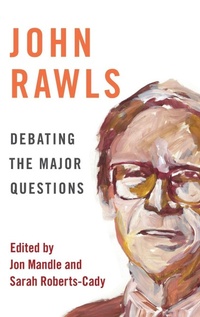
John Rawls
Debating the Major Questions
Published on 9. October 2020
Book
Hardback
406 pages
978-0-19-085921-3 (ISBN)
Description
John Rawls is widely considered one of the most important political philosophers of the 20th century, and his highly original and influential works play a central role in contemporary philosophical debates.
This collection of original essays explores the outpouring of scholarship and debate inspired by Rawls's political philosophy. Given the vastness of this scholarship, this volume aims to provide inroads to its central themes and preoccupations. The volume is divided into ten parts, exploring ten distinct questions, for example: Can Rawls's conception of public reason offer determinate answers to major questions of justice? Is ideal theory useful or relevant to resolving issues of justice in the nonideal world? Are libertarians correct to criticize Rawls's work for failing to prioritize economic liberty? When institutions aim at equality, what is it that they should seek to equalize--primary goods, capabilities, or welfare? For each question, there is an introductory essay, providing an overview of the relevant arguments from Rawls's work and the historical contours of the debate that ensued. Each introductory essay is followed by two essays written by scholars who take opposing positions, which move the discussion forward in a fruitful way.
This volume provides readers with clear and in-depth explication of Rawls's arguments, the most important critical dialogue generated in response to those arguments, and the dialogue's significance to contemporary politics.
This collection of original essays explores the outpouring of scholarship and debate inspired by Rawls's political philosophy. Given the vastness of this scholarship, this volume aims to provide inroads to its central themes and preoccupations. The volume is divided into ten parts, exploring ten distinct questions, for example: Can Rawls's conception of public reason offer determinate answers to major questions of justice? Is ideal theory useful or relevant to resolving issues of justice in the nonideal world? Are libertarians correct to criticize Rawls's work for failing to prioritize economic liberty? When institutions aim at equality, what is it that they should seek to equalize--primary goods, capabilities, or welfare? For each question, there is an introductory essay, providing an overview of the relevant arguments from Rawls's work and the historical contours of the debate that ensued. Each introductory essay is followed by two essays written by scholars who take opposing positions, which move the discussion forward in a fruitful way.
This volume provides readers with clear and in-depth explication of Rawls's arguments, the most important critical dialogue generated in response to those arguments, and the dialogue's significance to contemporary politics.
More details
Language
English
Place of publication
New York
United States
Target group
Professional and scholarly
Dimensions
Height: 240 mm
Width: 161 mm
Thickness: 26 mm
Weight
772 gr
ISBN-13
978-0-19-085921-3 (9780190859213)
Copyright in bibliographic data and cover images is held by Nielsen Book Services Limited or by the publishers or by their respective licensors: all rights reserved.
Schweitzer Classification
Other editions
Additional editions
Book
07/2020
Oxford University Press Inc
€60.00
Shipment within 15-20 days
E-Book
06/2020
1st Edition
OUP eBook
€19.99
Available for download
E-Book
06/2020
1st Edition
OUP eBook
€25.49
Available for download
Persons
Jon Mandle is Professor of Philosophy at SUNY Albany. He has published widely on political philosophy and John Rawls in particular, including co-editing The Cambridge Rawls Lexicon (with David Reidy, Cambridge 2015), and the Blackwell Companion to Rawls (with David Reidy, Blackwell 2014), as well as authoring three monographs: Rawls a Theory of Justice: An Introduction (Cambridge 2009), Global Justice (Polity 2006) and What's Left of Liberalism?: An Interpretation and Defense of Justice as Fairness (Lexington Books 2000).
Sarah Roberts-Cady is a Professor of Philosophy at Fort Lewis College. Her research on ethics and political philosophy has been featured in Journal of Social Philosophy, International Journal of Applied Philosophy, Philosophy Today, and Politics and the Life Sciences.
Sarah Roberts-Cady is a Professor of Philosophy at Fort Lewis College. Her research on ethics and political philosophy has been featured in Journal of Social Philosophy, International Journal of Applied Philosophy, Philosophy Today, and Politics and the Life Sciences.
Content
An Introduction to Rawls on Justice
Jon Mandle and Sarah Roberts-Cady
Part I: Public Reason
Introduction to Public Reason
Chapter 1: Public Political Reason: Still Not Wide Enough
David Reidy
Chapter 2: Just Wide Enough: Reidy on Public Reason
James Boettcher
Part II: Ideal and Nonideal Theory
Introduction to Ideal and Nonideal Theory
Chapter 3: The "Focusing Illusion" of Rawlsian Ideal Theory
Colin Farrelly
Chapter 4: The Value of Ideal Theory
Matthew Adams
Part III: The Libertarian Critique
Introduction to the Libertarian Critique
Chapter 5: Rawls's Underestimation of the Importance of Economic Agency and Economic Rights
Jeppe Von Platz
Chapter 6: Rawls on Economic Liberty and the Choice of "Systems of Social Co-Operation"
Alan Thomas
Part IV: Luck Egalitarianism
Introduction to Luck Egalitarianism
Chapter 7: Rawls and Luck Egalitarianism
Kasper Lippert-Rasmussen
Chapter 8: The Point of Justice: On the Paradigmatic Incompatibility between Rawlsian "Justice as Fairness" and Luck Egalitarianism
Rainer Forst
Part V: The Capability Critique
Introduction to the Capability Critique
Chapter 9: Sen's Capability Critique
Chris Lowry
Chapter 10: Spectres of Democracy: Detouring the Limitations of Rawls and the Capabilities Approach
Tony Fitzpatrick
Part VI: The Dependency Critique
Introduction to the Dependency Critique
Chapter 11: The Dependency Critique of Rawlsian Equality
Eva Kittay
Chapter 12: A Feminist Liberal Response to the Dependency Critique
Amy Baehr
Part VII: Rawls and feminism
Introduction to Rawls and Feminism
Chapter 13: The Indeterminacy of Rawls's Principles for Gender Justice
M. Victoria Costa
Chapter 14: A Feminist Defense of Political Liberalism
Christie Hartley and Lori Watson
Part VIII: Rawls and Nonhuman Animals
Introduction to Rawls and Nonhuman Animals
Chapter 15: Extending Rawlsian Justice to Nonhuman Animals
Sarah Roberts-Cady
Chapter 16: Rawls and Animals: A Defense
Patrick Taylor Smith
Part IX: International Economic Justice
Introduction to International Economic Justice
Chapter 17: Rawls on Global Economic Justice: A Critical Examination
Rekha Nath
Chapter 18: Rawls's Reasoning about International Economic Justice: A Defense
Gillian Brock
Part X: International Justice and Toleration
Introduction to International Justice and Toleration
Chapter 19: Right-Wing Populism and Non-Coercive Injustice: On the Limits of the Law of Peoples
Michael Blake
Chapter 20: Tolerating Decent Societies: A Defense of the Law of Peoples
Jon Mandle
Jon Mandle and Sarah Roberts-Cady
Part I: Public Reason
Introduction to Public Reason
Chapter 1: Public Political Reason: Still Not Wide Enough
David Reidy
Chapter 2: Just Wide Enough: Reidy on Public Reason
James Boettcher
Part II: Ideal and Nonideal Theory
Introduction to Ideal and Nonideal Theory
Chapter 3: The "Focusing Illusion" of Rawlsian Ideal Theory
Colin Farrelly
Chapter 4: The Value of Ideal Theory
Matthew Adams
Part III: The Libertarian Critique
Introduction to the Libertarian Critique
Chapter 5: Rawls's Underestimation of the Importance of Economic Agency and Economic Rights
Jeppe Von Platz
Chapter 6: Rawls on Economic Liberty and the Choice of "Systems of Social Co-Operation"
Alan Thomas
Part IV: Luck Egalitarianism
Introduction to Luck Egalitarianism
Chapter 7: Rawls and Luck Egalitarianism
Kasper Lippert-Rasmussen
Chapter 8: The Point of Justice: On the Paradigmatic Incompatibility between Rawlsian "Justice as Fairness" and Luck Egalitarianism
Rainer Forst
Part V: The Capability Critique
Introduction to the Capability Critique
Chapter 9: Sen's Capability Critique
Chris Lowry
Chapter 10: Spectres of Democracy: Detouring the Limitations of Rawls and the Capabilities Approach
Tony Fitzpatrick
Part VI: The Dependency Critique
Introduction to the Dependency Critique
Chapter 11: The Dependency Critique of Rawlsian Equality
Eva Kittay
Chapter 12: A Feminist Liberal Response to the Dependency Critique
Amy Baehr
Part VII: Rawls and feminism
Introduction to Rawls and Feminism
Chapter 13: The Indeterminacy of Rawls's Principles for Gender Justice
M. Victoria Costa
Chapter 14: A Feminist Defense of Political Liberalism
Christie Hartley and Lori Watson
Part VIII: Rawls and Nonhuman Animals
Introduction to Rawls and Nonhuman Animals
Chapter 15: Extending Rawlsian Justice to Nonhuman Animals
Sarah Roberts-Cady
Chapter 16: Rawls and Animals: A Defense
Patrick Taylor Smith
Part IX: International Economic Justice
Introduction to International Economic Justice
Chapter 17: Rawls on Global Economic Justice: A Critical Examination
Rekha Nath
Chapter 18: Rawls's Reasoning about International Economic Justice: A Defense
Gillian Brock
Part X: International Justice and Toleration
Introduction to International Justice and Toleration
Chapter 19: Right-Wing Populism and Non-Coercive Injustice: On the Limits of the Law of Peoples
Michael Blake
Chapter 20: Tolerating Decent Societies: A Defense of the Law of Peoples
Jon Mandle