


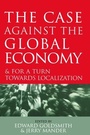
The Case Against the Global Economy
And for a Turn Towards Localization
2nd Edition
Published on 1. October 2000
Book
Paperback/Softback
336 pages
978-1-85383-742-5 (ISBN)
Description
The greatest political debate of our time is about the blind rush towards a single global economy, its consequences for jobs, democracy, human well-being and cultural diversity, and its impact on the natural world that sustains us. Its effects will be profound and irreversible, but globalization itself is not inevitable. In The Case Against the Global Economy, 24 leading economic, agricultural, cultural and environmental authorities, drawn from across the world, argue that free trade and economic globalization are producing exactly the opposite results to those promised. From a detailed analysis of the new global economy, its structures and its full social and ecological implications, they show how it is undermining our liberty, our security and our well-being, and is devastating the planet. First published in the USA in 1996, in an edition focused on North America, the book won the American Political Science Association award for the Best Book in Ecological and Transformational Politics. This completely revised and updated international edition presents a passionate and persuasive case for the need to reverse course, away from globalization and towards a revitalized democracy, local self-sufficiency and ecological health.
Reviews / Votes
'The arguments for community self-sufficiency and the strenghtening of the 'social economy' at local level give the necessary positive spin to the book, helping to ensure its message survives the months and years to come.'The Food Magazine
More details
Edition
2nd edition
Language
English
Place of publication
London
United Kingdom
Publishing group
Taylor & Francis Ltd
Target group
College/higher education
Professional and scholarly
Dimensions
Height: 234 mm
Width: 156 mm
Weight
544 gr
ISBN-13
978-1-85383-742-5 (9781853837425)
Copyright in bibliographic data and cover images is held by Nielsen Book Services Limited or by the publishers or by their respective licensors: all rights reserved.
Schweitzer Classification
Other editions
Additional editions
Book
09/2017
2nd Edition
Routledge
€290.17
Shipment within 10-20 days
E-Book
02/2014
2nd Edition
Routledge
€55.49
Available for download
E-Book
02/2014
2nd Edition
Routledge
€55.49
Available for download
Person
Edward goldsmith is the founder of The Ecologist, Europe's leading environmental magazine, and author of numerous books, including A Blueprint for Survival, A Stable Society and the Way: An Ecological Worldview. He is also a member of the International Forum on Globalization
Jerry Mander is president, programme director of the Foundation for Deep Ecology and a senior fellow at the Public Media Center, a non-profit social and environmental advertising company. His books include Four Arguments for the Elimination of Television and In the Absence of the Sacred.
Jerry Mander is president, programme director of the Foundation for Deep Ecology and a senior fellow at the Public Media Center, a non-profit social and environmental advertising company. His books include Four Arguments for the Elimination of Television and In the Absence of the Sacred.
Content
Introduction: facing the Rising Tide * Part 1 Engines of Globalization: Development as Colonialism * The Failure of Bretton Woods * Technologies of Globalization * Electronic Money and the Casino Economy * Mechanisms of Corporate Rule * The Rules of Corporate Behaviour * Monsanto - A Profile of Corporate Arrogance * The Wal-Martians Have Landed * Free Trade - The Great Destroyer * Part 2 Impacts of Globalization: Structural Adjustment Programmes * Jurassic Fund * Seeds of Exploitation - Free Trade Zones in the Global Economy * The Global Economy and the Developing World * The Pressure to Modernize and Globalize * Homogenization of Global Culture * The World Trade Organization's Five-year Record - Seattle in Context * The Environmental Cost of Economic Globalization * The World Trade Organization and Developing World Agriculture * The World Trade Organization and the Liberalization of Trade in Healthcare and Services * Fuelling Climate Change * Part 3 Steps Towards Relocation: Shifting Direction - from Global Dependence to Local Interdependence * Conserving Communities * Local Money - a Currency for Every Community * Saving our Small Farms and Rural Communities * The New Protectionism of 'Localization' * The Last Word * References * Index