

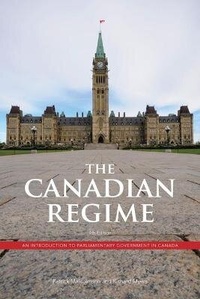
The Canadian Regime
An Introduction to Parliamentary Government in Canada, Fourth Edition
4th Edition
Published on 1. August 2009
Book
Paperback/Softback
277 pages
978-1-4426-0047-8 (ISBN)
Description
Lucid and readable, The Canadian Regime is a well-established, well-known introduction to Canadian government. By explaining the inner logic of parliamentary government, as well as the underlying rationale for its institutions and processes, the authors demystify what might appear to be a relatively complex political system. Urging readers to consider the organic nature of the political system-in which change in one area inevitably ripples through the rest of the system-the authors provide much more than just a description of the features of government.
The fourth edition has been updated to include analysis of the 2008 Canadian federal election. Discussions of responsible government and the role of the Governor General have been revised and expanded. Coalition government, the Single Transferable Vote, and the emergence of the Green Party are explained and new developments in Senate reform and Supreme Court appointments are also covered.
The fourth edition has been updated to include analysis of the 2008 Canadian federal election. Discussions of responsible government and the role of the Governor General have been revised and expanded. Coalition government, the Single Transferable Vote, and the emergence of the Green Party are explained and new developments in Senate reform and Supreme Court appointments are also covered.
More details
Edition
4th New edition
Language
English
Place of publication
Toronto
Canada
Target group
Professional and scholarly
Edition type
New edition
Product notice
Paperback (trade)
Dimensions
Height: 230 mm
Width: 152 mm
Thickness: 14 mm
Weight
360 gr
ISBN-13
978-1-4426-0047-8 (9781442600478)
Copyright in bibliographic data and cover images is held by Nielsen Book Services Limited or by the publishers or by their respective licensors: all rights reserved.
Schweitzer Classification
Other editions
New editions
Patrick Malcolmson | Richard Myers
The Canadian Regime
An Introduction to Parliamentary Government in Canada, Fifth Edition
Book
07/2012
5th Edition
University of Toronto Press
€57.13
Article exhausted; check for reprint
Persons
Patrick Malcolmson is currently Vice-President (Academic) at St. Thomas University in Fredericton, New Brunswick and formerly served as the Chair of the New Brunswick Human Rights Commission.
Richard Myers is the Principal of St. Paul's University College, University of Waterloo.
Richard Myers is the Principal of St. Paul's University College, University of Waterloo.
Content
Preface
Map: Parliamentary Representation by Province
Part One: Introduction
Chapter One: Canada's Regime Principles
1.1 Political Regimes
1.2 Equality
1.3 Liberty
1.4 The Canadian Regime
Chapter Two: The Constitution
2.1 Constitutions and Their Functions
2.2 Constitutional Forms
2.3 The Canadian Constitution
2.4 Amending Canada's Constitution
2.5 Judicial Review of the Constitution
2.6 Constitutional Politics Since 1982
Part Two: Basic Principles of the Canadian Constitution
Chapter Three: Responsible Government
3.1 The Emergence of Responsible Government
3.2 The Conventions of Responsible Government
3.3 Responsible Government as "Cabinet Government"
3.4 Forming a Government
3.5 Majority and Minority Government
3.6 Institutional Implications of Responsible Government
3.7 Responsible Government and Separation of Powers Compared
Chapter Four: Federalism
4.1 What is Federalism?
4.2 Why a Federal Union?
4.3 The Original Design of the Federal Union
4.4 The Historical Development of Federalism in Canada
4.5 Financing Government and Federal-Provincial Relations
4.6 The Challenge of Canadian Federalism
4.7 Current Controversies: The Pressure to Decentralize
Chapter Five: The Canadian Charter of Rights and Freedoms
5.1 What is a Charter of Rights?
5.2 How the Charter Works: Hunter v. Southam
5.3 Remedies
5.4 The Adoption of the Charter
5.5 Opposition to the Charter
5.6 The Notwithstanding Clause
5.7 Section 1
5.8 The Political Impact of the Charter
Part Three: Institutions
Chapter Six: The Crown and its Servants
6.1 The Crown
6.2 The Governor General
6.3 The Functions of the Governor General
6.4 The Cabinet
6.5 The Cabinet Committee System
6.6 The Prime Minister
6.7 Prime Ministerial Government?
6.8 The Civil Service
Chapter Seven: Parliament
7.1 The Role of Parliament
7.2 The Parliamentary Calendar
7.3 The House of Commons: Membership and Officers
7.4 The Business of the House of Commons
7.5 The Rules of Procedure of the House of Commons
7.6 The Backbencher
7.7 House of Commons Reform
7.8 The Senate
7.9 Senate Reform
Chapter Eight: The Judiciary
8.1 The Role of the Judiciary
8.2 The Fundamental Principles of the Canadian Judiciary
8.3 Canada's Courts
8.4 The Supreme Court of Canada
8.5 The Politics of Judicial Appointments
8.6 The "Court Party" Thesis
Part Four: Participation
Chapter Nine: Elections
9.1 Elections and Representation
9.2 Canada's Electoral System
9.3 The Effects of SMP
9.4 Proportional Representation
9.5 Single Transferable Vote
9.6 Voting in Canada
Chapter Ten: Political Parties
10.1 Political Parties in the Canadian Regime
10.2 The Five Functions of Political Parties
10.3 Parties and Ideology
10.4 Canada's Major Parties
10.5 The Canadian Party System
10.6 The Organization of Political Parties
10.7 Financing Political Parties
10.8 Party Government and Party Politics
Chapter Eleven: Interest Groups, Public Opinion, and Democratic Citizenship
11.1 Forms of Political Participation
11.2 Interest Groups
11.3 Women in Politics
11.4 Public Opinion
11.5 The Media
11.6 The Question of Public Opinion Polls
11.7 Civic Education and Democratic Citizenship
Appendix:
The Constitution Acts 1867 and 1982
Index
Map: Parliamentary Representation by Province
Part One: Introduction
Chapter One: Canada's Regime Principles
1.1 Political Regimes
1.2 Equality
1.3 Liberty
1.4 The Canadian Regime
Chapter Two: The Constitution
2.1 Constitutions and Their Functions
2.2 Constitutional Forms
2.3 The Canadian Constitution
2.4 Amending Canada's Constitution
2.5 Judicial Review of the Constitution
2.6 Constitutional Politics Since 1982
Part Two: Basic Principles of the Canadian Constitution
Chapter Three: Responsible Government
3.1 The Emergence of Responsible Government
3.2 The Conventions of Responsible Government
3.3 Responsible Government as "Cabinet Government"
3.4 Forming a Government
3.5 Majority and Minority Government
3.6 Institutional Implications of Responsible Government
3.7 Responsible Government and Separation of Powers Compared
Chapter Four: Federalism
4.1 What is Federalism?
4.2 Why a Federal Union?
4.3 The Original Design of the Federal Union
4.4 The Historical Development of Federalism in Canada
4.5 Financing Government and Federal-Provincial Relations
4.6 The Challenge of Canadian Federalism
4.7 Current Controversies: The Pressure to Decentralize
Chapter Five: The Canadian Charter of Rights and Freedoms
5.1 What is a Charter of Rights?
5.2 How the Charter Works: Hunter v. Southam
5.3 Remedies
5.4 The Adoption of the Charter
5.5 Opposition to the Charter
5.6 The Notwithstanding Clause
5.7 Section 1
5.8 The Political Impact of the Charter
Part Three: Institutions
Chapter Six: The Crown and its Servants
6.1 The Crown
6.2 The Governor General
6.3 The Functions of the Governor General
6.4 The Cabinet
6.5 The Cabinet Committee System
6.6 The Prime Minister
6.7 Prime Ministerial Government?
6.8 The Civil Service
Chapter Seven: Parliament
7.1 The Role of Parliament
7.2 The Parliamentary Calendar
7.3 The House of Commons: Membership and Officers
7.4 The Business of the House of Commons
7.5 The Rules of Procedure of the House of Commons
7.6 The Backbencher
7.7 House of Commons Reform
7.8 The Senate
7.9 Senate Reform
Chapter Eight: The Judiciary
8.1 The Role of the Judiciary
8.2 The Fundamental Principles of the Canadian Judiciary
8.3 Canada's Courts
8.4 The Supreme Court of Canada
8.5 The Politics of Judicial Appointments
8.6 The "Court Party" Thesis
Part Four: Participation
Chapter Nine: Elections
9.1 Elections and Representation
9.2 Canada's Electoral System
9.3 The Effects of SMP
9.4 Proportional Representation
9.5 Single Transferable Vote
9.6 Voting in Canada
Chapter Ten: Political Parties
10.1 Political Parties in the Canadian Regime
10.2 The Five Functions of Political Parties
10.3 Parties and Ideology
10.4 Canada's Major Parties
10.5 The Canadian Party System
10.6 The Organization of Political Parties
10.7 Financing Political Parties
10.8 Party Government and Party Politics
Chapter Eleven: Interest Groups, Public Opinion, and Democratic Citizenship
11.1 Forms of Political Participation
11.2 Interest Groups
11.3 Women in Politics
11.4 Public Opinion
11.5 The Media
11.6 The Question of Public Opinion Polls
11.7 Civic Education and Democratic Citizenship
Appendix:
The Constitution Acts 1867 and 1982
Index