

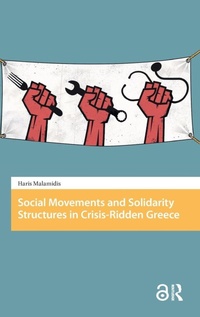
Social Movements and Solidarity Structures in Crisis-Ridden Greece
Published on 1. October 2020
Book
Hardback
362 pages
978-94-6372-243-8 (ISBN)
Description
Social Movements and Solidarity Structures in Crisis-Ridden Greece explores the rich grassroots experience of social movements in Greece between 2008 and 2016. The harsh conditions of austerity triggered the rise of vibrant mobilizations that went hand-in-hand with the emergence of numerous solidarity structures, providing unofficial welfare services to the suffering population. Based on qualitative field research conducted in more than 50 social movement organizations in Greece's two major cities, the book offers an in-depth analysis of the contentious mechanisms that led to the development of such solidarity initiatives. By analyzing the organizational structure, resources and identity of markets without middlemen, social and collective kitchens, organizations distributing food parcels, social clinics and self-managed cooperatives, this study explains the enlargement of boundaries of collective action in times of crisis.
More details
Series
Language
English
Place of publication
Oxford
Netherlands
Target group
Professional and scholarly
Academic
Illustrations
3 Illustrations
Dimensions
Height: 240 mm
Width: 161 mm
Thickness: 24 mm
Weight
708 gr
ISBN-13
978-94-6372-243-8 (9789463722438)
Copyright in bibliographic data and cover images is held by Nielsen Book Services Limited or by the publishers or by their respective licensors: all rights reserved.
Schweitzer Classification
Other editions
Additional editions

Book
approx. 12/2025
1st Edition
Routledge
€73.22
Not yet published
E-Book
10/2025
Routledge
€0.00
Available for download
E-Book
10/2025
Routledge
€0.00
Available for download
Person
Haris Malamidis is a post-doctoral researcher at the Department of Sociology at the University of Crete, Greece and member of the Centre on Social Movement Studies (Cosmos) in Florence, Italy.
Content
Acknowledgements
Introduction
Aim and Contribution
Research Design
Structure of the Book
PART I: Boundary Enlargement and Anti-Austerity Mobilizations
1 Theorizing the Process of Boundary Enlargement
1.1 Why Boundary Enlargement?
1.2 Dismantling the process of boundary enlargement
1.3 Limitations
1.4 Conclusion
2 The Greek Wave of Anti-Austerity Mobilizations in Context
2.1 Three decades of mobilizations
2.2 From December 2008, onwards
2.3 The Period of Austerity
2.4 Alternative Repertoires of Action
2.5 Conclusion
PART II: Social Movements in Food, Health and Labour
3 The Social Movement Scene of Food
3.1 Organizational Structure
3.2 Resources
3.3 Identity
3.4 Conclusion
4 The Social Movement Scene of Health
4.1 Organizational Structure
4.2 Resources
4.3 Identity
4.4 Conclusion
5 The Social Movement Scene of Labour
5.1 Organizational Structure
5.2 Resources
5.3 Identity
5.4 Conclusion
PART III: Different applications of Boundary Enlargement
6 Different Scenes, Different Trajectories but the Same Process: A Within-Case Comparison
6.1 Comparing the Scenes
6.2 Comparing the Trajectories
7 Boundary Enlargement in Different Contexts
7.1 The Spanish anti-austerity mobilizations
7.2 The 2001 Argentinean Crisis
8 Epilogue
8.1 Expanding the notion of boundary enlargement
8.2 Future Research
Bibliography
Annex
SMOs Material
List of Interviewees
Index
Introduction
Aim and Contribution
Research Design
Structure of the Book
PART I: Boundary Enlargement and Anti-Austerity Mobilizations
1 Theorizing the Process of Boundary Enlargement
1.1 Why Boundary Enlargement?
1.2 Dismantling the process of boundary enlargement
1.3 Limitations
1.4 Conclusion
2 The Greek Wave of Anti-Austerity Mobilizations in Context
2.1 Three decades of mobilizations
2.2 From December 2008, onwards
2.3 The Period of Austerity
2.4 Alternative Repertoires of Action
2.5 Conclusion
PART II: Social Movements in Food, Health and Labour
3 The Social Movement Scene of Food
3.1 Organizational Structure
3.2 Resources
3.3 Identity
3.4 Conclusion
4 The Social Movement Scene of Health
4.1 Organizational Structure
4.2 Resources
4.3 Identity
4.4 Conclusion
5 The Social Movement Scene of Labour
5.1 Organizational Structure
5.2 Resources
5.3 Identity
5.4 Conclusion
PART III: Different applications of Boundary Enlargement
6 Different Scenes, Different Trajectories but the Same Process: A Within-Case Comparison
6.1 Comparing the Scenes
6.2 Comparing the Trajectories
7 Boundary Enlargement in Different Contexts
7.1 The Spanish anti-austerity mobilizations
7.2 The 2001 Argentinean Crisis
8 Epilogue
8.1 Expanding the notion of boundary enlargement
8.2 Future Research
Bibliography
Annex
SMOs Material
List of Interviewees
Index