

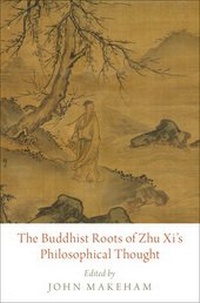
The Buddhist Roots of Zhu Xi's Philosophical Thought
Published on 12. July 2018
Book
Hardback
370 pages
978-0-19-087855-9 (ISBN)
Description
Zhu Xi (1130-1200) is the most influential Neo-Confucian philosopher and arguably the most important Chinese philosopher of the past millennium, both in terms of his legacy and for the sophistication of his systematic philosophy. The Buddhist Roots of Zhu Xi's Philosophical Thought combines in a single study two major areas of Chinese philosophy that are rarely tackled together: Chinese Buddhist philosophy and Zhu Xi's Neo-Confucian philosophy. Despite Zhu Xi's importance as a philosopher, the role of Buddhist thought and philosophy in the construction of his systematic philosophy remains poorly understood. What aspects of Buddhism did he criticize and why? Was his engagement limited to criticism (informed or otherwise) or did Zhu also appropriate and repurpose Buddhist ideas to develop his own thought? If Zhu's philosophical repertoire incorporated conceptual structures and problematics that are marked by a distinct Buddhist pedigree, what implications does this have for our understanding of his philosophical project? The five chapters that make up The Buddhist Roots of Zhu Xi's Philosophical Thought present a rich and complex portrait of the Buddhist roots of Zhu Xi's philosophical thought. The scholarship is meticulous, the analysis is rigorous, and the philosophical insights are fresh. Collectively, the chapters illuminate a greatly expanded range of the intellectual resources Zhu incorporated into his philosophical thought, demonstrating the vital role that models derived from Buddhism played in his philosophical repertoire. In doing so, they provide new perspectives on what Zhu Xi was trying to achieve as a philosopher, by repurposing ideas from Buddhism. They also make significant and original contributions to our understanding of core concepts, debates and conceptual structures that shaped the development of philosophy in East Asia over the past millennium.
Reviews / Votes
This collection of truly erudite and philosophically inspiring scholarship belongs on the desk of every serious Confucian Studies scholar. * Lukas Pokorny, Religious Studies Review * In bringing Western scholarship on Zhu's philosophy and Buddhism into an advanced scale, [this book] will greatly benefit future studies on related topics. * Wing-cheuk Chan, Brock University, Dao: A Journal of Comparative Philosophy * This volume contains a wealth of information about early Buddhist philosophy and how it often influenced, in ways both dramatic and subtle, Zhu Xi's philosophy. It succeeds in making the case for rather extensive influence and widespread intentional appropriation, providing evidence and argument that is often compelling... Understanding the context and precedents of Zhu Xi's philosophy can often help us grasp the points he makes, and it adds new dimensions to our appreciation of all that he accomplished and how it came to be. This volume makes an unprecedented contribution to such understanding. * Notre Dame Philosophical Reviews *More details
Language
English
Place of publication
New York
United States
Target group
Professional and scholarly
Dimensions
Height: 163 mm
Width: 236 mm
Thickness: 33 mm
Weight
640 gr
ISBN-13
978-0-19-087855-9 (9780190878559)
Copyright in bibliographic data and cover images is held by Nielsen Book Services Limited or by the publishers or by their respective licensors: all rights reserved.
Schweitzer Classification
Other editions
Additional editions
John Makeham
The Buddhist Roots of Zhu Xi's Philosophical Thought
E-Book
06/2018
1st Edition
OUP eBook
€27.49
Available for download
John Makeham
The Buddhist Roots of Zhu Xi's Philosophical Thought
E-Book
06/2018
1st Edition
OUP eBook
€27.49
Available for download
Person
John Makeham is Chair and Director of the China Studies Research Centre at La Trobe University.
Content
Introduction
Chapter 1: The Radiant Mind: Zhu Xi and the Chan Doctrine of Tathagatagarbha John Jorgensen
Chapter 2: Zhu Xi's Critique of Buddhism: Selfishness, Salvation, and Self-Cultivation Justin Tiwald
Chapter 3: Buddhism and Zhu Xi's Epistemology of Discernment Stephen C. Angle
Chapter 4: The Ti/Yong Model and its Discontents: Models of Ambiguous Priority in Chinese Buddhism and Zhu
Xi's Neo-Confucianism Brook Ziporyn
Chapter 5: Monism and the Problem of the Ignorance and Badness in Chinese Buddhism and Zhu Xi's Neo-Confucianism John Makeham
Index
Chapter 1: The Radiant Mind: Zhu Xi and the Chan Doctrine of Tathagatagarbha John Jorgensen
Chapter 2: Zhu Xi's Critique of Buddhism: Selfishness, Salvation, and Self-Cultivation Justin Tiwald
Chapter 3: Buddhism and Zhu Xi's Epistemology of Discernment Stephen C. Angle
Chapter 4: The Ti/Yong Model and its Discontents: Models of Ambiguous Priority in Chinese Buddhism and Zhu
Xi's Neo-Confucianism Brook Ziporyn
Chapter 5: Monism and the Problem of the Ignorance and Badness in Chinese Buddhism and Zhu Xi's Neo-Confucianism John Makeham
Index