

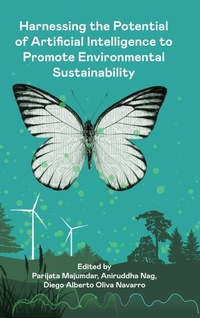
Harnessing the Potential of Artificial Intelligence to Promote Environmental Sustainability
Will be published approx. on 13. January 2026
Book
Hardback
288 pages
978-1-83662-997-9 (ISBN)
Description
Harnessing the Potential of Artificial Intelligence to Promote Environmental Sustainability provides a comprehensive examination of how AI is transforming environmental conservation and sustainability efforts. This scholarly work delves into cutting-edge AI technologies-such as automation, data analytics, and machine learning-and explores their potential to address pressing environmental challenges. Through in-depth analysis and practical case studies, the book demonstrates how AI can enhance resource management, support sustainable practices, and improve environmental monitoring.
Beyond technical solutions, the authors engage with the ethical considerations and potential risks of deploying AI in environmental contexts. Issues such as fairness, transparency, and accountability in AI systems are explored, along with the need for regulatory frameworks to mitigate negative impacts. An essential resource for researchers, professionals, policymakers, and anyone interested in the intersection of technology and environmental stewardship, this contributed work offers a roadmap for leveraging AI to foster a sustainable future, emphasising the crucial role of advanced technologies in addressing global environmental challenges.
Beyond technical solutions, the authors engage with the ethical considerations and potential risks of deploying AI in environmental contexts. Issues such as fairness, transparency, and accountability in AI systems are explored, along with the need for regulatory frameworks to mitigate negative impacts. An essential resource for researchers, professionals, policymakers, and anyone interested in the intersection of technology and environmental stewardship, this contributed work offers a roadmap for leveraging AI to foster a sustainable future, emphasising the crucial role of advanced technologies in addressing global environmental challenges.
More details
Language
English
Place of publication
Bingley
United Kingdom
Target group
Professional and scholarly
Dimensions
Height: 235 mm
Width: 157 mm
Thickness: 18 mm
Weight
518 gr
ISBN-13
978-1-83662-997-9 (9781836629979)
Copyright in bibliographic data and cover images is held by Nielsen Book Services Limited or by the publishers or by their respective licensors: all rights reserved.
Schweitzer Classification
Persons
Parijata Majumdar is an Assistant Professor at the Indian Institute of Information Technology, Agartala, India.
Aniruddha Nag is an Associate Professor at Techno India Group.
Diego Alberto Oliva Navarro is an Associate Professor at the Department of Computer Sciences of the Universidad de Guadalajara in the Centro Universitario de Ciencias Exactas e Ingenierias located in Jalisco, Mexico.
Aniruddha Nag is an Associate Professor at Techno India Group.
Diego Alberto Oliva Navarro is an Associate Professor at the Department of Computer Sciences of the Universidad de Guadalajara in the Centro Universitario de Ciencias Exactas e Ingenierias located in Jalisco, Mexico.
Content
Chapter 1. Designing An Application For Environmental Sustainability: Leveraging IOT AND AI For Data Collection and Analysis; Anton Yuryevich Demin, Aleksander Dmitriyevich Bragin, Darya Igorevna Dmitriychuk, and Vladislav Aleksandrovich Zarubin
Chapter 2. Applications and Challenges of Real-Time Data Analysis in the Field of Disaster Prevention, Reduction, and Relief; Jeya Sutha M, Ramesh Dhanaseelan F, and Jabanesha S
Chapter 3. Providing an Intelligent Sustainable Solution for Electricity Management; Sudakshina Dasgupta, Tamal Mondal, Indrajit Bhattacharya, and Tanmoy Paul
Chapter 4. Ethical Perspectives of Artificial Intelligence - A Bibliometric Analysis; Soumik Gangopadhyay, Rabin Mazumder, Poulami Basu, Soumyadeep Dhol, Alolika Datta, Moupia Kundu, Suhrit Tewary, and Aparajita Bhattacharya
Chapter 5. Harnessing AI for Waste Management and Circular Economy: Enhancing Recycling and Resource Efficiency; Mainak Saha, Rabin Bhaumik, and Shriya Chakraborty
Chapter 6. Optimized Plant Identification through Leaf Feature Extraction Using Deep Learning and Advanced Digital Image Processing Techniques; Mainak Saha and Sushanta Das
Chapter 7. Exploring The Role Of Virtual Reality In Promoting Sustainable Tourism Practices Amidst Covid-19 Pandemic; Doyel Mukherjee Prodhan, Archan Mitra, Amrita Mitra Mukherjee, and Soumik Gangopadhyay
Chapter 8. Environmental Informatics promotion using Artificial Intelligence & Allied Technologies: The Applications, Sustainability & Educational Perspectives; P. K. Paul
Chapter 9. E-Wastes Management in AI context: The Opportunities & Challenges in Educational & Healthcare Waste - A Scientific Study; Ritam Chatterjee and Abhijit Bandyopadhyay
Chapter 10. Artificial Intelligence & Sustainability in the context of Smart City and Urban Development: An Overview; Nilanjan Das
Chapter 11. Developing AI-friendly environmental policies addressing regulatory challenges and opportunities, AI and global environmental governance and funding, incentives for AI driven environmental initiatives; Tathagata Roy Chowdhury and Aniruddha Nag
Chapter 12. A Survey On Sql Injection Attack Detection Using Machine Learning; Silambarasan Elkana, Harish Vishwa S M, Harsh Raj, Harsh Gupta, and Likhitha
Chapter 13. Role of Artificial Intelligence in Sustainable Environment Practices; Parijata Majumdar
Chapter 2. Applications and Challenges of Real-Time Data Analysis in the Field of Disaster Prevention, Reduction, and Relief; Jeya Sutha M, Ramesh Dhanaseelan F, and Jabanesha S
Chapter 3. Providing an Intelligent Sustainable Solution for Electricity Management; Sudakshina Dasgupta, Tamal Mondal, Indrajit Bhattacharya, and Tanmoy Paul
Chapter 4. Ethical Perspectives of Artificial Intelligence - A Bibliometric Analysis; Soumik Gangopadhyay, Rabin Mazumder, Poulami Basu, Soumyadeep Dhol, Alolika Datta, Moupia Kundu, Suhrit Tewary, and Aparajita Bhattacharya
Chapter 5. Harnessing AI for Waste Management and Circular Economy: Enhancing Recycling and Resource Efficiency; Mainak Saha, Rabin Bhaumik, and Shriya Chakraborty
Chapter 6. Optimized Plant Identification through Leaf Feature Extraction Using Deep Learning and Advanced Digital Image Processing Techniques; Mainak Saha and Sushanta Das
Chapter 7. Exploring The Role Of Virtual Reality In Promoting Sustainable Tourism Practices Amidst Covid-19 Pandemic; Doyel Mukherjee Prodhan, Archan Mitra, Amrita Mitra Mukherjee, and Soumik Gangopadhyay
Chapter 8. Environmental Informatics promotion using Artificial Intelligence & Allied Technologies: The Applications, Sustainability & Educational Perspectives; P. K. Paul
Chapter 9. E-Wastes Management in AI context: The Opportunities & Challenges in Educational & Healthcare Waste - A Scientific Study; Ritam Chatterjee and Abhijit Bandyopadhyay
Chapter 10. Artificial Intelligence & Sustainability in the context of Smart City and Urban Development: An Overview; Nilanjan Das
Chapter 11. Developing AI-friendly environmental policies addressing regulatory challenges and opportunities, AI and global environmental governance and funding, incentives for AI driven environmental initiatives; Tathagata Roy Chowdhury and Aniruddha Nag
Chapter 12. A Survey On Sql Injection Attack Detection Using Machine Learning; Silambarasan Elkana, Harish Vishwa S M, Harsh Raj, Harsh Gupta, and Likhitha
Chapter 13. Role of Artificial Intelligence in Sustainable Environment Practices; Parijata Majumdar