

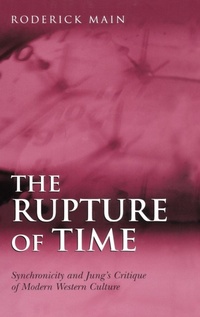
The Rupture of Time
Synchronicity and Jung's Critique of Modern Western Culture
1st Edition
Published on 8. July 2004
Book
Hardback
224 pages
978-1-58391-228-7 (ISBN)
Description
Why was the idea of synchronicity so important to Jung?
Jung's theory of synchronicity radically challenges the entrenched assumptions of mainstream modern culture in the West. It is one of the most fascinating yet difficult and discomfiting of Jung's psychological theories.
The Rupture of Time aims to clarify what Jung really meant by synchronicity, why the idea was so important to him and how it informed his thinking about modern western culture. Areas examined include:
* how the theory fits into Jung's overall psychological model and the significance of its apparent inconsistencies
* the wide range of personal, intellectual and social contexts of Jung's thinking on the topic
* how Jung himself applied the theory of synchronicity within his critique of science, religion, and society
* the continuing relevance of the theory for understanding issues in contemporary detraditionalised religion.
Focusing closely on Jung's own writings and statements, this book discloses that the theory of synchronicity is not an inconsequential addendum to analytical psychology but is central to the psychological project that occupied Jung throughout his professional life. This much-needed clarification of one of Jung's central tenets will be of great interest to all analytical psychologists and scholars engaged with Jungian thought.
Jung's theory of synchronicity radically challenges the entrenched assumptions of mainstream modern culture in the West. It is one of the most fascinating yet difficult and discomfiting of Jung's psychological theories.
The Rupture of Time aims to clarify what Jung really meant by synchronicity, why the idea was so important to him and how it informed his thinking about modern western culture. Areas examined include:
* how the theory fits into Jung's overall psychological model and the significance of its apparent inconsistencies
* the wide range of personal, intellectual and social contexts of Jung's thinking on the topic
* how Jung himself applied the theory of synchronicity within his critique of science, religion, and society
* the continuing relevance of the theory for understanding issues in contemporary detraditionalised religion.
Focusing closely on Jung's own writings and statements, this book discloses that the theory of synchronicity is not an inconsequential addendum to analytical psychology but is central to the psychological project that occupied Jung throughout his professional life. This much-needed clarification of one of Jung's central tenets will be of great interest to all analytical psychologists and scholars engaged with Jungian thought.
More details
Language
English
Place of publication
London
United Kingdom
Publishing group
Taylor & Francis Ltd
Target group
College/higher education
Professional and scholarly
Postgraduate, Professional, Professional Practice & Development, and Undergraduate
Dimensions
Height: 240 mm
Width: 161 mm
Thickness: 17 mm
Weight
508 gr
ISBN-13
978-1-58391-228-7 (9781583912287)
Copyright in bibliographic data and cover images is held by Nielsen Book Services Limited or by the publishers or by their respective licensors: all rights reserved.
Schweitzer Classification
Other editions
Additional editions
Book
09/2014
1st Edition
Routledge
€79.80
Shipment within 10-20 days
E-Book
06/2004
1st Edition
Routledge
€73.99
Available for download
E-Book
06/2004
1st Edition
Routledge
€73.99
Available for download
Person
Roderick Main is Lecturer in Psychoanalytic Studies at the University of Essex, and the editor of Jung on Synchronicity and the Paranormal (Routledge, 1997).
Content
Introduction. A Radical Challenge. Part I: The Theory of Synchronicity. Synchronicity and Analytical Psychology. Intellectual Difficulties. Part II: Synchronicity in Context. Sources and Influences. Religion, Science, and Synchronicity. Part III: Synchronicity Applied. Synchronicity and Jung's Critique of Science, Religion, and Society. Synchronicity and the Spiritual Revolution. Conclusion. The Rupture of Time.