

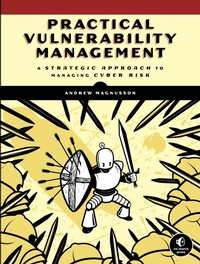
Practical Vulnerability Management
A Strategic Approach to Managing Cyber Risk
Published on 6. October 2020
Book
Paperback/Softback
192 pages
978-1-59327-988-2 (ISBN)
Description
Vulnerability management is a critical and sometimes neglected aspect of information security. It consists of two main parts: awareness and action. First, the security practitioner must be aware of the vulnerabilities that exist in an organisation's systems and understand how dangerous each one is. Second, that information must feed into an ongoing process of addressing vulnerabilities by updating the vulnerable systems or otherwise mitigating their severity.
Reviews / Votes
"An easy read and offers comprehensive solutions to keeping an organization secure and always prepared for possible attacks."-Helga Labus, Help Net Security
More details
Language
English
Place of publication
San Francisco
United States
Product notice
Paperback (trade)
Unsewn / adhesive bound
Dimensions
Height: 231 mm
Width: 180 mm
Thickness: 17 mm
Weight
370 gr
ISBN-13
978-1-59327-988-2 (9781593279882)
Copyright in bibliographic data and cover images is held by Nielsen Book Services Limited or by the publishers or by their respective licensors: all rights reserved.
Schweitzer Classification
Other editions
Additional editions
E-Book
09/2020
No Starch Press
€23.49
Available for download
Person
Andrew Magnusson has been working in the information security field since 2002, in areas ranging from firewall configuration to security consulting to managing SOC2 compliance. As a consultant deploying enterprise vulnerability management tools he has seen how an organization's vulnerability management practices, or lack thereof, affects their overall information security posture.
Content
Introduction
Part I: Vulnerability Management Basics
Chapter 1: Basic Concepts
Chapter 2: Sources of Information
Chapter 3: Vulnerability Scanners
Chapter 4: Automating Vulnerability Management
Chapter 5: Vulnerability Management Outcomes
Chapter 6: Vulnerability Management and Organizational Priorities
Part II: Hands-on Vulnerability Management
Chapter 7: Setting Up Your Environment
Chapter 8: Using the Data Collection Tools
Chapter 9: Getting Your Data into Usable Format
Chapter 10: Maintaining the Database
Chapter 11: Generating Asset and Vulnerability Reports
Chapter 12: Automating Scans and Reporting
Chapter 13: Advanced Reporting
Chapter 14: Advanced Topics
Chapter 15. Conclusion
Index
Part I: Vulnerability Management Basics
Chapter 1: Basic Concepts
Chapter 2: Sources of Information
Chapter 3: Vulnerability Scanners
Chapter 4: Automating Vulnerability Management
Chapter 5: Vulnerability Management Outcomes
Chapter 6: Vulnerability Management and Organizational Priorities
Part II: Hands-on Vulnerability Management
Chapter 7: Setting Up Your Environment
Chapter 8: Using the Data Collection Tools
Chapter 9: Getting Your Data into Usable Format
Chapter 10: Maintaining the Database
Chapter 11: Generating Asset and Vulnerability Reports
Chapter 12: Automating Scans and Reporting
Chapter 13: Advanced Reporting
Chapter 14: Advanced Topics
Chapter 15. Conclusion
Index