

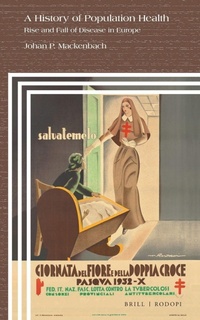
A History of Population Health
Rise and Fall of Disease in Europe
Published on 23. May 2020
Book
Hardback
442 pages
978-90-04-42582-8 (ISBN)
Description
Winner of the 2021 Choice Outstanding Academic Title Award
In A History of Population Health Johan P. Mackenbach offers a broad-sweeping study of the spectacular changes in people's health in Europe since the early 18th century. Most of the 40 specific diseases covered in this book show a fascinating pattern of 'rise-and-fall', with large differences in timing between countries. Using a unique collection of historical data and bringing together insights from demography, economics, sociology, political science, medicine, epidemiology and general history, it shows that these changes and variations did not occur spontaneously, but were mostly man-made. Throughout European history, changes in health and longevity were therefore closely related to economic, social, and political conditions, with public health and medical care both making important contributions to population health improvement.
Readers who would like to have a closer look at the quantitative data used in the trend graphs included in the book can find these it here.
In A History of Population Health Johan P. Mackenbach offers a broad-sweeping study of the spectacular changes in people's health in Europe since the early 18th century. Most of the 40 specific diseases covered in this book show a fascinating pattern of 'rise-and-fall', with large differences in timing between countries. Using a unique collection of historical data and bringing together insights from demography, economics, sociology, political science, medicine, epidemiology and general history, it shows that these changes and variations did not occur spontaneously, but were mostly man-made. Throughout European history, changes in health and longevity were therefore closely related to economic, social, and political conditions, with public health and medical care both making important contributions to population health improvement.
Readers who would like to have a closer look at the quantitative data used in the trend graphs included in the book can find these it here.
Reviews / Votes
"[...] strengths of this excellent book include its meticulous and extensive documentation, transparent discussion of what data is and is not available, analysis of prevailing theoretical explanations, use of supplementary tables, and Mackenbach's clear and compelling writing." - M.D. Lagerwey, Western Michigan University, in: Choice, February 2021 Vol. 58 No. 6"Mackenbach's longue duree, Braudel-inspired, and erudite book wades into scholarly territory that will be familiar to readers of Journal of British Studies. [...] Mackenbach's book will provide an important starting point for future research on the role of politics and public health in curbing COVID-19." - Jacob Steere-Williams, College of Charleston, South Carolina, in: Journal of British Studies, Vol. 60 (3), 2021, pp. 746-748
More details
Series
Language
English
Place of publication
Leiden
Netherlands
Target group
Professional and scholarly
Product notice
sewn/stitched
Cloth over boards
Illustrations
9 s/w Tabellen, 2 farbige Tabellen, 2 s/w Abbildungen, 17 farbige Abbildungen
2 Tables, color; 9 Tables, black and white; 50 Line drawings, color; 1 Line drawings, black and white; 17 Illustrations, color; 2 Illustrations, black and white
Dimensions
Height: 237 mm
Width: 156 mm
Thickness: 28 mm
Weight
968 gr
ISBN-13
978-90-04-42582-8 (9789004425828)
Copyright in bibliographic data and cover images is held by Nielsen Book Services Limited or by the publishers or by their respective licensors: all rights reserved.
Schweitzer Classification
Person
Johan P. Mackenbach is Professor of Public Health at Erasmus MC, Rotterdam, The Netherlands. He is a member of the Royal Netherlands Academy of Sciences and the Academia Europaea, and has published widely on contemporary and historical health issues.
Content
Preface
List of illustrations
Chapter 1. Introduction
?Utopia come true?
? ?Rising life expectancy
? ?The rise and fall of disease
?The epidemiologic transition theory
? ?The McKeown debate and the Preston-curve
? ?The role of human agency
? &;How to read this book
? ?Concepts, sources, data and methods
PART I. LONG-TERM TRENDS: A BIRD'S EYE VIEW
Chapter 2. Long-term trends in population health
?Changes in over-all population health
? ?Declining mortality
? ?Young and old, men and women
? ?Regional and social inequalities
? ?Rising height
? ?More years in good health, more years in bad health?
?Changes in disease patterns
? ?Shifting causes of death
? ?Shifts in the burden of disease
? ?Diseases rise, diseases fall
?Epidemiologic transition 2.0
? ?A theory in need of repair
? ?How: characterizing change
? ?When: staging change
? ?Where: locating change
Chapter 3. Understanding trends in population health
? Theories of population health
? ?An 'ecological-evolutionary theory' of the origins of disease
? ?Explaining long-term change
?Economic, political and sociocultural conditions
? ?Economic history: improvements in living standards
? ?Political history: the rise of the modern state
? ?Sociocultural history: the lights go on
?Public health and medical care
? ?A short history of public health
? ?The impact of public health
? ?A short history of medical care
? ?The Role of Medicine
PART II. ZOOMING IN: THE RISE AND FALL OF DISEASES
Chapter 4. Health problems of pre-industrial societies
?Violence and hunger
? ?War
? ?Homicide
? ?Famine
?Great epidemics
? ?Plague
? ?Smallpox
? ?Typhus
? ?Malaria
Chapter 5. Health problems of industrializing societies
?Communicable diseases
? ?Cholera, dysentery, typhoid
? ?Tuberculosis
? ?Syphilis
? ?Scarlet fever, measles, whooping cough, diphtheria
? ?Pneumonia, influenza
?Maternal, infant and perinatal mortality
? ?Maternal mortality
? ?Infant mortality
? ?Still-births
? Other health problems of industrializing societies
? ?Pellagra, rickets, goitre
? ?Peptic ulcer, appendicitis
? ?Lung diseases caused by occupational and environmental exposures
Chapter 6. Health problems of affluent societies
? Chronic diseases
? ?Ischaemic heart disease
? ?Cerebrovascular disease
? ?Diabetes mellitus
? ?Stomach, colorectal, breast, prostate cancer
? ?Lung cancer
? ?Liver cirrhosis
? ?Dementia
? ?Depression
? Injuries
? ?Road traffic injuries
? ?Suicide
? A new plague
? ?AIDS
PART III: SYNTHESIS AND OUTLOOK
Chapter 7. Why?
? Why did European population health improve?
? ?The rise and fall of disease
? ?The role of human agency
? ?The role of public health and medical care
? ?The Rise of the West: was there a 'prime mover'?
? Why did some countries rush ahead or lag behind?
? ?Northern lights: the Swedish advantage
? ?Dutch comfort: we were the champions
? ?Southern miracles: from rear-guard to forefront
? ?Balkan troubles: the weight of the past
? ?Russian roulette: the value of life
Chapter 8. Outlook
? Feathers of Icarus
? ?Geopolitical instability
? ?Increasing inequality
? ?Global environmental change
? The way ahead
? ?The public health paradigm
? ?An expanding circle of concern
? ?Re-thinking Utopia
? By way of conclusion
? ?Through the telescope of history
? ?The European experience
? ?The role of politics
? ?The future
Appendices
Bibliography
Index
List of illustrations
Chapter 1. Introduction
?Utopia come true?
? ?Rising life expectancy
? ?The rise and fall of disease
?The epidemiologic transition theory
? ?The McKeown debate and the Preston-curve
? ?The role of human agency
? &;How to read this book
? ?Concepts, sources, data and methods
PART I. LONG-TERM TRENDS: A BIRD'S EYE VIEW
Chapter 2. Long-term trends in population health
?Changes in over-all population health
? ?Declining mortality
? ?Young and old, men and women
? ?Regional and social inequalities
? ?Rising height
? ?More years in good health, more years in bad health?
?Changes in disease patterns
? ?Shifting causes of death
? ?Shifts in the burden of disease
? ?Diseases rise, diseases fall
?Epidemiologic transition 2.0
? ?A theory in need of repair
? ?How: characterizing change
? ?When: staging change
? ?Where: locating change
Chapter 3. Understanding trends in population health
? Theories of population health
? ?An 'ecological-evolutionary theory' of the origins of disease
? ?Explaining long-term change
?Economic, political and sociocultural conditions
? ?Economic history: improvements in living standards
? ?Political history: the rise of the modern state
? ?Sociocultural history: the lights go on
?Public health and medical care
? ?A short history of public health
? ?The impact of public health
? ?A short history of medical care
? ?The Role of Medicine
PART II. ZOOMING IN: THE RISE AND FALL OF DISEASES
Chapter 4. Health problems of pre-industrial societies
?Violence and hunger
? ?War
? ?Homicide
? ?Famine
?Great epidemics
? ?Plague
? ?Smallpox
? ?Typhus
? ?Malaria
Chapter 5. Health problems of industrializing societies
?Communicable diseases
? ?Cholera, dysentery, typhoid
? ?Tuberculosis
? ?Syphilis
? ?Scarlet fever, measles, whooping cough, diphtheria
? ?Pneumonia, influenza
?Maternal, infant and perinatal mortality
? ?Maternal mortality
? ?Infant mortality
? ?Still-births
? Other health problems of industrializing societies
? ?Pellagra, rickets, goitre
? ?Peptic ulcer, appendicitis
? ?Lung diseases caused by occupational and environmental exposures
Chapter 6. Health problems of affluent societies
? Chronic diseases
? ?Ischaemic heart disease
? ?Cerebrovascular disease
? ?Diabetes mellitus
? ?Stomach, colorectal, breast, prostate cancer
? ?Lung cancer
? ?Liver cirrhosis
? ?Dementia
? ?Depression
? Injuries
? ?Road traffic injuries
? ?Suicide
? A new plague
? ?AIDS
PART III: SYNTHESIS AND OUTLOOK
Chapter 7. Why?
? Why did European population health improve?
? ?The rise and fall of disease
? ?The role of human agency
? ?The role of public health and medical care
? ?The Rise of the West: was there a 'prime mover'?
? Why did some countries rush ahead or lag behind?
? ?Northern lights: the Swedish advantage
? ?Dutch comfort: we were the champions
? ?Southern miracles: from rear-guard to forefront
? ?Balkan troubles: the weight of the past
? ?Russian roulette: the value of life
Chapter 8. Outlook
? Feathers of Icarus
? ?Geopolitical instability
? ?Increasing inequality
? ?Global environmental change
? The way ahead
? ?The public health paradigm
? ?An expanding circle of concern
? ?Re-thinking Utopia
? By way of conclusion
? ?Through the telescope of history
? ?The European experience
? ?The role of politics
? ?The future
Appendices
Bibliography
Index