

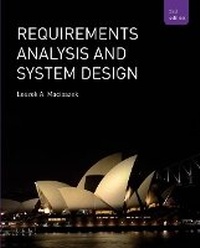
Requirements Analysis and Systems Design
3rd Edition
Published on 28. June 2007
Book
Paperback/Softback
656 pages
978-0-321-44036-5 (ISBN)
Description
An examination of the methods and techniques used in the analysis and design phases of Information System development. Emphasis is placed upon the application of object technology in enterprise information systems (EIS) with UML being used throughout. Through its excellent balance of practical explanation and theoretical insight the book manages to avoid unnecessary, complicating details without sacrificing rigor. Examples of real-world scenarios are used throughout, giving the reader an understanding of what really goes on within the field of Software Engineering.
More details
Edition
3rd edition
Language
English
Place of publication
New Jersey
United States
Publishing group
Pearson Education (US)
Target group
College/higher education
Dimensions
Height: 233 mm
Width: 189 mm
Thickness: 26 mm
Weight
920 gr
ISBN-13
978-0-321-44036-5 (9780321440365)
Copyright in bibliographic data and cover images is held by Nielsen Book Services Limited or by the publishers or by their respective licensors: all rights reserved.
Schweitzer Classification
Other editions
Previous edition
Leszek Maciaszek
Requirements Analysis and System Design
Book
12/2004
2nd Edition
Addison Wesley
€91.54
Article exhausted; check for reprint
Content
Preface
Guided Tour
Publisher's acknowledgements
1 The Software Process
Objectives
1.1 The nature of software development
1.2 System planning
1.3 Systems for htree management levels
1.4 Th software development lifecycle
1.5 Development models and methods
1.6 Problem statements for case studies
Summary
Key terms
Multiple choice tests
Questions
Review quiz answers
Multiple choice answers
Answers to odd-numbered questions
2 Requirements determination
Objectives
2.1 From business processes to solution envisioning
2.2 Requirements elicitation
2.3 Requirements negotiation and validation
2.4 Requirements management
2.5 Requirements business model
2.6 Requirements document
Summary
Key terms
Multiple choice tests
questions
Exercises (advertising expenditure)
Exercises (time logging)
Review quiz answers
Multiple choice answers
Answers to odd-numbered questions
Solutions to exercises (AE)
3 Fundamentals of Visual Modeling
Objectives
3.1 Use case view
3.2 Activity view
3.3 Structure view
3.4 Interaction view
3.5 State machine view
3.6 IMplementation view
Summary
Key terms
Multiple choice tests
Questions
Exercises
Exercises (video store)
Review quiz answers
Multiple choice tests
Answers to odd-numbered questions
Solutions to odd-numbered exercises
Solutions to odd-numbered exercises (video store)
4 Requirements specification
Objectives
4.1 Architectural prerogatives
4.2 State specifications
4.3 Behavior specifications
4.4 State change specifications
Summary
Key terms
Multiple choice tests
Questions
Exercises (video store)
Exercises (contact management)
Exercises (univeristy enrolment)
Review quiz answers
Multiple choice answers
Answers to odd-numbered questions
Solutions to exercises (university enrolment)
5 Moving from Analysis to Design
Objectives
5.1 Advanced class modeling
5.2 Advanced generalizations and inhertance modeling
5.3 Advanced aggregation and delegation modeling
5.4 Advanced interaction modeling
Summary
Key terms
Multiple choice tests
Questions
Exercises
Exercises (time logging)
Exercises (advertising expenditure)
Review quiz answers
Multiple choice answers
Answers to odd-numbered questions
Solutions to odd-numbered exercises
Solutions ot exercises (time logging)
6 System Architecture and Program Design
Objectives
6.1 Distributed physical architecture
6.2 Multi-layer logical architecture
6.3 Architectural modeling
6.4 Principles of program design and reuse
6.5 Collaboration modeling
Summary
Key terms
Multiple choice tests
Questions
Exercises (video store)
Exercises (advertising expenditure)
Review quiz answers
Multiple choice answers
Answers to odd-numbered questions
Solutions to exercises (advertising expenditure)
7 Graphical User Interface Design
Objectives
7.1 Principles of GUI use
7.2 Desktop GUI design
7.3 Web GUI design
7.4 Modeling GUI navigation
Summary
Key terms
Multiple choice tests
Questions
Exercises (contact management)
Exercises (telemarketing)
Review quiz answers
Multiple choice answers
Answers to odd-numbered questions
Solutions to exercises (contract management)
8 Persistence and Database Design
Guided Tour
Publisher's acknowledgements
1 The Software Process
Objectives
1.1 The nature of software development
1.2 System planning
1.3 Systems for htree management levels
1.4 Th software development lifecycle
1.5 Development models and methods
1.6 Problem statements for case studies
Summary
Key terms
Multiple choice tests
Questions
Review quiz answers
Multiple choice answers
Answers to odd-numbered questions
2 Requirements determination
Objectives
2.1 From business processes to solution envisioning
2.2 Requirements elicitation
2.3 Requirements negotiation and validation
2.4 Requirements management
2.5 Requirements business model
2.6 Requirements document
Summary
Key terms
Multiple choice tests
questions
Exercises (advertising expenditure)
Exercises (time logging)
Review quiz answers
Multiple choice answers
Answers to odd-numbered questions
Solutions to exercises (AE)
3 Fundamentals of Visual Modeling
Objectives
3.1 Use case view
3.2 Activity view
3.3 Structure view
3.4 Interaction view
3.5 State machine view
3.6 IMplementation view
Summary
Key terms
Multiple choice tests
Questions
Exercises
Exercises (video store)
Review quiz answers
Multiple choice tests
Answers to odd-numbered questions
Solutions to odd-numbered exercises
Solutions to odd-numbered exercises (video store)
4 Requirements specification
Objectives
4.1 Architectural prerogatives
4.2 State specifications
4.3 Behavior specifications
4.4 State change specifications
Summary
Key terms
Multiple choice tests
Questions
Exercises (video store)
Exercises (contact management)
Exercises (univeristy enrolment)
Review quiz answers
Multiple choice answers
Answers to odd-numbered questions
Solutions to exercises (university enrolment)
5 Moving from Analysis to Design
Objectives
5.1 Advanced class modeling
5.2 Advanced generalizations and inhertance modeling
5.3 Advanced aggregation and delegation modeling
5.4 Advanced interaction modeling
Summary
Key terms
Multiple choice tests
Questions
Exercises
Exercises (time logging)
Exercises (advertising expenditure)
Review quiz answers
Multiple choice answers
Answers to odd-numbered questions
Solutions to odd-numbered exercises
Solutions ot exercises (time logging)
6 System Architecture and Program Design
Objectives
6.1 Distributed physical architecture
6.2 Multi-layer logical architecture
6.3 Architectural modeling
6.4 Principles of program design and reuse
6.5 Collaboration modeling
Summary
Key terms
Multiple choice tests
Questions
Exercises (video store)
Exercises (advertising expenditure)
Review quiz answers
Multiple choice answers
Answers to odd-numbered questions
Solutions to exercises (advertising expenditure)
7 Graphical User Interface Design
Objectives
7.1 Principles of GUI use
7.2 Desktop GUI design
7.3 Web GUI design
7.4 Modeling GUI navigation
Summary
Key terms
Multiple choice tests
Questions
Exercises (contact management)
Exercises (telemarketing)
Review quiz answers
Multiple choice answers
Answers to odd-numbered questions
Solutions to exercises (contract management)
8 Persistence and Database Design