


The Portable Machiavelli
Published on 31. May 1979
Book
Paperback/Softback
576 pages
978-0-14-015092-6 (ISBN)
Description
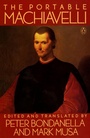
Edited and translated by Peter Bondanella and Mark Musa, "The Portable Machiavelli" not only gives the casual reader a chance to read different personal and professional works of Machiavelli, but also strives to do away with many of the myths that have plagued the man's posthumous fame. For example, the famous "the ends justifies the means" quote is actually a gross exaggeration of what Machiavelli originally wrote, which was "in the actions of all men...when there is no impartial arbiter, one must consider the final result." The biggest counterargument Bondanella and Musa can supply is the simple fact that they include a less famous piece Machiavelli did called "The Discourses." This piece is often not mentioned or even casually footnoted because it presents the true Machiavelli - a man who was supportive of a Republic government run by the citizens. Any one who believes Machiavelli is a supporter of despots will be surprised to read him speaking in support for fair and public trials and a balance of power between rulers and their people.
More details
Language
English
Place of publication
London
United Kingdom
Publishing group
Penguin Books Ltd
Product notice
Paperback (UK-B)
Dimensions
Height: 197 mm
Width: 129 mm
Thickness: 25 mm
Weight
386 gr
ISBN-13
978-0-14-015092-6 (9780140150926)
Copyright in bibliographic data and cover images is held by Nielsen Book Services Limited or by the publishers or by their respective licensors: all rights reserved.
Schweitzer Classification
Other editions
Additional editions
Niccolo Machiavelli | Peter Bondanella | Mark Musa
The Portable Machiavelli
E-Book
01/1979
Penguin Books
€11.49
Available for download
Persons
Niccolo Machiavelli was born in Florence in 1469 of an old citizen family. In 1498 he was appointed secretary and a second chancellor to the Florentine Republic. During his time of office he accompanied Julius II on his first campaign of conquest. In 1507, as chancellor of the newly appointed Nove di Milizia, he organised an infantry force which fought at the capture of Pisa in 1509. Three years later it was defeated by the Holy League at Prato, the Medici returned to Florence, and Machiavelli was excluded from public life. He retired to his farm near San Casciano, where he gave his time to study and writing. After a brief return to public life, he died in 1527.
Content
The Portable Machiavelli - Edited and Translated by Peter Bondanella and Mark Musa Introduction: An Essay on Machiavelli
Note and Acknowlegments
Machiavelli: A Selective Bibliography of Translations, Editions and Criticisms
The Private Letters
The Prince
The Discourses (abridged)
A Fable: Belfagor, The Devil Who Took a Wife
The Mandrake Root
From The Art of War
The Life of Castruccio Castracani of Lucca
From The History of Florence
Note and Acknowlegments
Machiavelli: A Selective Bibliography of Translations, Editions and Criticisms
The Private Letters
The Prince
The Discourses (abridged)
A Fable: Belfagor, The Devil Who Took a Wife
The Mandrake Root
From The Art of War
The Life of Castruccio Castracani of Lucca
From The History of Florence