

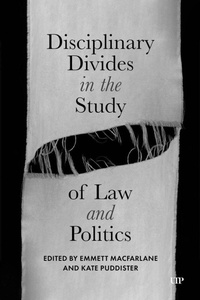
Disciplinary Divides in the Study of Law and Politics
Will be published approx. on 16. June 2026
Book
Hardback
386 pages
978-1-4875-1328-3 (ISBN)
Description
This book studies the "disciplinary divides" between law and political science, including conceptual, methodological, and normative differences in how each field approaches policy, institutions, and legal phenomena.
Disciplinary Divides in the Study of Law and Politics critically analyses these fault lines and proposes strategies to bridge them. The chapters identify key gaps, disagreements, and challenges in the study of law and politics through fresh empirical analyses, including studies of rights (such as Charter and Indigenous rights) and of institutional actors and processes - courts, legislatures, executives, expert witnesses, judicial selection, constitutional amendment, and government lawyers. The volume addresses a wide range of legal domains, including constitutional, administrative, immigration and refugee, federalism, and electoral law, while also highlighting areas where deeper interdisciplinary engagement is needed. Several chapters contribute to theoretical development, and many adopt a forward-looking perspective, identifying urgent research questions and setting future research agendas. Collectively, the contributions demonstrate how greater interdisciplinary collaboration can enhance our understanding of law's relationship to power, public policy, and society.
Disciplinary Divides in the Study of Law and Politics critically analyses these fault lines and proposes strategies to bridge them. The chapters identify key gaps, disagreements, and challenges in the study of law and politics through fresh empirical analyses, including studies of rights (such as Charter and Indigenous rights) and of institutional actors and processes - courts, legislatures, executives, expert witnesses, judicial selection, constitutional amendment, and government lawyers. The volume addresses a wide range of legal domains, including constitutional, administrative, immigration and refugee, federalism, and electoral law, while also highlighting areas where deeper interdisciplinary engagement is needed. Several chapters contribute to theoretical development, and many adopt a forward-looking perspective, identifying urgent research questions and setting future research agendas. Collectively, the contributions demonstrate how greater interdisciplinary collaboration can enhance our understanding of law's relationship to power, public policy, and society.
More details
Language
English
Place of publication
Toronto
Canada
Target group
College/higher education
Professional and scholarly
Product notice
sewn/stitched
Cloth over boards
Dimensions
Height: 229 mm
Width: 152 mm
Thickness: 25 mm
Weight
700 gr
ISBN-13
978-1-4875-1328-3 (9781487513283)
Copyright in bibliographic data and cover images is held by Nielsen Book Services Limited or by the publishers or by their respective licensors: all rights reserved.
Schweitzer Classification
Persons
Emmett Macfarlane is a professor of political science at the University of Waterloo.
Kate Puddister is an associate professor of political science at the University of Guelph.
Kate Puddister is an associate professor of political science at the University of Guelph.
Content
Foreword
The Honourable Justice Malcolm Rowe
Introduction: Political Science and Law: Shared Foundations and Disciplinary Divides
Kate Puddister and Emmett Macfarlane
Part I: Examining the Divides
Chapter 1: Legal Blindspots in Canadian Political Science
Dennis Baker and Byron Sheldrick
Chapter 2: Who Cites Who? An Empirical Study of the Research Foundations of the Canadian Law and Politics Subfield
Andrew McDougall and Charles Buck
Chapter 3: Taking Power Seriously: Studying Aboriginal Rights in Formal and Informal Loci of Power
Minh Do
Chapter 4: Portrait of the Political Scientist as an Expert Witness
Christopher Manfredi
Chapter 5: The Role of Government Lawyers
Matthew Hennigar
Chapter 6: Dialogue Theory and Legislative Responses: What the Metaphor Missed (or Perhaps Misunderstood about Courts and Legislatures)
James B. Kelly
Part II: Dialogues across the Disciplinary Divide
Chapter 7: Partisan Divides and Disciplinary Divides? Political Scientists, Legal Scholars, and the Politics of Judicial Selection
Mark Harding
Chapter 8: Response: Canada's Indispensable Legal and Political Constitutionalism: Some Observations on Constitutionalism from a (Primarily) Legal Perspective
Warren Newman
Chapter 9: Canadian Political Science's Unfortunate Neglect of Administrative Law
David Said and Dennis Baker
Chapter 10: Response: Collaboration at the Intersection of Administrative Law and Political Science
Paul Daly
Chapter 11: Law and Social Science: A Sustainable Jurisprudence of Canadian Federalism
Peter C. Oliver
Chapter 12: Response: On Being Judgmatical: Judicial Choices and How to Think about Hard versus Easy Cases
Christa Scholtz
Chapter 13: Political Revival, Scholarly Renaissance: Academic Writing on the Notwithstanding Clause, 1982-2023
Dave Snow
Chapter 14: Response: Notwithstanding Constitutional Law, Politics, and Scholarship
Eric M. Adams and Catherine Ford
Chapter 15: Why Law Was Late to Comparative Constitutional Amendment
Richard Albert
Chapter 16: Response: Political Science and the Study of Constitutional Amendment
Emmett Macfarlane
Part III: Disciplinary Dexterity and Scholarly Collaborations
Chapter 17: Parallel Narratives, Divergent Disciplines: Examining Advisory Opinions
Carissima Mathen and Kate Puddister
Chapter 18: Finding Common Ground? Campaign Finance Law
Erin Crandall and Michael Pal
Chapter 19: The Anti-Disciplinary Divide: Canada's Safe Third Country Agreement, Roxham Road, and the Politicization of Legal Loopholes
Megan Gaucher and Shauna Labman
Selected Bibliography
The Honourable Justice Malcolm Rowe
Introduction: Political Science and Law: Shared Foundations and Disciplinary Divides
Kate Puddister and Emmett Macfarlane
Part I: Examining the Divides
Chapter 1: Legal Blindspots in Canadian Political Science
Dennis Baker and Byron Sheldrick
Chapter 2: Who Cites Who? An Empirical Study of the Research Foundations of the Canadian Law and Politics Subfield
Andrew McDougall and Charles Buck
Chapter 3: Taking Power Seriously: Studying Aboriginal Rights in Formal and Informal Loci of Power
Minh Do
Chapter 4: Portrait of the Political Scientist as an Expert Witness
Christopher Manfredi
Chapter 5: The Role of Government Lawyers
Matthew Hennigar
Chapter 6: Dialogue Theory and Legislative Responses: What the Metaphor Missed (or Perhaps Misunderstood about Courts and Legislatures)
James B. Kelly
Part II: Dialogues across the Disciplinary Divide
Chapter 7: Partisan Divides and Disciplinary Divides? Political Scientists, Legal Scholars, and the Politics of Judicial Selection
Mark Harding
Chapter 8: Response: Canada's Indispensable Legal and Political Constitutionalism: Some Observations on Constitutionalism from a (Primarily) Legal Perspective
Warren Newman
Chapter 9: Canadian Political Science's Unfortunate Neglect of Administrative Law
David Said and Dennis Baker
Chapter 10: Response: Collaboration at the Intersection of Administrative Law and Political Science
Paul Daly
Chapter 11: Law and Social Science: A Sustainable Jurisprudence of Canadian Federalism
Peter C. Oliver
Chapter 12: Response: On Being Judgmatical: Judicial Choices and How to Think about Hard versus Easy Cases
Christa Scholtz
Chapter 13: Political Revival, Scholarly Renaissance: Academic Writing on the Notwithstanding Clause, 1982-2023
Dave Snow
Chapter 14: Response: Notwithstanding Constitutional Law, Politics, and Scholarship
Eric M. Adams and Catherine Ford
Chapter 15: Why Law Was Late to Comparative Constitutional Amendment
Richard Albert
Chapter 16: Response: Political Science and the Study of Constitutional Amendment
Emmett Macfarlane
Part III: Disciplinary Dexterity and Scholarly Collaborations
Chapter 17: Parallel Narratives, Divergent Disciplines: Examining Advisory Opinions
Carissima Mathen and Kate Puddister
Chapter 18: Finding Common Ground? Campaign Finance Law
Erin Crandall and Michael Pal
Chapter 19: The Anti-Disciplinary Divide: Canada's Safe Third Country Agreement, Roxham Road, and the Politicization of Legal Loopholes
Megan Gaucher and Shauna Labman
Selected Bibliography