

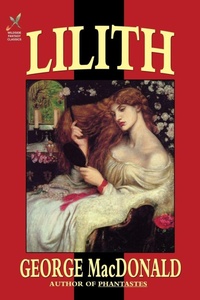
Lilith
Published on 1. March 2005
Book
Paperback/Softback
226 pages
978-1-58715-974-9 (ISBN)
Description
George MacDonald (1824-1905) was a Scottish author, teacher, and, briefly, clergyman, whose theology was too personal and idiosyncratic for him to remain on the pulpit for very long, but whose imagination led him to write two of the most important visionary novels of the 19th century, Phantastes and Lilith.
Includes an introduction by fantasy scholar Darrell Schweitzer.
More details
Series
Language
English
Place of publication
Holicog
United States
Target group
Children/juvenile
Product notice
Paperback (trade)
Unsewn / adhesive bound
Dimensions
Height: 229 mm
Width: 152 mm
Thickness: 13 mm
Weight
374 gr
ISBN-13
978-1-58715-974-9 (9781587159749)
Copyright in bibliographic data and cover images is held by Nielsen Book Services Limited or by the publishers or by their respective licensors: all rights reserved.
Schweitzer Classification
Persons
George MacDonald was a Scottish author, poet, and Christian Congregational clergyman. He established himself as a pioneering figure in modern fantasy writing and mentored fellow writer Lewis Carroll. In addition to his fairy stories, MacDonald wrote various works on Christian theology, including sermon collections. George MacDonald was born on December 10, 1824 in Huntly, Aberdeenshire, Scotland. His father, a farmer, descended from the Clan MacDonald of Glen Coe and was a direct descendant of one of the families killed in the 1692 massacre. MacDonald was raised in an exceptionally literary household: one of his maternal uncles was a renowned Celtic scholar, editor of the Gaelic Highland Dictionary, and collector of fairy stories and Celtic oral poetry. His paternal grandfather had helped to publish an edition of James Macpherson's Ossian, a contentious epic poem based on the Fenian Cycle of Celtic Mythology that contributed to the birth of European Romanticism. MacDonald's step-uncle was a Shakespeare scholar, while his paternal cousin was also a Celtic intellectual.