

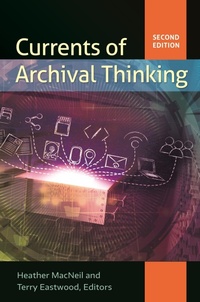
Currents of Archival Thinking
2nd Edition
Published on 9. January 2017
Book
Paperback/Softback
416 pages
978-1-4408-3908-5 (ISBN)
Description
With new technologies and additional goals driving their institutions, archives are changing drastically. This book shows how the foundations of archival practice can be brought forward to adapt to new environments-while adhering to the key principles of preservation and access.
Archives of all types are experiencing a resurgence, evolving to meet new environments (digital and physical) and new priorities. To meet those changes, professional archivist education programs-now one of the more active segments of LIS schools-are proliferating as well. This book identifies core archival theories and approaches and how those interact with major issues and trends in the field. The essays explore the progression of archival thinking today, discussing the nature of archives in light of present-day roles for archivists and archival institutions in the preservation of documentary heritage.
Examining new conceptualizations and emerging frameworks through the lenses of core archival practice and theory, the book covers core foundational topics, such as the nature of archives, the ruling concept of provenance, and the principal functions of archivists, discussing each in the context of current and future environments and priorities. Several new essays on topics of central importance not treated in the first edition are included, such as digital preservation and the influence of new technologies on institutional programs that facilitate archival access, advocacy, and outreach; the changing legal context of archives and archival work; and the archival collections of private persons and organizations. Readers will also learn how communities of various kinds intersect with the archival mission and how other disciplines' perspectives on archives can open new avenues.
Archives of all types are experiencing a resurgence, evolving to meet new environments (digital and physical) and new priorities. To meet those changes, professional archivist education programs-now one of the more active segments of LIS schools-are proliferating as well. This book identifies core archival theories and approaches and how those interact with major issues and trends in the field. The essays explore the progression of archival thinking today, discussing the nature of archives in light of present-day roles for archivists and archival institutions in the preservation of documentary heritage.
Examining new conceptualizations and emerging frameworks through the lenses of core archival practice and theory, the book covers core foundational topics, such as the nature of archives, the ruling concept of provenance, and the principal functions of archivists, discussing each in the context of current and future environments and priorities. Several new essays on topics of central importance not treated in the first edition are included, such as digital preservation and the influence of new technologies on institutional programs that facilitate archival access, advocacy, and outreach; the changing legal context of archives and archival work; and the archival collections of private persons and organizations. Readers will also learn how communities of various kinds intersect with the archival mission and how other disciplines' perspectives on archives can open new avenues.
Reviews / Votes
As an adjunct professor, I can easily see adding this book into my curriculum to provide students with a theoretical framework from which to build their practical knowledge. * Technical Services Quarterly * Each chapter and essay is thoroughly researched and provides multiple statistics to back up claims. . . . This title is perfect for academic libraries (particularly library schools), special collections, and for those pursuing a career in archives and records management. * VOYA * The second edition of Currents of Archival Thinking should be considered a stand-alone book, rather than simply an updated version of a resource that is already in your bookcase. . . . Overall, there appears to be a sense of openness to users, communities, society, and social justice in nearly all the chapters. . . . Whether intentional or not, this shift in archival discourse, grounded solidly on 'traditional' archival theory, is more than welcome. * Archivaria *More details
Edition
2nd edition
Language
English
Place of publication
United States
Publishing group
Bloomsbury Publishing Plc
Target group
Professional and scholarly
College/higher education
Dimensions
Height: 234 mm
Width: 156 mm
Thickness: 23 mm
Weight
629 gr
ISBN-13
978-1-4408-3908-5 (9781440839085)
Copyright in bibliographic data and cover images is held by Nielsen Book Services Limited or by the publishers or by their respective licensors: all rights reserved.
Schweitzer Classification
Other editions
Additional editions
Heather MacNeil | Terry Eastwood
Currents of Archival Thinking
E-Book
01/2017
2nd Edition
Libraries Unlimited Inc
€61.99
Available for download
Heather MacNeil | Terry Eastwood
Currents of Archival Thinking
E-Book
01/2017
2nd Edition
Libraries Unlimited Inc
€61.99
Available for download
Persons
Heather MacNeil is professor in the University of Toronto Faculty of Information.
Terry Eastwood is professor emeritus in the School of Library, Archival, and Information Studies at the University of British Columbia.
Terry Eastwood is professor emeritus in the School of Library, Archival, and Information Studies at the University of British Columbia.
Content
CONTENTS
Introduction: Shifting Currents
Terry Eastwood and Heather MacNeil
PART I: FOUNDATIONS
Chapter 1: A Contested Realm: The Nature of Archives and the Orientation of Archival Science
Terry Eastwood
Chapter 2: Origins and Beyond: The Ongoing Evolution of Archival Ideas about Provenance
Jennifer Douglas
Chapter 3: Archives as a Place
Adrian Cunningham
PART II: FUNCTIONS
Chapter 4: Managing Records in Current Recordkeeping Environments
Gillian Oliver
Chapter 5: Archival Appraisal in Four Paradigms
Fiorella Foscarini
Chapter 6: Digital Preservation: from Possible to Practical
Glenn Dingwall
Chapter 7: Continuing Debates about Description
Geoffrey Yeo
Chapter 8: Archival Interaction
Wendy Duff and Elizabeth Yakel
Chapter 9: Archival Public Programming
Sigrid McCausland
PART III: FRAMEWORKS
Chapter 10: Right to Information
Elizabeth Shepherd
Chapter 11: Archives and Social Justice
David A. Wallace
Chapter 12: Participatory Archives
Alexandra Eveleigh
Chapter 13: GLAMs, LAMs and Archival Perspectives
Jeannette A. Bastian
Chapter 14: Community Archives
Rebecka Sheffield
Index
About the Editors and Contributors
Introduction: Shifting Currents
Terry Eastwood and Heather MacNeil
PART I: FOUNDATIONS
Chapter 1: A Contested Realm: The Nature of Archives and the Orientation of Archival Science
Terry Eastwood
Chapter 2: Origins and Beyond: The Ongoing Evolution of Archival Ideas about Provenance
Jennifer Douglas
Chapter 3: Archives as a Place
Adrian Cunningham
PART II: FUNCTIONS
Chapter 4: Managing Records in Current Recordkeeping Environments
Gillian Oliver
Chapter 5: Archival Appraisal in Four Paradigms
Fiorella Foscarini
Chapter 6: Digital Preservation: from Possible to Practical
Glenn Dingwall
Chapter 7: Continuing Debates about Description
Geoffrey Yeo
Chapter 8: Archival Interaction
Wendy Duff and Elizabeth Yakel
Chapter 9: Archival Public Programming
Sigrid McCausland
PART III: FRAMEWORKS
Chapter 10: Right to Information
Elizabeth Shepherd
Chapter 11: Archives and Social Justice
David A. Wallace
Chapter 12: Participatory Archives
Alexandra Eveleigh
Chapter 13: GLAMs, LAMs and Archival Perspectives
Jeannette A. Bastian
Chapter 14: Community Archives
Rebecka Sheffield
Index
About the Editors and Contributors