

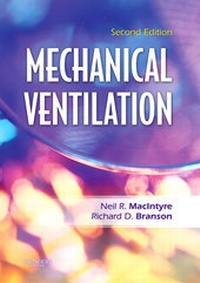
Mechanical Ventilation
2nd Edition
Published on 28. February 2008
Book
Paperback/Softback
528 pages
978-1-4160-3141-3 (ISBN)
Description
With cutting-edge and clinically relevant information, MECHANICAL VENTILATION, 2nd Edition takes a practical, clinical approach to the principles and practice of mechanical ventilation. This informative resource explains mechanical ventilation decisions and procedures in real-world terms so information is easy to understand and apply. This thoroughly updated edition includes one new chapter, four completely updated chapters, and a wealth of new user-friendly features.
Detailed, clinically focused coverage of the application of mechanical ventilation to the most common respiratory diseases, provides practical answers to real life problems.
UNIQUE! Sections of chapters on Special Techniques and Future Therapies include information on the newest techniques for treating patients in respiratory distress.
A separate appendix of case studies helps you apply what you've learned to realistic situations.
Well-known and respected authors, Neil MacIntyre and Rich Branson, share their vast expertise and accurate, cutting-edge information.
Chapter Objectives, Key Point Summaries, and Assessment Questions reinforce basic concepts from each chapter.
New chapter on Unique Patient Populations highlights the mechanical ventilation issues of traumatic brain injury, neuromuscular disease, lung transplantation, burn injury, and perioperative patient populations.
Expanded glossary includes relevant terminology and key terms to help you easily find unfamiliar terminology.
Detailed, clinically focused coverage of the application of mechanical ventilation to the most common respiratory diseases, provides practical answers to real life problems.
UNIQUE! Sections of chapters on Special Techniques and Future Therapies include information on the newest techniques for treating patients in respiratory distress.
A separate appendix of case studies helps you apply what you've learned to realistic situations.
Well-known and respected authors, Neil MacIntyre and Rich Branson, share their vast expertise and accurate, cutting-edge information.
Chapter Objectives, Key Point Summaries, and Assessment Questions reinforce basic concepts from each chapter.
New chapter on Unique Patient Populations highlights the mechanical ventilation issues of traumatic brain injury, neuromuscular disease, lung transplantation, burn injury, and perioperative patient populations.
Expanded glossary includes relevant terminology and key terms to help you easily find unfamiliar terminology.
Reviews / Votes
The second edition of Mechanical Ventilation is an excellent introductory text for students of critical care, particularly respiratory therapists, critical care nurses who wish to expand their understanding of mechanical ventilation, and the busy academic provider who needs a quick reference on the fundamentals of mechanical ventilation for board review or from which to generate core teaching materials for trainees. Its greatest strengths are its choice of material, its figures and tables, and its concise, understandable reviews of complex technical aspects of mechanical ventilation, pulmonary physiology, and the potentially confusing literature on clinical applications. This book will become part of our core reading for residency training, and I highly recommended it.Respiratory Care - February 2009
More details
Edition
2nd edition
Language
English
Place of publication
London
United Kingdom
Publishing group
Elsevier Health Sciences
Target group
College/higher education
Dimensions
Height: 260 mm
Width: 184 mm
Weight
970 gr
ISBN-13
978-1-4160-3141-3 (9781416031413)
Copyright in bibliographic data and cover images is held by Nielsen Book Services Limited or by the publishers or by their respective licensors: all rights reserved.
Schweitzer Classification
Other editions
Previous edition
Neil R. MacIntyre | Richard D. Branson
Mechanical Ventilation
Book
09/2000
Saunders
€76.87
Article exhausted; check for reprint
Persons
Author
Professor of Medicine, Medical Director of Respiratory Care, Clinical Chief of the Division of Pulmonary and Critical Care Medicine, Duke University Medical Center, Durham, NC
Associate Professor of Surgery, Adjunct Faculty, College of Pharmacy, University of Cincinnati, Cincinnati, Ohio; Adjunct Faculty, School of Aerospace Medicine, United States Air Force
Content
Section I: Technical Aspects
1. Classification of Mechanical Ventilators
2. Modes of Ventilator Operation
3. The Patient-Ventilator Interface: Ventilator Circuit, Airway Care, and Suctioning
4. Humidification and Aerosol Therapy
5. Ventilator Monitors and Displays
Section II: Physiology
6. Respiratory System Mechanics
7. Alveolar-Capillary Gas Transport
8. Patient-Ventilator Interactions
9. Cardiopulmonary Interactions
10. Ventilator Induced Lung Injury
Section III: Adjunctive Therapy
11. Nutrition
12. Sedation, Analgesia, and Neuromuscular Blockade
13. Patient Positioning
14. Ventilator Associated Pneumonia
Section IV: Clinical Applications
15. Management of Parenchymal Lung Injury
16. Management of Obstructive Airway Disease
17. Unique Patient Populations NEW!
18. Discontinuing Mechanical Support
19. Prolonged Mechanical Ventilation
20. Transport and Resuscitation
21. Non-invasive Ventilation
Section V: Special Techniques and Future Therapies
22. Modifications on Conventional Ventilation Techniques
23. High-Frequency Ventilation
24. Extracorporeal Techniques for Cardiopulmonary Support
25. Heliox and Inhaled Nitric Oxide
Appendices
Case Studies
Assessment Question Answers
Glossary
1. Classification of Mechanical Ventilators
2. Modes of Ventilator Operation
3. The Patient-Ventilator Interface: Ventilator Circuit, Airway Care, and Suctioning
4. Humidification and Aerosol Therapy
5. Ventilator Monitors and Displays
Section II: Physiology
6. Respiratory System Mechanics
7. Alveolar-Capillary Gas Transport
8. Patient-Ventilator Interactions
9. Cardiopulmonary Interactions
10. Ventilator Induced Lung Injury
Section III: Adjunctive Therapy
11. Nutrition
12. Sedation, Analgesia, and Neuromuscular Blockade
13. Patient Positioning
14. Ventilator Associated Pneumonia
Section IV: Clinical Applications
15. Management of Parenchymal Lung Injury
16. Management of Obstructive Airway Disease
17. Unique Patient Populations NEW!
18. Discontinuing Mechanical Support
19. Prolonged Mechanical Ventilation
20. Transport and Resuscitation
21. Non-invasive Ventilation
Section V: Special Techniques and Future Therapies
22. Modifications on Conventional Ventilation Techniques
23. High-Frequency Ventilation
24. Extracorporeal Techniques for Cardiopulmonary Support
25. Heliox and Inhaled Nitric Oxide
Appendices
Case Studies
Assessment Question Answers
Glossary