

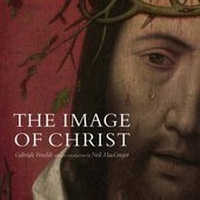
The Image of Christ
Published on 25. October 2011
Book
Paperback/Softback
224 pages
978-1-85709-292-9 (ISBN)
Description
The Image of Christ expresses the view that modern secular audiences can engage with the masterpieces of Christian art at an emotional as well as a purely aesthetic or historical level. This book aims to help the viewer understand these pictures by focusing attention on the purpose for which they were made, and explores what they might have meant to their original viewers.
The authors trace how a recognizable image of Christ evolved, starting with the earliest symbols and metaphorical images such as the Sheperd, the Lamb and the Vine. They trace the emergence of a "true likeness," emphasizing the importance of the Veronica, the "miraculous portrait" said to have been imprinted on the cloth held out to Jesus on the way to Calvary. They describe how artists conveyed the paradox of Christ's dual nature-human and divine, weak and powerful, victim and victor-in portrayals of his infancy. They also show how images of Christ's suffering during the Passion were intended to convey a cosmic, not just a personal significance. Artists have attempted to put extremes of suffering and despair into an overal context of hope-a vein of hope that runs from the catacombs to Hiroshima and beyond.
These are images that speak, even to those who do not hold Christian beliefs. Artists had to make it clear that in representing the life and death of Jesus they were offering a continuing truth; we the spectators have to become eyewitnesses to an event that matters to us now. As a result, the different moments and aspects of Christ's life become, in the hands of great artists, a reflection of all human experience. The Virgin nursing her son expresses the feelings of love every mother has for her child. Christ mocked in innocence beset by violence. Christ risen and appearing to Mary Magdalene is a universal reaffirmation that love cannot be destroyed by death. Beyond their obvious religious significance, these are paintings that have a universal meaning.
Published by National Gallery Company/Distributed by Yale University Press
The authors trace how a recognizable image of Christ evolved, starting with the earliest symbols and metaphorical images such as the Sheperd, the Lamb and the Vine. They trace the emergence of a "true likeness," emphasizing the importance of the Veronica, the "miraculous portrait" said to have been imprinted on the cloth held out to Jesus on the way to Calvary. They describe how artists conveyed the paradox of Christ's dual nature-human and divine, weak and powerful, victim and victor-in portrayals of his infancy. They also show how images of Christ's suffering during the Passion were intended to convey a cosmic, not just a personal significance. Artists have attempted to put extremes of suffering and despair into an overal context of hope-a vein of hope that runs from the catacombs to Hiroshima and beyond.
These are images that speak, even to those who do not hold Christian beliefs. Artists had to make it clear that in representing the life and death of Jesus they were offering a continuing truth; we the spectators have to become eyewitnesses to an event that matters to us now. As a result, the different moments and aspects of Christ's life become, in the hands of great artists, a reflection of all human experience. The Virgin nursing her son expresses the feelings of love every mother has for her child. Christ mocked in innocence beset by violence. Christ risen and appearing to Mary Magdalene is a universal reaffirmation that love cannot be destroyed by death. Beyond their obvious religious significance, these are paintings that have a universal meaning.
Published by National Gallery Company/Distributed by Yale University Press
Reviews / Votes
"Engaging . . . a novel approach to [a] seemingly familiar subject . . . insightful."-Jeremy W. H. Arnold, Religious Studies Review -- Jeremy W. H. Arnold * Religious Studies Review *More details
Edition
This is a reissue of a book originally publd in 2000
Language
English
Place of publication
London
United Kingdom
Target group
College/higher education
Professional and scholarly
Product notice
Paperback (trade)
Illustrations
182 color illus.
Dimensions
Height: 248 mm
Width: 248 mm
Weight
998 gr
ISBN-13
978-1-85709-292-9 (9781857092929)
Copyright in bibliographic data and cover images is held by Nielsen Book Services Limited or by the publishers or by their respective licensors: all rights reserved.
Schweitzer Classification
Persons
Gabriele Finaldi is Deputy Director of the Prado Museum, Madrid, and a former curator ofthe National Gallery, London. Neil MacGregor is Director of the British Museum, London and former director of the National Gallery, London. Susanna Avery-Quash is Research Curator in the History of Collecting at the National Gallery, London. Xavier Bray is Chief Curator at Dulwich Picture Gallery, London, and a former Curator at the National Gallery, London. Erika Langmuir is former Head of Education at the National Gallery, London. Alexander Strugis is Director of The Holburne Museum of Art, Bath.