

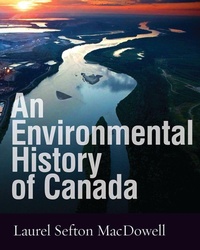
An Environmental History of Canada
Published on 25. July 2012
Book
Paperback/Softback
352 pages
978-0-7748-2102-5 (ISBN)
Description
Traces how Canada's colonial and national development contributed to modern environmental problems such as urban sprawl, the collapse of fisheries, and climate change
Includes over 200 photographs, maps, figures, and sidebar discussions on key figures, concepts, and cases
Offers concise definitions of environmental concepts
Ties Canadian history to issues relevant to contemporary society
Introduces students to a new, dynamic approach to the past
Throughout history most people have associated northern North America with wilderness - with abundant fish and game, snow-capped mountains, and endless forest and prairie. Canada's contemporary picture gallery, however, contains more disturbing images - deforested mountains, empty fisheries, and melting ice caps. Adopting both a chronological and thematic approach, Laurel MacDowell examines human interactions with the land, and the origins of our current environmental crisis, from first peoples to the Kyoto Protocol. This richly illustrated exploration of the past from an environmental perspective will change the way Canadians and others around the world think about - and look at - Canada.
Includes over 200 photographs, maps, figures, and sidebar discussions on key figures, concepts, and cases
Offers concise definitions of environmental concepts
Ties Canadian history to issues relevant to contemporary society
Introduces students to a new, dynamic approach to the past
Throughout history most people have associated northern North America with wilderness - with abundant fish and game, snow-capped mountains, and endless forest and prairie. Canada's contemporary picture gallery, however, contains more disturbing images - deforested mountains, empty fisheries, and melting ice caps. Adopting both a chronological and thematic approach, Laurel MacDowell examines human interactions with the land, and the origins of our current environmental crisis, from first peoples to the Kyoto Protocol. This richly illustrated exploration of the past from an environmental perspective will change the way Canadians and others around the world think about - and look at - Canada.
Reviews / Votes
MacDowell...mounts an impressive summary of how Canadian history has been rethought from an environment perspective over the last 40 years. She demonstrates this with a copiously illustrated and well-referenced exploration of the evolution of Canada's landscape over millennia...a very accessible text for students and general readers, with excellent maps, illustrations, information boxes, and rich bibliographies for each chapter. Highly recommended.- B. Osborne, Queen's University at Kingston (Choice)
More details
Language
English
Place of publication
Vancouver
Canada
Product notice
Paperback (trade)
Illustrations
65 b&w photos, 16 maps, 13 graphs
Dimensions
Height: 251 mm
Width: 203 mm
Thickness: 23 mm
Weight
794 gr
ISBN-13
978-0-7748-2102-5 (9780774821025)
Copyright in bibliographic data and cover images is held by Nielsen Book Services Limited or by the publishers or by their respective licensors: all rights reserved.
Schweitzer Classification
Person
Laurel Sefton MacDowell is a professor of history in the Department of Historical Studies at the University of Toronto.
Content
Introduction
Part 1: Aboriginal Peoples and Settlers
1 Encountering a New Land
2 Settling the Land and Transforming the "Wilderness"
Part 2: Industrialism, Reform, and Infrastructure
3 Early Cities and Urban Reform
4 The Conservation Movement
5 Mining Resources
6 Cars, Consumerism, and Suburbs
Part 3: Harnessing Nature, Harming Nature
7 Changing Energy Regimes
8 Water
9 The Contested World of Food and Agriculture
Part 4: The Environmental Era
10 The Environmental Movement and Public Policy
11 Parks and Wildlife
12 Coastal Fisheries
13 The North and Climate Change
Conclusion
Index
Part 1: Aboriginal Peoples and Settlers
1 Encountering a New Land
2 Settling the Land and Transforming the "Wilderness"
Part 2: Industrialism, Reform, and Infrastructure
3 Early Cities and Urban Reform
4 The Conservation Movement
5 Mining Resources
6 Cars, Consumerism, and Suburbs
Part 3: Harnessing Nature, Harming Nature
7 Changing Energy Regimes
8 Water
9 The Contested World of Food and Agriculture
Part 4: The Environmental Era
10 The Environmental Movement and Public Policy
11 Parks and Wildlife
12 Coastal Fisheries
13 The North and Climate Change
Conclusion
Index