

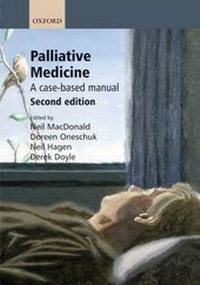
Palliative Medicine
A case-based manual
2nd Edition
Published on 29. October 2005
Book
Paperback/Softback
438 pages
978-0-19-852832-6 (ISBN)
Description
Palliative care is now an integral part of the undergraduate medical curriculum. Medical education across the board is adopting a case-based approach. This book uses a series of cases to illustrate critical points in palliative medicine. The case-studies have been carefully chosen to reflect real life clinical practice. The contributors illustrate, through the case studies, the desired skills, attitudes, and knowledge required in this field of medicine. The second edition of this popular book continues to offer a panoramic view of palliative care. The new edition introduces a number of new topics, new authors, and a thorough update on continuing chapters. It includes material on non-malignant disease which is an integral part of palliative care. The text distinguishes between evidence-based practice and common practice which has yet to be verified by research studies. Each chapter includes a brief section at the end containing a commentary on future trends and promising areas of research.
More details
Edition
2nd Revised edition
Language
English
Place of publication
Oxford
United Kingdom
Target group
Professional and scholarly
Edition type
Revised edition
Illustrations
4 halftones, numerous tables and line drawings
Dimensions
Height: 239 mm
Width: 169 mm
Thickness: 24 mm
Weight
739 gr
ISBN-13
978-0-19-852832-6 (9780198528326)
Copyright in bibliographic data and cover images is held by Nielsen Book Services Limited or by the publishers or by their respective licensors: all rights reserved.
Schweitzer Classification
Other editions
New editions
Book
03/2012
3rd Edition
Oxford University Press
€58.17
Article exhausted; check different version
Persons
Content
COMMUNICATION; 1. Communication in advanced illness; PAIN; 2. Managing pain in palliative patients; 3. Neuropathic pain; 4. Bone pain; 5. Visceral pain; 6. Neurological effects; ANOREXIA-CACHEXIA-FATIGUE; 7. Anorexia-cachexia syndrome; 8. Fatigue; PSYCHO-SOCIAL ISSUES; 9. Anxiety and depression; 10. Grief and bereavement; 11. Sleep; RESPIRATORY PROBLEMS; 12. Dyspnoea; 13. Cough; PALLIATIVE CARE IN NON-MALIGNANT DISEASE; 14. AIDS; 15. End stage renal disease and discontinuation of dialysis; 16. Cardiac disease; GASTROINTESTINAL PROBLEMS; 17. Nausea and vomiting; 18. Constipation; 19. Malignant bowel obstruction; SPIRITUAL CARE; 20. Spiritual care; AN APPROACH TO ETHICAL ISSUES; 21. An approach to ethical issues in end of life care; ETHICAL ISSUES IN PALLIATIVE CARE RESEARCH; 22. Ethical issues in palliative care research; PEDIATRIC PALLIATIVE CARE; 23. Pediatric palliative care; COGNITIVE IMPAIRMENT; 24. Cognitive impairment; DEHYDRATION; 25. Dehydration; MOUTH CARE; 26. Mouth care; MALIGNANT WOUNDS AND PRESSURE ULCERS; 27. Malignant wounds and pressure ulcers; LYMPHOEDEMA; 28. Lymphoedema; GENITOURINARY SYMPTOMS; 29. Genitourinary symptoms; HOME CARE OF DYING PATIENTS; 30. Home care of dying patients; INFORMATION TECHNOLOGY IN PALLIATIVE CARE; 31. Information technology in palliative care