

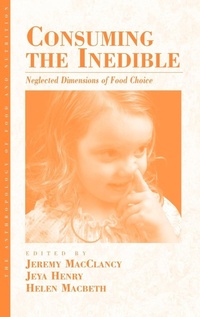
Consuming the Inedible
Neglected Dimensions of Food Choice
1st Edition
Published on 1. December 2007
Book
Hardback
258 pages
978-1-84545-353-4 (ISBN)
Description
Everyday, millions of people eat earth, clay, nasal mucus, and similar substances. Yet food practices like these are strikingly understudied in a sustained, interdisciplinary manner. This book aims to correct this neglect. Contributors, utilizing anthropological, nutritional, biochemical, psychological and health-related perspectives, examine in a rigorously comparative manner the consumption of foods conventionally regarded as inedible by most Westerners. This book is both timely and significant because nutritionists and health care professionals are seldom aware of anthropological information on these food practices, and vice versa. Ranging across diversity of disciplines Consuming the Inedible surveys scientific and local views about the consequences - biological, mineral, social or spiritual - of these food practices, and probes to what extent we can generalize about them.
Reviews / Votes
"...contains fascinating material on the social, political, nutritional, and evolutionary aspects of human food choice. Scholars and students in food studies will find Consuming the Inedible useful for its variety of approaches to 'unusual' eating practices, and several of the chapters should also find their way onto reading lists for courses in the anthropology of food." ? JRAIMore details
Series
Language
English
Place of publication
Oxford
United Kingdom
Target group
College/higher education
Professional and scholarly
Product notice
Library binding
Illustrations
Bibliography; Index
Dimensions
Height: 240 mm
Width: 161 mm
Thickness: 19 mm
Weight
555 gr
ISBN-13
978-1-84545-353-4 (9781845453534)
DOI
10.3167/9781845453534
Copyright in bibliographic data and cover images is held by Nielsen Book Services Limited or by the publishers or by their respective licensors: all rights reserved.
Schweitzer Classification
Other editions
Additional editions
Jeremy M. MacClancy | Jeya Henry | Helen Macbeth
Consuming the Inedible
Neglected Dimensions of Food Choice
E-Book
12/2007
1st Edition
Berghahn Books
€24.49
Available for download
Jeremy M. MacClancy | Jeya Henry | Helen Macbeth
Consuming the Inedible
Neglected Dimensions of Food Choice
E-Book
12/2007
1st Edition
Berghahn Books
from
€41.79
Available for download
Persons
Jeremy M. MacClancy is Professor of Social Anthropology at the Anthropology Department, Oxford Brookes University. He is the author of Consuming Culture, and prize-winning investigator of Basque cuisine.
Content
List of Figures
List of Tables
Preface
List of Contributors
Introduction: Considering the Inedible, Consuming the Ineffable
Jeremy MacClancy, Helen Macbeth and Jeya Henry
Chapter 1. Evidence for the Consumption of the Inedible: Who, What, When, Where and Why?
Sera L.Young
Chapter 2. Consuming the Inedible: Pica Behaviour
Carmen Strungaru
Chapter 3. The Concepts of Food and Non-food: Perspectives from Spain
Isabel Gonzalez Turmo
Chapter 4. Food Definitions and Boundaries: Eating Constraints and Human Identities
Ellen Messer
Chapter 5. A Vile Habit? The Potential Biological Consequences of Geophagia, with Special Attention to Iron
Sera L. Young
Chapter 6. The Discovery of Human Zinc Deficiency: A Reflective Journey Back in Time
Ananda S. Prasad
Chapter 7. Geophagia and Human Nutrition
Peter Hooda and Jeya Henry
Chapter 8. Consumption of Materials with Low Nutritional Value and Bioactive Properties: Non-human Primates vs Humans
Sabrina Krief
Chapter 9. Lime as the Key Element: A "Non-food" in Food for Subsistence
Ricardo Avila, Martin Tena and Peter Hubbard
Chapter 10. Salt as a "Non-food": To What Extent Do Gustatory Perceptions Determine Non-food vs Food Choices?
Claude Marcel Hladik
Chapter 11. Non-food Food During Famine: The Athens Famine Survivor Project
Antonia-Leda Matalas and Louis E. Grivetti
Chapter 12. Eating Garbage: Socially Marginal Food Provisioning Practices
Rachel Black
Chapter 13. Eating Cat in the North of Spain in the Early Twentieth Century
F. Xavier Medina
Chapter 14. Insects: Forgotten and Rediscovered as Food. Entomophagy among the Eipo, Highlands of West New Guinea, and in Other Traditional Societies
Wulf Schiefenhoevel and Paul Blum
Chapter 15. Eating Snot: Socially Unacceptable but Common. Why?
Maria Jesus Portalatin
Chapter 16. Cannibalism: No Myth, but Why So Rare?
Helen Macbeth, Wulf Schiefenhoevel and Paul Collinson
Chapter 17. From Edible to Inedible: Social Construction, Family Socialisation and Upbringing
Luis Cantarero
Chapter 18. The Use of Waste Products in the Fermentation of Alcoholic Beverages
Rodolfo Fernandez and Daria Deraga
Afterword: Earthy Realism: Geophagia in Literature and Art
Jeremy MacClancy
Index
List of Tables
Preface
List of Contributors
Introduction: Considering the Inedible, Consuming the Ineffable
Jeremy MacClancy, Helen Macbeth and Jeya Henry
Chapter 1. Evidence for the Consumption of the Inedible: Who, What, When, Where and Why?
Sera L.Young
Chapter 2. Consuming the Inedible: Pica Behaviour
Carmen Strungaru
Chapter 3. The Concepts of Food and Non-food: Perspectives from Spain
Isabel Gonzalez Turmo
Chapter 4. Food Definitions and Boundaries: Eating Constraints and Human Identities
Ellen Messer
Chapter 5. A Vile Habit? The Potential Biological Consequences of Geophagia, with Special Attention to Iron
Sera L. Young
Chapter 6. The Discovery of Human Zinc Deficiency: A Reflective Journey Back in Time
Ananda S. Prasad
Chapter 7. Geophagia and Human Nutrition
Peter Hooda and Jeya Henry
Chapter 8. Consumption of Materials with Low Nutritional Value and Bioactive Properties: Non-human Primates vs Humans
Sabrina Krief
Chapter 9. Lime as the Key Element: A "Non-food" in Food for Subsistence
Ricardo Avila, Martin Tena and Peter Hubbard
Chapter 10. Salt as a "Non-food": To What Extent Do Gustatory Perceptions Determine Non-food vs Food Choices?
Claude Marcel Hladik
Chapter 11. Non-food Food During Famine: The Athens Famine Survivor Project
Antonia-Leda Matalas and Louis E. Grivetti
Chapter 12. Eating Garbage: Socially Marginal Food Provisioning Practices
Rachel Black
Chapter 13. Eating Cat in the North of Spain in the Early Twentieth Century
F. Xavier Medina
Chapter 14. Insects: Forgotten and Rediscovered as Food. Entomophagy among the Eipo, Highlands of West New Guinea, and in Other Traditional Societies
Wulf Schiefenhoevel and Paul Blum
Chapter 15. Eating Snot: Socially Unacceptable but Common. Why?
Maria Jesus Portalatin
Chapter 16. Cannibalism: No Myth, but Why So Rare?
Helen Macbeth, Wulf Schiefenhoevel and Paul Collinson
Chapter 17. From Edible to Inedible: Social Construction, Family Socialisation and Upbringing
Luis Cantarero
Chapter 18. The Use of Waste Products in the Fermentation of Alcoholic Beverages
Rodolfo Fernandez and Daria Deraga
Afterword: Earthy Realism: Geophagia in Literature and Art
Jeremy MacClancy
Index