

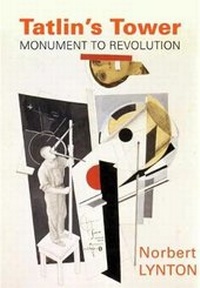
Tatlin's Tower
Monument to Revolution
Published on 15. June 2009
Book
Hardback
240 pages
978-0-300-11130-9 (ISBN)
Description
An examination of the greatest unexecuted work of art of the 20th century
The plans for the gigantic Monument to the Third International were completed in 1920 by Vladimir Tatlin, the Russian painter and visionary designer who was a key figure of Russian constructivism. Planned as the headquarters and monument of the Comintern in Petrograd, it was to be made from industrial materials-iron, glass, and steel-as a towering symbol of modernity. Because of the political turmoil and housing shortages in Russia after the 1917 Revolution, the building was never constructed, but it remains a celebrated icon of revolutionary art.
In this insightful book, Norbert Lynton investigates the sources and symbolism of Tatlin's Tower and considers not only its significance but also the broader role of allegory in abstraction and as an expression of man's highest aspirations. Then, in light of his new symbolic reading of the Tower, Lynton examines Tatlin's flying machine, Letatlin, and earlier works in his career and discusses their impact on other Russian painters, sculptors, designers, and architects of his era.
The plans for the gigantic Monument to the Third International were completed in 1920 by Vladimir Tatlin, the Russian painter and visionary designer who was a key figure of Russian constructivism. Planned as the headquarters and monument of the Comintern in Petrograd, it was to be made from industrial materials-iron, glass, and steel-as a towering symbol of modernity. Because of the political turmoil and housing shortages in Russia after the 1917 Revolution, the building was never constructed, but it remains a celebrated icon of revolutionary art.
In this insightful book, Norbert Lynton investigates the sources and symbolism of Tatlin's Tower and considers not only its significance but also the broader role of allegory in abstraction and as an expression of man's highest aspirations. Then, in light of his new symbolic reading of the Tower, Lynton examines Tatlin's flying machine, Letatlin, and earlier works in his career and discusses their impact on other Russian painters, sculptors, designers, and architects of his era.
Reviews / Votes
"The author illuminates the artist's role in a momentous social program. . . . A humanized, holistic vision of Tatlin and his work."--T. A. Horton, The Architect's Newspaper -- T. A. Horton * The Architect's Newspaper * "The book is a richly rewarding exegesis of Vladimir Tatlin's 1920 Monument to the Third International."--Roann Barris, Slavic Review -- Roann Barris * Slavic Review *More details
Language
English
Place of publication
United States
Product notice
Cloth over boards
Illustrations
45 b-w + 10 color illus.
Dimensions
Height: 254 mm
Width: 178 mm
Weight
1247 gr
ISBN-13
978-0-300-11130-9 (9780300111309)
Copyright in bibliographic data and cover images is held by Nielsen Book Services Limited or by the publishers or by their respective licensors: all rights reserved.
Schweitzer Classification
Person
Norbert Lynton, who died in 2007, was the founding professor of art history at Sussex University and a respected critic.