

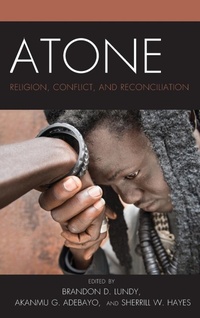
Atone
Religion, Conflict, and Reconciliation
Published on 26. February 2018
Book
Hardback
364 pages
978-1-4985-6068-9 (ISBN)
Description
The relationship between religion and conflict has generated considerable academic and political debate. Although the majority of religions and spiritual traditions are replete with wisdom that propagates a broader unity among human beings, these same examples have been used to legitimize hatred and fear. While some studies claim that religion facilitates peacebuilding, reconciliation, and healing, others argue that religion exacerbates hostility, instigates vengeance-seeking behaviors, and heightens conflict. But religion does not act by itself, human beings are responsible for acts of peace or conflict, of division or reconciliation, in the name of religion. This book addresses these rather complex issues from the perspective of reconciliation, or atonement, to advance both the frontiers of knowledge and the global search for alternative paths to peace. The contributions in the volume focus in three areas: (1) Reconciling Religious Conflicts, (2) Reconciling Conflict through Religion, and (3) Religious Reconciliations. In each of these sections scholars, practitioners, and religious leaders address specific examples that highlight the complex intersections of religious practices with global conflict and reconciliation efforts. This informative and provocative book is relevant for students and faculty in peace and conflict studies, religious studies, humanities, social sciences, and provides insights useful to practitioners and professionals working in peacebuilding and international development seeking to promote effective resolution and reconciliation efforts.
Reviews / Votes
This book provides an interesting and eclectic set of case studies that problematize the paradoxical position of religion in modern conflict. With an important emphasis on under-addressed contexts like Africa, halal food, and religious songs, the book's unique approach to the complicated interconnections between religion and reconciliation provides both academics and religious practitioners with evidence-based examples of religion's social influence in the contemporary world. The book's attempt to blend insider and outsider perspectives on religion as a driver of peaceful social change interrupts long held debates within the fields of Religious Studies and Peace and Conflict Studies. -- Jeremy A. Rinker, University of North Carolina, Greensboro Though images of religion-related violence around the world shape our perception of activist faith in the global era, these thoughtful essays show that religion can be not only a source for conflict but also a basis for tolerance, acceptance, and reconciliation. It is a useful corrective and a significant contribution to the growing literature on religion and peacebuilding in all traditions. -- Mark Juergensmeyer, professor emeritus of global studies and sociology, University of California, Santa BarbaraMore details
Series
Language
English
Place of publication
United States
Publishing group
Bloomsbury Publishing Plc
Target group
Professional and scholarly
Illustrations
21 tables;
Dimensions
Height: 235 mm
Width: 157 mm
Thickness: 26 mm
Weight
744 gr
ISBN-13
978-1-4985-6068-9 (9781498560689)
Copyright in bibliographic data and cover images is held by Nielsen Book Services Limited or by the publishers or by their respective licensors: all rights reserved.
Schweitzer Classification
Other editions
Additional editions
Atone
Religion, Conflict, and Reconciliation
E-Book
02/2018
1st Edition
Lexington Books
€124.99
Available for download
E-Book
02/2018
1st Edition
Lexington Books
€124.99
Available for download
Persons
Brandon D. Lundy is associate professor of anthropology and associate director in the School of Conflict Management, Peacebuilding and Development at Kennesaw State University.
Akanmu G. Adebayo is professor of history at Kennesaw State University.
Sherrill W. Hayes is professor and associate director of the School of Conflict Management, Peacebuilding, and Development at Kennesaw State University.
Akanmu G. Adebayo is professor of history at Kennesaw State University.
Sherrill W. Hayes is professor and associate director of the School of Conflict Management, Peacebuilding, and Development at Kennesaw State University.
Content
Tables
Preface and Acknowledgments, by Brandon D. Lundy, Akanmu G. Adebayo, and Sherrill W. Hayes
Introduction: Examining the Paradoxical Role of Religion in Conflict and Reconciliation, by Brandon D. Lundy, Ziaul Haque, Akanmu G. Adebayo, Sherrill W. Hayes, and Aaron Clarke
Part I: Reconciling Religious Conflicts
Chapter 1: Sources of the Radical Self: Extremism, Modernity, and Religion, by Daniel Cere
Chapter 2: Education, Religion, and Religious Extremism, by Ratna Ghosh
Chapter 3: Revisiting Muslim Identity and Islamophobia in the Contemporary World, by Dilmurat Mahmut
Chapter 4: The Limits of Law in Resolving Religious Conflicts: Perspectives from Nigeria and Beyond, by Abiodun Odusote
Chapter 5: Transnational Insurgency and Counterinsurgency around the Lake Chad Basin: Rethinking Boko Haram, by Olatunde O. Taiwo
Chapter 6: Land Use and Religious Movements: Entangled Spaces and Impending Conflict along Lagos-Ibadan Expressway, Nigeria, by Monsuru O. Muritala
Part II: Reconciling Conflict through Religion
Chapter 7: Islamic Approach to Abrahamic Traditions, by Jusuf Salih
Chapter 8: How Mysticism Can Point the Way to Tolerance: Recognizing a Common Ground of Non-conceptual Experience in Meister Eckhart and Zen, by D. Clint Johnson
Chapter 9: Reconciliation: Examining the Charleston AME Tragedy Victims' Forgiveness of Dylann Roof, by Chux Ibekwe
Chapter 10: Truth, Justice, and Reconciliation Commission in Togo: A Useful Tool for Regime Maintenance or for Healing the Wounds of the Past for Peaceful Democratic Alternations? by Edoh Agbehonou
Chapter 11: Faith-Based Organizations and Refugee Women: A Case Study of the Assistance Provided by Faith-Based and Other Organization to Liberian Women Refugees in Ghana, by Joyce D. Acquah
Chapter 12: Religious Songs in Conflict Situation: An Interrogation of Selected Yoruba Coded Church Songs, by Dolapo Z. Olupayimo
Chapter 13: Halal in Context: A Reconciliation of Muslim Foodways and Animal Welfare in Islam, by Sherrie D. Alexander
Chapter 14: Testing the Co-Religionist Hypothesis in Sri Lanka, by Joel Elliott and Joseph G. Bock
Chapter 15: The Role of the Catholic Church in Managing Interstate Conflict: An Examination of the Intervention of Pope Francis in Cuba-U.S. Relations, by John B. Idamkue
Part III: Religious Reconciliations
Chapter 16: A Pope, a Patriarch, a Spiritual Revolution, by Johan Galtung
Chapter 17: Searching for Shalom, by Albert Slomovitz
Chapter 18: Framing Conflict and Reconciliation in the Context of Zen Buddhism, by Michael J. Elliston
Chapter 19: Soka Nichiren Buddhism, by Julian Godwin
Chapter 20: Religious Resources for Reconciliation, by Tom Pynn
Preface and Acknowledgments, by Brandon D. Lundy, Akanmu G. Adebayo, and Sherrill W. Hayes
Introduction: Examining the Paradoxical Role of Religion in Conflict and Reconciliation, by Brandon D. Lundy, Ziaul Haque, Akanmu G. Adebayo, Sherrill W. Hayes, and Aaron Clarke
Part I: Reconciling Religious Conflicts
Chapter 1: Sources of the Radical Self: Extremism, Modernity, and Religion, by Daniel Cere
Chapter 2: Education, Religion, and Religious Extremism, by Ratna Ghosh
Chapter 3: Revisiting Muslim Identity and Islamophobia in the Contemporary World, by Dilmurat Mahmut
Chapter 4: The Limits of Law in Resolving Religious Conflicts: Perspectives from Nigeria and Beyond, by Abiodun Odusote
Chapter 5: Transnational Insurgency and Counterinsurgency around the Lake Chad Basin: Rethinking Boko Haram, by Olatunde O. Taiwo
Chapter 6: Land Use and Religious Movements: Entangled Spaces and Impending Conflict along Lagos-Ibadan Expressway, Nigeria, by Monsuru O. Muritala
Part II: Reconciling Conflict through Religion
Chapter 7: Islamic Approach to Abrahamic Traditions, by Jusuf Salih
Chapter 8: How Mysticism Can Point the Way to Tolerance: Recognizing a Common Ground of Non-conceptual Experience in Meister Eckhart and Zen, by D. Clint Johnson
Chapter 9: Reconciliation: Examining the Charleston AME Tragedy Victims' Forgiveness of Dylann Roof, by Chux Ibekwe
Chapter 10: Truth, Justice, and Reconciliation Commission in Togo: A Useful Tool for Regime Maintenance or for Healing the Wounds of the Past for Peaceful Democratic Alternations? by Edoh Agbehonou
Chapter 11: Faith-Based Organizations and Refugee Women: A Case Study of the Assistance Provided by Faith-Based and Other Organization to Liberian Women Refugees in Ghana, by Joyce D. Acquah
Chapter 12: Religious Songs in Conflict Situation: An Interrogation of Selected Yoruba Coded Church Songs, by Dolapo Z. Olupayimo
Chapter 13: Halal in Context: A Reconciliation of Muslim Foodways and Animal Welfare in Islam, by Sherrie D. Alexander
Chapter 14: Testing the Co-Religionist Hypothesis in Sri Lanka, by Joel Elliott and Joseph G. Bock
Chapter 15: The Role of the Catholic Church in Managing Interstate Conflict: An Examination of the Intervention of Pope Francis in Cuba-U.S. Relations, by John B. Idamkue
Part III: Religious Reconciliations
Chapter 16: A Pope, a Patriarch, a Spiritual Revolution, by Johan Galtung
Chapter 17: Searching for Shalom, by Albert Slomovitz
Chapter 18: Framing Conflict and Reconciliation in the Context of Zen Buddhism, by Michael J. Elliston
Chapter 19: Soka Nichiren Buddhism, by Julian Godwin
Chapter 20: Religious Resources for Reconciliation, by Tom Pynn