

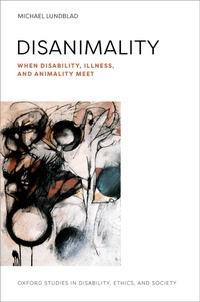
Disanimality
When Disability, Illness, and Animality Meet
Will be published approx. on 29. June 2026
Book
Hardback
240 pages
978-0-19-784566-0 (ISBN)
Description
If you are an advocate for people with disabilities, should you also be vegan? How does your position on assisted suicide relate to how you think about euthanizing pets? Recent work in disability studies has called for greater engagement with animal studies, but disability activists and scholars have long been uncomfortable with comparisons between animals and people with disabilities or chronic and terminal illnesses. The long and problematic history of dehumanizing and animalizing disabled people has often led to the need to reclaim their humanity and basic human rights. What, then, should be the relationship between disability and animal rights?
Disanimality reveals how certain forms of animal advocacy can lead to greater discomfort for disability activists, such as universalist calls for veganism and abolitionist animal rights. The result can be what Lundblad calls disanimality, a feeling of discomfort which can be produced when overly simplistic comparisons are made between animals and people with disabilities. Disanimality argues instead for staying with the trouble of historically and culturally situated analysis, foregrounding posthumanist approaches to both animal and disability studies in relation to contemporary novels, films, and memoirs. Closer attention to the ways that disability, illness, and animality meet can lead not only to new theoretical tools and concepts, but also better potential for coalitions between advocacy movements.
Disanimality reveals how certain forms of animal advocacy can lead to greater discomfort for disability activists, such as universalist calls for veganism and abolitionist animal rights. The result can be what Lundblad calls disanimality, a feeling of discomfort which can be produced when overly simplistic comparisons are made between animals and people with disabilities. Disanimality argues instead for staying with the trouble of historically and culturally situated analysis, foregrounding posthumanist approaches to both animal and disability studies in relation to contemporary novels, films, and memoirs. Closer attention to the ways that disability, illness, and animality meet can lead not only to new theoretical tools and concepts, but also better potential for coalitions between advocacy movements.
More details
Series
Language
English
Place of publication
New York
United States
Product notice
sewn/stitched
Cloth over boards
Dimensions
Height: 234 mm
Width: 156 mm
Thickness: 18 mm
Weight
513 gr
ISBN-13
978-0-19-784566-0 (9780197845660)
Copyright in bibliographic data and cover images is held by Nielsen Book Services Limited or by the publishers or by their respective licensors: all rights reserved.
Schweitzer Classification
Other editions
Additional editions
Book
approx. 09/2026
Oxford University Press Inc
€35.50
Not yet published
Person
Michael Lundblad is Professor of English-Language Literature at the University of Oslo, Norway. He is the author of The Birth of a Jungle: Animality in Progressive-Era U.S. Literature and Culture (Oxford), the co-editor, with Gro Ween of Control: Attempting to Tame the World, the editor of Animalities: Literary and Cultural Studies Beyond the Human, and the co-editor, with Marianne DeKoven, of Species Matters: Humane Advocacy and Cultural Theory. He is also the editor of special issues of New Literary History on "Animality/ Posthumanism/ Disability" and Tamkang Review on "Cetacean Nations".
Content
- Introduction: Posthumanist Disanimality
- 1: Down on the Factory Farm
- 2: Slow Violence and Damaged Bodies
- 3: Animal Pedagogies at the End of Life (Writing)
- 4: Assisted Dying
- 5: Zombie Disposability
- 6: Companion Prosthetics