

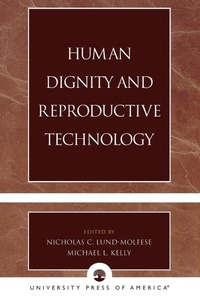
Human Dignity and Reproductive Technology
Published on 2. September 2003
Book
Paperback/Softback
142 pages
978-0-7618-2654-5 (ISBN)
Description
What is it that worries us about cloning? Why do technologies such as in vitro fertilization threaten the family? How does modern biological science threaten the very life it studies? These are important questions that demand a careful examination of science, technology, and the dignity of the human person.
The March 2002 symposium Human Dignity and Reproductive Technology brought together philosophers, theologians, scientists, lawyers, and scholars from across the United States to discuss these questions.
The essays of this book are the contributions of the symposium's participants. These essays do not simply catalogue recent ethical debates concerning reproduction technologies. Rather, they examine how these technologies impact human life and its innate, undeniable dignity. In accordance with the tradition of the Catholic Church, human dignity is examined from the perspectives of both faith and reason so that the good of technology may promote the dignity of the human person.
The March 2002 symposium Human Dignity and Reproductive Technology brought together philosophers, theologians, scientists, lawyers, and scholars from across the United States to discuss these questions.
The essays of this book are the contributions of the symposium's participants. These essays do not simply catalogue recent ethical debates concerning reproduction technologies. Rather, they examine how these technologies impact human life and its innate, undeniable dignity. In accordance with the tradition of the Catholic Church, human dignity is examined from the perspectives of both faith and reason so that the good of technology may promote the dignity of the human person.
More details
Language
English
Place of publication
Lanham, MD
United States
Dimensions
Height: 229 mm
Width: 152 mm
Thickness: 8 mm
Weight
217 gr
ISBN-13
978-0-7618-2654-5 (9780761826545)
Copyright in bibliographic data and cover images is held by Nielsen Book Services Limited or by the publishers or by their respective licensors: all rights reserved.
Schweitzer Classification
Persons
Nicholas C. Lund-Molfese, M.A., J.D. is Coordinator of the Ministry in Higher Education Agency of the Archdiocese of Chicago and Director of the Integritas Institute of the John Paul II Newman Center, University of Illinois at Chicago.
Michael L. Kelly is an undergraduate at the University of Chicago studying Biology and the History, Philosophy, and Social Studies of Science and Medicine. He is an Ethics Fellow and member of the Healthcare Ethics Advisory Board at the Integritas Institute of the John Paul II Newman Center at the University of Illinois at Chicago.
Michael L. Kelly is an undergraduate at the University of Chicago studying Biology and the History, Philosophy, and Social Studies of Science and Medicine. He is an Ethics Fellow and member of the Healthcare Ethics Advisory Board at the Integritas Institute of the John Paul II Newman Center at the University of Illinois at Chicago.
Content
Chapter 1 Editor's Note
Chapter 2 Introduction
Chapter 3 Part I: Culture, Technology and the Church: Opening Remarks; The Body and the Quest for Control; The Magisterium on the Cutting Edge: Evangelization and Culture; Human Dignity and Reproductive Technology: Pastoral Implications
Chapter 4 Part II: Science, Philosophy and the Human Being: What's Wrong with Biology and Biologists? The Remote Roots of the Moral Crisis; The Moral Status of the Human Embryo; Begetting vs. Making Babies
Chapter 5 Part III: Politics and Law: Retrospective and Prospective: The Public Policy Debate on Embryo Research; The Constitutionality of Recent Pro-Life Legislation
Chapter 6 Contributors
Chapter 7 Index
Chapter 2 Introduction
Chapter 3 Part I: Culture, Technology and the Church: Opening Remarks; The Body and the Quest for Control; The Magisterium on the Cutting Edge: Evangelization and Culture; Human Dignity and Reproductive Technology: Pastoral Implications
Chapter 4 Part II: Science, Philosophy and the Human Being: What's Wrong with Biology and Biologists? The Remote Roots of the Moral Crisis; The Moral Status of the Human Embryo; Begetting vs. Making Babies
Chapter 5 Part III: Politics and Law: Retrospective and Prospective: The Public Policy Debate on Embryo Research; The Constitutionality of Recent Pro-Life Legislation
Chapter 6 Contributors
Chapter 7 Index