

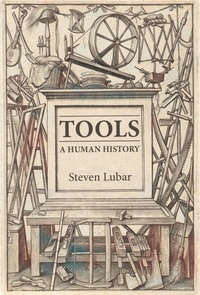
Hands-On
How We Shaped Tools and Tools Shaped Us
Will be published approx. on 23. February 2027
Book
Hardback
352 pages
978-0-262-05842-1 (ISBN)
Description
An illuminating collection of essays that explores the history of simple tools to reveal how we shape and are shaped by technology.
From the former curator of the history of technology at the Smithsonian and a Guggenheim recipient.
Every tool tells a story. Hands-On is an engaging collection of essays that explores the history and philosophy of tools and tool use. Each essay focuses on a single tool, wielding it to reveal a larger story about the nature of tools and technology as well as the diverse ways that tools allow us to understand culture and cultural change. As Steven Lubar reveals, seemingly simple workshop tools and household implements can provide insights into innovation and creativity, work and skill, hand and mind, nature and materials, and society and culture.
The book focuses on hand tools from the stone axe to the modern drill, from the broom to the hammer. The author uses their histories to consider big questions about the nature of tools and technology. How do we learn to use tools? How did tools come to define humanity? What shapes the design of tools? How and why do tools change over time? Together, these essays reveal how we shape technology, how we make sense of it, and how it shapes us.
Especially as machines become increasingly challenging to understand and control, it is important for us to understand how we use tools—and how we should build machines we can work with, not machines we work for. This book helps us make that crucial connection.
From the former curator of the history of technology at the Smithsonian and a Guggenheim recipient.
Every tool tells a story. Hands-On is an engaging collection of essays that explores the history and philosophy of tools and tool use. Each essay focuses on a single tool, wielding it to reveal a larger story about the nature of tools and technology as well as the diverse ways that tools allow us to understand culture and cultural change. As Steven Lubar reveals, seemingly simple workshop tools and household implements can provide insights into innovation and creativity, work and skill, hand and mind, nature and materials, and society and culture.
The book focuses on hand tools from the stone axe to the modern drill, from the broom to the hammer. The author uses their histories to consider big questions about the nature of tools and technology. How do we learn to use tools? How did tools come to define humanity? What shapes the design of tools? How and why do tools change over time? Together, these essays reveal how we shape technology, how we make sense of it, and how it shapes us.
Especially as machines become increasingly challenging to understand and control, it is important for us to understand how we use tools—and how we should build machines we can work with, not machines we work for. This book helps us make that crucial connection.
More details
Language
English
Place of publication
Cambridge (Massachusetts)
United States
Publishing group
MIT Press Ltd
Product notice
sewn/stitched
Cloth over boards
Illustrations
79 B&W ILLUS.
Dimensions
Height: 229 mm
Width: 152 mm
Weight
567 gr
ISBN-13
978-0-262-05842-1 (9780262058421)
Copyright in bibliographic data and cover images is held by Nielsen Book Services Limited or by the publishers or by their respective licensors: all rights reserved.
Schweitzer Classification
Person
Steven Lubar